
Home » 2020 (Page 5)
Yearly Archives: 2020

Betty Broderick

I’m sure many of you are aware of the Dirty John series two, Betty Broderick. Although it has not had as much coverage as I’d have hoped. Now true crime documentaries are not always the best way to find out the truth, after delving deep into the history of this case, I found it does represent it well. If you haven’t given it a watch, I would definitely recommend it and would love to know your thoughts on the case.
Betty was married to Daniel Broderick, having 4 children and helping him become a doctor and then through law school. Of course, it all ended in 1989 when Betty had finally had enough of the torturous years with her husband’s affair with Linda Kolkena, killing them both. Not that I am condoning what she did at all, it was wrong for her to end his and Linda’s life. Although I do understand why she did do it and believe others in her situation could be led to this end too. After she kept them afloat with money while he went through law school, having his children and being the perfect housewife, he decided she was too old and needed a young wife to suit his new high class life-style.
This is not to say that Daniel was the sole person to blame, Betty was in the wrong too. However, taking a woman’s children away from her and brainwashing them tipped her over the edge, as it would do with many women. Betty brought the children up alone, with Daniel always too busy with his company to care about them. It seems Daniel did love Betty to begin with, but to me, it seems it became easy and stayed with her to do everything for him.
Daniel began socialising with his new girlfriend, rubbing his success in Betty’s face. This really does make me sad for Betty, she had no money because all her time was invested in her husband’s career. When it came to the divorce, it became a game for Daniel, trying to leave her with next to nothing and only supervised visits with her own children. He really did drive her to the point of destruction.
This woman is now 72 and has been in prison since 1989. I may be too generous, but I believe that this woman should be let to live her final years as a free woman. Free from having to fight for her children, fight for money to live and fight for her sanity. Daniel took all these away from her. And, although he did not get to live, Betty merely existed in the years of their divorce. She lost her spark and became depressed.
What do you believe?
Share this:

A grand day out
Have you noticed how the news is reported these days in respect of Covid-19? Gone are the individualised and personalised stories of the casualties of this awful virus. Gone are the stories of individual and collective heroism of ordinary, actually extraordinary, people. Gone is the mention of the R rate and the discussion around it. Gone are those pictures of the people that died. No longer the headline, Covid- 19 is reduced to the middle order and consists predominately of the number of cases and the number of deaths. We watch these figures rise on a daily basis and we hear discussion about local lockdowns and areas with high incidents. We hear confusing stories about lockdown and then no lock down and then lockdown or is it partial lockdown and where exactly does it apply? We hear about areas that have high incidents where no action is being taken, well not yet anyway. And companies that remain open despite outbreaks only to be forced to close, let’s be honest, because of media scrutiny. We hear more from Nicola Sturgeon the first minister of Scotland than we do from our own prime minister.
We are sucked into a world of tourism, safe corridors and safe countries, lists and the plight of the aviation industry. We hear tourists moaning about self-isolation (I constantly scream at the tv you made that choice you ****). We are sucked into the debacle around schools and qualifications and returning to school. And we are told by Boris that we should all go back to work, back to the office. We hear of tourists returning on flights having contracted Covid-19 and passengers not wearing masks on flights. At the same time, we are told by bosses in the aviation industry that the industry is doomed unless something is done about it, this self-isolation malarkey really isn’t good for business. Once again, I shout at the tv (I don’t suppose you’ll be getting on one of those cattle trucks in a hurry you ***). Do I sound angry, I guess I am?
When the virus first struck, whenever that was, we all probably didn’t take it that seriously, serious but you know, not that serious. Then there was the lockdown, now that was serious, and it hit home how serious it was. Then we watched the tv and that reinforced how serious it was and if you weren’t a little concerned for yourself, your friends and your loved ones then you really weren’t in touch with reality. And then the economic costs started to rack up and that became really serious. And then, the government decided that since the NHS hadn’t been overwhelmed it was now permissible to open things up. And then, the government decided that it would pass the responsibility for the management of Covid to local authorities. And somewhere along the line, the responsibility for ensuring my safety, and yours became that of business. As long as businesses could assure us that they were Covid safe then we could go back to work and go shopping and eat out. In fact, you could eat out for 50% less in some places aided by a government scheme. A scheme to get businesses back on their feet which of course involved packing people in. Just how Covid secure are these places, well you take your chance, but you can feel assured.
I decided to venture out with my wife to get ourselves a new mattress. The old one has had its day, we meet in the middle of the bed every night, whether we want to or not, the only solution, to try to sleep as close to the edge as you can and if possible somehow cling on. Time for a new mattress. I’m not sure about these new-fangled mattresses (you know, the ones that come in a box and then pop out never to be returned to the box) and so rather than shopping on line we went to a store. We entered the store, masked up as is required, to be greeted by an assistant who pointed to the hand sanitiser. “oh, that bottle doesn’t work”, she says, “try the other but you’ll have to hit it quite hard”. Oh well, at least she’s wearing a face shield and I notice the other assistants are doing the same, except that theirs are up, a bit like a visor really, as they hang about talking to each other. One saunters over to us and after a brief conversation leaves us to look at and try the mattresses. Now that sounds alright doesn’t it, except that not only was his face shield not down, he’d taken it off altogether and thrown it onto the bed. We kept our distance. So, the markings on the floor suggesting 2 metre distance and the hand sanitiser at the entrance and the issue of face shields to staff are all Covid compliant but in operation, not really. Still we had a grand day out and felt quite assured.
As we hear the clamour to get schools back up and running, we hear about the plight of the school children and as a consequence, the voices and concerns of the teachers are drowned out. As we hear the concerns of lecturers from their union, the lecturers themselves and even the medical profession, their voices are drowned out. The only thing that seems to matter now is the economy and business. Those that run it are not on the coal face and will not be putting themselves at risk, but they tell us how we must all do our bit and return to work. If you wonder how getting children back to school fits in, well parents caring for children at home are not in the office working.
I selected some passages from the government guidelines regarding Covid 19.
“The more people you have interactions with, the more chance the virus has to spread. Therefore, try to limit the number of people you see – especially over short periods of time”
“limit the number of different activities which you partake in succession to reduce the potential chain of transmission”
“group size should be limited to the minimum which allows the activity to take place”
Now isn’t that confusing. We must all get back to work and back to the offices and, yet the government’s own guidelines seem to suggest this should not happen unless absolutely necessary. How exactly does this fit with teaching and class sizes and the number of students that teachers interact with? The same applies to lecturers at university, of course they have the added problem that the students will have come from all over the country and then come together in a Covid -19 cauldron. Pack them all in but you can feel assured that schools and campuses are Covid safe (a bit like those planes returning from foreign climes).
I feel like I am in a socio-economic experiment. An experiment where I see the disadvantaged and weak in our society put at risk for the sake of business. Where the older generation are made to feel dispensable and unimportant. Where figures are manipulated to downplay the seriousness of the problem. Die on day 29 after infection and you won’t be included in the Covid statistics. I see an experiment where facts are bent, ignored, and a narrative that subjugates the truth to management and business ideals. It looks like I’m going to be shouting at the tv for a very long time and I must be honest I really don’t feel very assured.

Share this:


What price justice?

Having read a colleague’s blog Is justice fair?, I turned my mind to recent media coverage regarding the prosecution rates for rape in England and Wales. Just as a reminder, the coverage concerned the fact that the number of prosecutions is at an all-time low with a fall of 932 or 30.75% with the number of convictions having fallen by 25%. This is coupled with a falling number of cases charged when compared with the year 2015/16. The Victims’ Commissioner Dame Vera Baird somewhat ironically, was incensed by these figures and urged the Crown Prosecution Service to change its policy immediately.
I’m always sceptical about the use of statistics, they are just simple facts, manipulated in some way or another to tell a story. Useful to the media and politicians alike they rarely give us an explanation of underlying causes and issues. Dame Vera places the blame squarely on the Crown Prosecution Service (CPS) and its policy of only pursuing cases that are likely to succeed in court. Now this is the ironic part, as a former Labour member of parliament, a minister and Solicitor General for England and Wales, she would have been party to and indeed helped formalise and set CPS policy and guidelines. The former Labour Government’s propensity to introduce targets and performance indicators for the public services knew no bounds. If its predecessors, the Conservatives were instrumental in introducing and promulgating these management ideals, the Labour government took them to greater heights. Why would we be surprised then that the CPS continue in such a vein? Of course, add in another dimension, that of drastic budget cuts to public services since 2010, the judicial system included, and the pursuit of rationalisation of cases looks even more understandable and if we are less emotional and more clinical about it, absolutely sensible.
My first crown court case involved the theft of a two-bar electric fire. A landlady reported that a previous tenant had, when he moved out, taken the fire with him. As a young probationary constable in 1983, I tracked down the culprit, arrested him and duly charged him with the offence of theft. Some months later I found myself giving evidence at crown court. As was his right at the time, the defendant had elected trial by jury. The judicial system has moved a long way since then. Trial by jury is no longer allowed for such minor offences and of course the police no longer have much say in who is prosecuted and who isn’t certainly when comes to crown court cases. Many of the provisions that were in place at the time protected the rights of defendants and many of these have been diminished, for the most part, in pursuit of the ‘evil three Es’; economy, effectiveness and efficiency. Whilst the rights of defendants have been diminished, so too somewhat unnoticed, have the rights of victims. The lack of prosecution of rape cases is not a phenomenon that stands alone. Other serious cases are also not pursued or dropped in the name of economy or efficiency or effectiveness. If all the cases were pursued, then the courts would grind to a halt such have been the financial cuts over the years. Justice is expensive whichever way you look at it.
My colleague is right in questioning the fairness of a system that seems to favour the powerful, but I would add to it. The pursuit of economy is indicative that the executive is not bothered about justice. To borrow my colleague’s analogy, they want to show that there is an ice cream but the fact that it is cheap, and nasty is irrelevant.
Share this:


Is justice fair?

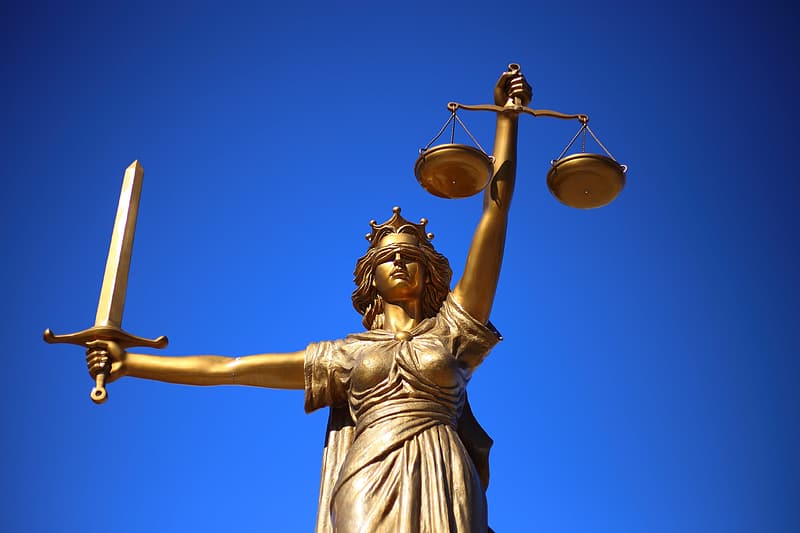
There is a representation of justice. A woman (lady justice) blindfolded holding the scales of justice in one hard and a sword in the other. This representation demonstrates a visualisation of the core principles of justice: blindfold for impartiality, the scales for weighting the evidence and the sword, the authority. The need for this representation is making the point that justice is fair. To all people justice is an equaliser that brings the balance back to everyday life. Those who break the natural order are faced with the consequences of the arbitration made by the system that assumes equality for all against the law.
The representation of justice must be convincing in order to be accepted by the public. The impartiality has to be demonstrable and the system forms a bond across all social strata. Well, at least in principle. There is a difference between representation and reality. This is something we learn from early on. As a kid, I remember a special ice-cream in a cup that had a little toy in the bottom of the cup. It looked so appealing, but the reality never met my expectations. Still, I continued to buy it, in anticipation that maybe the representation and the reality will meet. Like the ice cream, the justice system, has a beautiful packaging that makes it incredibly appealing.
Forged in the flames of the renaissance and the enlightenment, justice transformed from a convenient divinity to a philosophical ideal and a social need. It became a concept that reflected social changes and economic growth. Many of the principles of justice, like equality and fairness, carried forward from the classical era. Only at this time these concepts were enriched with philosophical arguments influenced by humanism. The age of exploration and knowledge added to the scientific rigour of forensic investigation and the procedures became standardised. Great minds conceptualised some of theoretical aspects and transferred them in everyday practice. Cesare Beccaria’s treatise On Crimes and Punishments demonstrated how humanist principles can affect procedure and sentencing.
This justice system was/is our social “ice cream”. Desirable and available to all citizens. A system beyond people and social status, able to call individuals to account. Unfortunately like my childhood “ice cream” equally disappointing, primarily because the reality is not even close to the representation. The principles of justice are all noble and inspiring. There is however something behind the systems that needs to be explored in order to understand why reality and representation are so far apart. The guiding principle of any justice system from inception to this day is not to restore the balance (as so beautifully demonstrated with the scales) but to maintain the established order or the social status quo.
On the occasions where societies broke down because of war or revolution, significant changes happened. Those allowed some reforms in different parts of the system allowing changes, sometimes even radical. Even at those situations the reforms were never too radical or too extensive. Regardless of the political system, tyrannical, dictatorial or democratic, the establishment is keen to maintain its authority over the people. For this to happen, the system must be biased in its inception about what we mean about justice. If the expectations of law and order are given a direction, then the entire system follows that direction and all changes are more cosmetic than fundamental. Quite possibly this explains what we recognise as miscarriages of justice as simply the inability of the system to be more tactful about its choices and arbitrations.
Therefore, tax avoidance and drug use take a different level of priority in the system. It is the same reason that people from different socioeconomic groups are seem differently, regardless of the system’s reassurance on equality and fairness. Maybe the biggest irony of all is that the representation of justice is a woman, in one of the most male dominated systems. From the senior judiciary to the heads of police and the prison systems, women are still highly underrepresented. Whilst the representation of ethnic minorities is even lower. Of course, even if it was to change in composition, that would be arguably a cosmetic change. Perhaps it is time as society to use consumer law and demand that our justice system is like it’s been advertised…fair.
Share this:


Dear Black People. #BlackAsianWithLove
Dear Black People:
Remember, whiteness has been largely invisible to MANY folks for MANY generations. While one Corona-filled year can make a dent in it, these changes will hurt and will take time. For example, imagine waking up one day, seeing another Black body drop on the streets at the hands of the police, and you see the American president making mockery of it. Stereotypical “rednecks” are breaking open cans of (cheap) beer to celebrate the deaths and you suddenly realize that this – none of this – would NEVER happen to you because of the color of your skin, because your skin is white. That’s got a be an earth-shattering realization.
Dear Black people, can you remember learning something that totally shattered your world view? That’s what’s happening to the wider, whiter world right now. Like any humans, some embrace change, others retreat in defeat and plot retaliation, for Mr. Backlash is NEVER EVER late.
Dear Black people, take a deep breath. Step back and look at the arch of history. It’s a sheer miracle that you’re even here, that your ancestors survived (I’ll spare you the litany of atrocities). History shows you that these flaring moments are fleeting, that in fact, it gets better. So, keep your head to the sky! Strap up your boots, march for justice, speak up, fight for peace, raise your voices in solidarity with peace-loving people everywhere of every shape, size and color. Do these things at your own pace, in your own way, and in your own space, for every contribution towards world peace is needed. Be the change.
Share this:


Turning a blind eye: when people remain silent to abuse in the name of religion, tradition, and culture

The thought that people in the 21st Century are silent about abuse appears to be an absurd notion. There has been a significant development in how public opinion is increasing the awareness of the role of abuses that occur behind closed doors, and the responsibility of safeguarding to protect the most vulnerable. Case studies of Daniel Pelka, Baby P, and even the institutional abuses at Winterbourne View Hospital are significant signal crimes, having provided public opinion with the chance to progress its understanding of abuse behind closed doors, being able to question concerning behaviours and beliefs, and for this to be reflected within legislation; with abusers even being sentenced and imprisoned.
Abuses behind closed doors
I raise the progression made on abuses that occur behind closed doors; there is still far to go, however, institutional abuses that occur literally in front of these doors are still an issue in society today.
The power imbalance of the state and police department in recognising their responsibility for the murder of George Floyd is one of many examples of this; the image of the local authority leaning on his neck, with him pleading for his mother and his life, is an image that can never be forgotten. The issues of institutional racism can be traced back decades, with the MacPherson Report highlighting these issues following the murder of Stephen Lawrence in 1993, but how far has society come to know about crimes committed within the family and community, to preserve the honour of religion, culture, and tradition? Deciding to leave one’s religious faith, has the potential to cause disruptions to the ideological framework of the family and community.
This decision appears to increase the level of threat the family and community may feel towards the individual as a result, with an increased likelihood of creating an environment of abuse to foster physical and psychological abuse. Being able to challenge such abuse, which occurs under the veil of religion, tradition, and culture, appears to be difficult. This might be due to how this type of abuse is maintained under collusion and coercive control within the family and community – with maintaining izzat (honour) being deemed the highest priority, instead of maintaining the dignity of the human being. His article aims to reflect upon the notion that apostatic-abuse occurs both in private and public worldwide due to the influences of power involved with this issue.
The definition of “apostate”
An apostate is a term used to describe people who once identified as religious, or with faith, or belief in God, or gods, and now identifies as non-religious. The transition of apostasy is difficult for the individual for a number of reasons, and the example of the Lion King is usually apt in explaining this issue (spoilers follow):
The moment where Mufasa dies, Simba (Mufasa’s son) is blamed for this and is shunned to leave the family home by his uncle Scar, and Scar further directs his hyena-followers to kill Simba. Simba evades the attack and travels across the desert alone and isolated for a considerable amount of time, where he eventually collapses.
The journey of Simba during this moment is similar to the journey of the apostate. The thought that a person can have a different opinion to that of the household can be divisive. For example, public opinion was ideologically divided in the United Kingdom over the recent decision to either remain in or leave the European Union. Having ideological differences on this topic, ruptured the cohesion within society, where family members even stopped talking to each other based on the ideological decision made. These political and ideological differences were used as a rationale by the murderer who sided with leaving the European Union, of Labour MP Jo Cox who sided with remaining in the European Union.
Apostates and their families
Sadly, the act of apostasy, where family members have ideological differences, can cause a similar threat reaction by families and communities towards their family member. When family members are strongly dedicated to the conviction of their ideology, faith, and/or scripture, the assertion of shunning the individual, using violence, and even threatening and causing death can be viable options to maintain the honour of their family home and community, is saddening. This conviction further facilitates an abusive environment to develop within the family and community, with family members silently accepting the abuse as a consequence for holding ideological differences. The reaction of the family members increases the likelihood of the person being isolated and shunned, which further creates an environment suitable for abuse to occur, and in similarity to Simba’s journey, this increases the likelihood of the apostate being left to survive on their own without support from the family that once supported them. The differences in thought and ideology create the dynamic of the family belonging to the in-group, and the apostate being identified in the out-group. This also appears to dehumanise the apostate, labelling them as a traitor to the values held dear by the family and community, thus perceiving abuse as an appropriate and acceptable punishment. The power held against the individual by the family and community increases the likelihood of secrecy and silence towards the harm that may be caused.
Abuses against apostates
The concern currently relates to how society appears to struggle with challenging ideas and beliefs, with origins based in religion, tradition, and culture. Regardless of its origin, however, abuse cannot be tolerated. Abuse is usually about a structural and personal power imbalance. The abuser uses that power as leverage to get the individual to do things, they do not want to do. One can appreciate that abuse of any kind, such as physical, psychological, neglect, and domestic violence, are all means to impede on the life of an individual. The cause for concern grows immensely when family members engage in acts of abuse against their own, and in cases within familial communities where the notion of abuse is hidden. Case studies from the past, such as Victoria Climbie, Shafilea Ahmed, and Surjit and Sarbjit Athwal, provide a rare insight into the damaging consequences of abuse within the family home. Some of the conditions that are similar between these case studies are that families maintained secrecy and a sense of order within the home to ensure the abuse remained hidden. The interesting similarity in these cases is how religion, culture, and/or tradition are used to rationalise the abuse – to maintain the notion of izzat; honour, within the family and community. This consequently creates an environment where the notion of honour is prioritised higher than the notion of humanity. Indeed, abuse cannot be tolerated, and for society to not tolerate such abuse, society needs to become comfortable with Maajid Nawaz’s notion that, “no idea is above scrutiny, and no person is below dignity”. What this means is that we can only challenge this type of abuse by becoming more comfortable with calling-out concerning behaviours and beliefs, regardless of their origin, and by adhering to the view of maintaining the dignity of humanity at all costs. Through this perspective, we can limit the number of vulnerable people that may be victims of such abuse, by not being silent to the abuses occurring behind closed doors.
Two key findings of the study
My recent publication, Apostates as a Hidden Population of Abuse Victims (Parekh & Egan, 2020), was the first research study to identify the worldwide abuses that apostates face within religious households. Two significant issues were found whilst completing the research.
Differences between ex-Muslims and ex-Christians
First, Muslim apostates were more likely than Christian apostates to face abuses in the form of assault (being shoved, pushed), serious assault (being hit, physically hurt, threats of death or injury), and psychological abuse (coercive control, stress, fear). The offenders in cases of apostatic-abuse are usually family members and members of their local community, who are acting under the guise of protecting, preserving and honouring their religion, tradition, and culture. Despite the lower number of people identifying as Muslim apostates in the study, they were significantly more likely to face this level of abuse, which questions the volatility towards apostates within some Muslim households across the world, and raises the wider question of how apostates may be perceived within Islam. The religious scriptures within Islam do not favour the apostate well, how else would a marginalised group cope with people who defect? Sadly, this has been integrated within the legislature of twelve nation-states, where the act of apostasy is still punishable by death, and in seven states where this act is punishable with a prison sentence (Humanists International, 2019; Humanists International, 2020). This shows a link between the way in which the religious scriptures are interpreted, actualised, and how religious sanctions are integrated within the criminal justice systems too. The power held by the state to kill its citizens is a concerning criminological issue; one that I would assert the state should not have, however, what appears to also be concerning is that the notion of human intrigue, inquisition, and intuition, are punishable. How can human beings flourish, if the very nature of being human is open to punishment? The recent case of Mubarak Bala in Nigeria is a testament to the concerns of this study. Enacting blasphemy laws appears to be positively supported as a way of preserving religious, traditional, and cultural values and practices, and by doing so, are perceived as favourable within the religious community. Bala’s post which critiqued Islam on social media was interpreted as insulting to Islam within Nigeria. As such, the full force of the religiously informed criminal justice system has been unhinged in its approach to deny Bala of his basic human rights. But, the power held by such traditionalistic interpretations of Islam, raises considerable concerns for people within a nation-state that may think differently. Cultural rules and values, under the guise of “honour,” are systematically embedded by families and communities to prevent individualisation and the demise of traditional cultural norms held by the parental migrant generation, which causes people to live fearfully within an Orwellian dystopia, enforced by the Sword of Damocles.
Apostates are less likely to report abuse to the police
Second, victims were less likely to inform the local authority of the abuses they were facing. Does this beg the question as to why victims are not reporting their abuse to the police? There are several reasons why victims struggle to report their abuse, and a selection of the reasons are highlighted here. Firstly, does the police truly understand the extent of apostatic-abuse? Secondly, will the police understand the religious, cultural, and traditional significance of this act of abuse? Thirdly, what are the ramifications for the victim within their family and community if they disclose this abuse, and will this cause further retribution? Fourthly, if the victim is under the age of adulthood, will the police take their claim seriously? Fifthly, does the religious community have a sense of power and influence within society that, can be used against the apostate? Sixthly, if the victim is to report the abuse, will they be shunned from the family? Seventhly, can the victim report the abuse, if by identifying as an apostate, they are likely to be punished instead? The study was able to capture the voices of the victims, and the reasons why they struggled to inform the local authority. What becomes concerning is that, despite being abused, victims are still left powerless. The psychological impact of having one’s family member taking part in abuse for having a difference of perspective is open to severely damaging the victim’s perspective of how the world functions, and if law enforcement remains silent too, then this further increases the levels of helplessness felt by the victim. When victims are left in a state of helplessness, this questions the legitimacy of the state in being able to protect its citizens from harm. The rationale of religion, culture, and tradition appear to be sufficient in extending punishment onto the apostate, and for family members, the community, and even police forces to further their assertion that the apostate might deserve the punishment they receive. How dangerous is it then, for a religious person to question deeply held religious views? This is a pertinent issue that fails to be raised – an apostate was once religious. Hence, if a religious person begins to doubt the teachings of their faith, and this is deemed as insulting, then how do religious people remain safe under such draconian infrastructure? If a religious person starts questioning their faith, and this becomes the catalyst for abuse within the home due to notions of dishonour, then how likely is that religious person to continue questioning their beliefs, or raise alarm to the way they are being treated; especially if they are aware that the local authority is less likely to support them? The responsibility for reporting the abuse should not be solely on the shoulders of the abused. The poignant issue here is to highlight the social structures that are involved to inhibit the victim from being aware that they have the power to report the crimes being committed against them.
How to contrast apostatic-abuse?
So, what do we do when dark things and hidden wrongdoings are concealed by social norms? Apostatic-abuse, by its nature, is usually hidden due to the stigma of dishonouring the family and the community, with members maintaining social norms to protect the moral fibre of its community. The consequences of which, can be truly abhorrent for the apostate, where they might have experienced physical and psychological abuse, to being shunned, excommunicated, to even having their life threatened by people who they believed loved them. When abuse can proliferate under secrecy, this increases the difficulties for local authorities to become aware that such victims exist. The example of how activists in the United Kingdom have worked with local authorities to raise awareness of the damaging effects of forced marriage and female genital mutilation to victims and asserting the need to criminalise abusers is a positive step towards legitimising the effect of these crimes towards victims (Council of Europe, 2017; Raptim, 2018). Following a similar model, internationally, would be advocated towards challenging and supporting victims of apostatic-abuse (Metropolitan Police, 2020; NPCC, 2018; Safe Lives, 2017). This model would act as a catalyst to provide training to organisations within criminal justice systems to support their comprehension of this hidden form of abuse. This may also facilitate conversations with members of parliament to further increase support for this abuse being represented within the legislation. This is not an issue within an isolated geographical location, but a worldwide phenomenon. As such, recognition of this form of abuse for organisations that work to support victims would be influential in gaining insight into the effects apostatic-abuse can cause. This form of action, awareness, and support being provided by agencies of criminal justice systems, may reduce the influence of power that abusers may have on victims, as a result of this crime becoming recognised.
Apostatic-abuse is a crime that is maintained through secrecy, social collusion, and coercive control, to maintain power and control over the individual that decides to think differently from their family and community. Sadly, in some nation-states, this perspective has also been criminalised with legislation even advocating for the death of the individual or imprisonment. This remains a crime that is either hidden within families and communities or is carried out by the state, through blasphemy laws, as a form of appeasing the masses to show the integration of religious law to criminal law. When human beings are restricted to how they can think about issues that are pertinent to them, increases the feelings of closure, censure, and control that are not psychologically healthy for the individual. This article, along with the published research, are the first steps to highlight these issues and starting the conversation of how we can help hidden victims around the world.
References
Council of Europe. (2017). Female Genital Mutilation and Forced Marriage. Accessed on 1st August 2020: https://rm.coe.int/female-genital-mutilation-and-forced-marriage/16807baf8f.
Humanists International. (2019). The Freedom of Thought Report. Accessed on 1st August 2020: https://fot.humanists.international/download-the-report/.
Humanists International. (2020). Humanists at Risk: Action Report 2020. Accessed on 1st August 2020: https://humanists.international/wp-content/uploads/2020/06/3098_Humanists-International_Humanists-at-Risk-Action-Report_Amends-V2_LR.pdf.
Parekh, H., & Egan, V. (2020). Apostates as a hidden population of abuse victims. Journal of Interpersonal Violence, DOI: 10.1177/0886260519898428.
Metropolitan Police. (2020). Operation Limelight. Accessed on 1st August 2020: https://assets.publishing.service.gov.uk/government/uploads/system/uploads/attachment_data/file/860625/operation_limelight_instructions.pdf.
National Police Chief’s Council (NPCC). (2018). Honour Based Abuse, Forced Marriage and Female Genital Mutilation: a Policing Strategy for England, Wales & Northern Ireland – Eradicating Honour based Abuse, Force Marriage and Female Genital Mutilation Together. Accessed on 1st August 2020: https://www.npcc.police.uk/Publication/Final%20NPCC%20HBA%20strategy%202015%202018December%202015.pdf
Raptim. (2018). 12 NGOs Fighting Against Female Genital Mutilation. Accessed on 1st August 2020: https://www.raptim.org/fighting-against-female-genital-mutilation/.
Safe Lives (2017). Your Choice: ‘honour’-based violence, forced marriage and domestic abuse. Accessed on 1st August 2020: https://safelives.org.uk/sites/default/files/resources/Spotlight%20on%20HBV%20and%20forced%20marriage-web.pdf.
Share this:

They RNC didn’t address me.
On the 2020 Republican National Convention (RNC)
They talked at length about their “God-given rights to bear arms,” yet were silent about what guns do to people like me. They have little to say about religious diversity, and are silent about the bountifully plenty o’ white-American churches rooted – deeply – in racism. Equally, and clearly by the very same measure, they’ve never stood for the legal rights of Blacks to defend ourselves from tyranny. The second amendment, they suggest by their consistent omissions, is for them – only! This is how they addressed me. Give them liberty or give them (my) death…as it were. They ignore the data confirming that their own kids are more likely to shoot them than any dangers posed by my kids.
At the 2020 RNC, they talked at length about protecting their suburbs from thugs and rioters, yet fell well short of acknowledging the terror people like me have learned to live with. They talk like nobody that looks like me lives in the suburbs, and I know all too well that eerie ‘Get Out’ feeling when cruising through virtually any suburb in America. Do I belong here? Their glares and stares, and random checks let me know, #Karen and her klan don’t believe we belong together. The RNC didn’t address people like me who believe in my own state’s motto inscribed right there on both our seal and flag – “United we stand. Divided we fall.”* All I could hear from the RNC were warnings towards people like me: STFU, we got guns. Their gun cult was the only sort of solidarity served up, and so all the speakers touted that singular party line.

My party’s lines are numerous, as we’ve been casting a wider and wider net of those disenfranchised by the conservatives. Dems are ‘the others’. This year’s DNC motto seems to be this oft repeated moniker, ‘strength in diversity, unity in solidarity’. Both in rhetoric and actions they are more open to accountability for and by these so-called others. We can think, talk, walk and chew gum at the same time. The RNC didn’t address these Others, but they certainly portrayed ‘us others as a clear and present threat to their (suburban) way of life. For them, I am pariah.
Urban life.
As for cities, this year’s RNC speakers talked about rioters, but never ever spoke about what the riots were about. They touted a very uncomplicated view of rioting, and even had the nerve to claim the oppressed are crying victimhood (you know that, ‘shut up while I press my hoof on your neck’ sort of way). These conservative folks need a reading from both Sigmund Freud and the House of Labeija. Despite knowing what I know, I am still shocked at their void of empathy and disinterest in empathetic communication. They never addressed the peaceful protests, not least of which the #TakeAKnee campaign for which their leaders black-balled those peaceful protestors. You saw how the monster of that party responded to several prominent sports figures’ form of non-violent protest. I walked away from watching the RNC feeling shame for them, for I know their hearts couldn’t possibly be that cold. What comes around goes around.
*Yes, I know my state seal shows two white men shaking hands over the destinies of entire populations of Black and brown people, which we’ll save for another discussion. Rest assured, the RNC klan would say I’m using political correctness to silence them.
Share this:


Covid-Universities and what if
Over the past week or so there have been some mutterings about whether it is safe to open up universities. There is the advice from the scientific advisors (Universities get some Indie SAGE advice on reopening campuses in September) and some thoughts from academics ‘Why universities must move all teaching online this autumn’.
As we move closer to the start of term, so my dread of what is ahead comes into sharper focus. I try to imagine what it would be like and try to reassure myself that the risk assessments have been done and the reassurances that the universities are Covid safe are true rather than simply fantasy and wishful thinking.
In this safe environment I imagine that the number of students and staff on campuses will be carefully managed as it is with many large stores.
I imagine that all staff and students will be wearing face coverings. This is not for protection of themselves, as the use of coverings is a somewhat altruistic venture, I cover my face and protect you and you cover yours and protect me.
I imagine that all thoroughfares will be marked and monitored. Social distancing is important, and we need to be at least a metre apart.
I imagine that the classrooms will be laid out in such a way that social distancing can be maintained and that the classrooms will be well ventilated, even in the middle of winter. I imagine all the chairs and desks and any other equipment will be wiped down after each session.
I imagine that face to face teaching will be limited and interactions with multiple groups of students will be severely curtailed to ensure lecturers are not put at unnecessary risk. I imagine each class will comprise only a few students to minimise risk.
I imagine that anyone who is symptomatic will not attend a university and will after being tested self-isolate. I imagine that all the people they have been in contact with will do the same for a whole, boring, 14 days.
I imagine that the universities’ management will be at each university, leading from the front. They will be checking to ensure the safety of students and staff. They will be mixing with staff and students, receiving feedback and continuously monitoring. I imagine the safety of the students and staff is paramount.
And then I think, what if…
What if campuses are a free for all. Students can come and go as they please, there is no monitoring of volumes. Or what if there is, but it is impossible to enforce with limited staff to do so. And those staff tasked with this endeavour are at greater risk due to the proximity with large volumes of students.
What if people decide not to wear face coverings or having got into the building decide to take them off or several people are exempt for some reason or another. Altruism has gone out of the window. I’m a criminologist and I know that people break the rules for all sorts of reasons and the only certainty is that some people will break the rules.
What if social distancing becomes all too difficult. Many of us have experienced it in stores. A one-way system works for most, but a significant number just don’t abide by it, for whatever reason. People break rules.
What if the social distancing in classes is impossible, there just isn’t enough classes to maintain it with the volume of students on the course. What if ventilation is impossible, other than air conditioning, some classes are in the middle of buildings. Who will clean the chairs and equipment after each class? Go to a restaurant and tables and chairs are wiped down after each use so who will do it at a university?
What if lecturers have to teach multiple groups face to face as there are not enough staff to spread the load. Teaching in a classroom for two hours multiple times in a day with different groups each time must surely expose lecturers to much greater risk.
What if students are of the age group where they are more likely to be asymptomatic? How many that are infected might be at a university, spreading the virus around campus and around the locality. Even if they are symptomatic, how likely are they to self-isolate? Judging by the street parties and illegal raves reported on the news, there is a good chance that some will break the rules. Let’s be realistic, if you are only likely to suffer affects akin to a cold, why would you be that bothered about social distancing or self-isolation?
And finally, what if all managers avail themselves of the much-vaunted government advice, work from home if you can. Leadership from the rear, the bottom line is more important than the safety of others. We can of course dress this up in management psychobabble about what the students need.
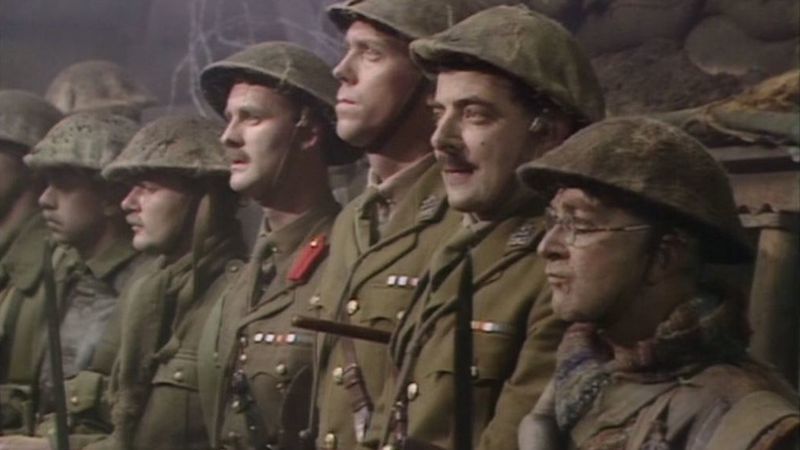
Never mind, ‘Tally ho and all of that sort of thing and over the top we go’*.
* For those of you that are lost at this point it might be worth a visit to the last episode of Blackadder Goes Forth.
Share this:


Imagine and what if…

‘Imagine’, a simple word and one that evokes memories of a song written by John Lennon and released in 1971. In that song we are asked to think about ideas that would perhaps lead us into notions of utopia, if only the ideas were true. Though, often what we see as a simple solution proves to be far from simple and in each solution, lies a paradox that gives lie to the fact that our solution was a solution at all. If we imagine a solution or a scenario we should also ask ourselves ‘what if’. ‘What if’ that were true, what would it look like and what would the consequences be? I like the idea of ‘what if’. ‘What if’ allows me to jump ahead, ‘what if’ allows me to see whether a solution would work, ‘what if’ allows me to play out various scenarios in my mind and ‘what if’ causes me more trouble than imagine. In imagine I can dream, in ‘what if’, I tear those dreams apart, dissecting each bit into practical reality. A reality that has its basis in science and my limited knowledge of human nature. And so, I’d like to begin my journey of ‘imagine’ and ‘what if’.
I suppose my thinking behind this short piece was to set the scene for a number of other pieces without trying to explain the background and rationale of each piece. ‘Imagine’ and ‘What if’ are the rationale. Perhaps the idea might provide a spark for other bloggers, I hope so. And so, I begin….
Imagine a chain of nice restaurants (not the greasy spoon type but perhaps not the Michelin star type either), each restaurant with its own chef. Imagine the work that goes into running a restaurant*, for those of you that watch MasterChef, ‘it isn’t hard to do’. Let’s start with the basics.
Well of course there is the food. Decent food, requires decent ingredients. So, sourcing the ingredients is important, a fair amount of research required to do this and then of course there is the logistics of purchasing the food at the right time in the right quantities and ensuring the quality at the same time.
Then there is the menu, what is put onto the menu is carefully planned around what ingredients are available, what the chef wants to produce and what the customer might want. If the theme of the restaurant is Vegetarian cuisine, there is little point in putting a chicken Balti on the menu. The actual menu needs to be produced, not some scrap of paper, it needs to be carefully planned, printed and delivered. The food then needs to be cooked and served. There is a lot of planning and careful consideration that goes into this. Dishes are tried and tried again until they are right and are aesthetically pleasing on the plate. The customers need to be looked after in the restaurant, shown to their tables, their orders taken, and drinks served.
Imagine how the restaurant is advertised, perhaps on Facebook, maybe its own website and imagine what the advertising would promise. Perhaps a congenial atmosphere, good food and fine service. Imagine you can book online. Imagine the amount of work that goes into building that website or Facebook page. Imagine the work that goes into servicing the bookings. Imagine the organisation of running a restaurant. So, what if…
The chef was responsible for:
- The design and implementation of the website or Facebook page
- The planning, sourcing and cooking of the food
- The design and printing of the menu
- The taking of the orders and the delivery of the food to the customers
- In fact, the chef was responsible for delivering just about everything.
What if…
The customers that came to the restaurant decided they don’t like Vegetarian cuisine and are more at home with burgers and chips, but somebody told them it was a good idea to try the restaurant, or maybe they didn’t have anything better to do on the day.
The restaurant chain managers decided that more customers were better for business and they crammed in as many as they could each day, whilst berating the chef for not servicing the website bookings in line with published timelines.
The restaurant managers decided that the chef could run it all on their own as it is better for the bottom line.
What if…
The feedback from customers is filled with complaints about the untimely service, the crammed conditions and the fact they don’t like Vegetarian food and couldn’t understand why burgers and chips weren’t on the menu as well.
The management scrutinise the restaurant Facebook page or website looking for inaccuracies or areas that don’t fit the restaurant chain’s USP and appear to have little interest in the food produced or the service given to customers.
The management introduce new policies to ‘ensure better customer service and a better customer experience’. The policies increase the workload for the chef.
Just imagine you are that chef ….
NB I apologise to all chefs out there. As with anything in life we have little idea of the amount of work something involves until we have to do it ourselves.
Share this:


Black British history does not just mean England

In July 2020 I was fortunate enough to be part of a project with The Guardian newspaper on fifty varied young, Black, British perspectives on Black Lives Matter – fifty Black Britons from across the country – from the Shetland Islands to Sunderland; from Northampton to Norfolk; from London to Glasgow and Edinburgh. The inclusion of Scotland in particularly, fascinates me, because I know if you ever call the Scots, English (or British), many will have your head. That whilst Scotland is part of Britain, it has its own culture and history, including a Black history. Though, to this day I have not been to Scotland and all the Scots I have met have been white. I know the first time I meet and hear a Black person with a Scottish accent will be a special day indeed.
When people talk about Scottish history, it is often one of fighting off English invaders. I think of films such as Outlaw King or even the not-so-historically-accurate Braveheart. Moreover, depictions of highland culture in Outlander, including the Jacobite cause being quashed at Culloden in 1745. However, whilst Scotland was oppressed by the English (British), they were also, like the English, complicit in slavery. Today, Glasgow is called the Merchant City, for the tobacco merchants. If you had a tobacco addiction in the 1700s (puffing away), your smoking habit was made in Glasgow and it was tainted with the violence of slave plantations across the Atlantic.
And yet, whilst Scotland was complicit in the Slave Trade, Black Scottish history goes back to Roman times. The Afro-Romans in Scotland “defending Hadrian’s wall in the third century AD was a ‘division of Moors’ (numerous Maurorum Aurelianorum) named after Marcus Aurelius or a later emperor known officially by the same name” (Fryer, 1984: 1). Today there is a small but thriving population of Black people in Scotland, one of Glasgow’s most famous being Ugandan-born poet Tawona Sithole. His poem ‘Good English’ resonates with me as a Black Briton of Caribbean heritage. And I expect it would resonate with many Black Scottish youth coming through now too, also at the mercy of micro-aggressive behaviours from the white population including the constant where are you froms?
In Ireland, additionally, there are communities of Irish people of African and Caribbean heritage. At University, a white Irish friend spoke to me about the number of Black African clergy in the Irish Catholic church. However, screen depictions of the Irish have often perpetuated stereotypes of alcoholism and violence. In screen media, both Northern Ireland and the Republic, are represented as white countries, with their own histories of conflict with English colonisers, including the famines, the Easter Risings (1916) and the thirty-year conflict known as The Troubles.
Furthermore, like the Scottish, the Irish have their own connections with slavery, especially as overseers on the plantations. Whilst the myth of Irish slaves has been debunked many times, there is a history of indentured labour on islands like Jamaica and Barbados. Black and Irish are often seen as juxtaposed but they needn’t be. Historian Peter Fryer talks about an African presence in the British isles “some 400 or 500 years after the Romans left” (Fryer, 1984: 2) and “an ancient Irish chronicle records that ‘blue men’ (fir gorma) were seized by Vikings in Morocco in the ninth century and carried off to Ireland, where they stayed for a long time” (ibis).
Whilst both Northern Ireland and the Republic are incredibly white nations now, especially in the rural areas, there is still a Black Irish history worthy of scholarship.
Black Irish history is something I hope to see more of in academia. SOAS academic Emma Dabiri growing up in 1980s inner-city Dublin is a start with her text Don’t Touch My Hair and quite an act to follow in the mainstream. Yet, there has not been a significant Black population in Ireland for long. Following the previous comment about African immigrant clergy in Ireland, however, many of the mixed-race children Dabiri came into contact with as a mixed-race Irish girl, in the 1980s were institutionalised:
“They were often the ‘illegitimate offspring of Irish women and African students. Not to put too fine a point on it, unmarried mothers were generally, in Ireland, treated like scum. Add the disgrace of a black child and, sure, you couldn’t really sink much lower.”
DABiri, 2018: 5
The arrival of mixed-race Black-racialised children in Ireland that grew up with single white mothers holds a similar sentiment to one case study in Wales. There were more Black people in Britain in 1944 than in 1948 (before the arrival of the Empire Windrush) – simply because of the influx of African-American soldiers, as “on the eve of D-Day, in June 1944, there was a hundred and thirty thousand African-American GIs, both army and air force, stationed in Britain” (Olusoga, 2017: 467).
In 1942, the segregated United States sent a racially-segreated force to Britain. During the war years, Black American soldiers were also deployed to Wales. In the last episode of Black and British, ‘Homecoming’, Prof. David Olusoga meets with members of a Welsh village called Abersychan, including the descendants that came out of the unions between the Black men and white women – unknowingly participating in a social experiment.
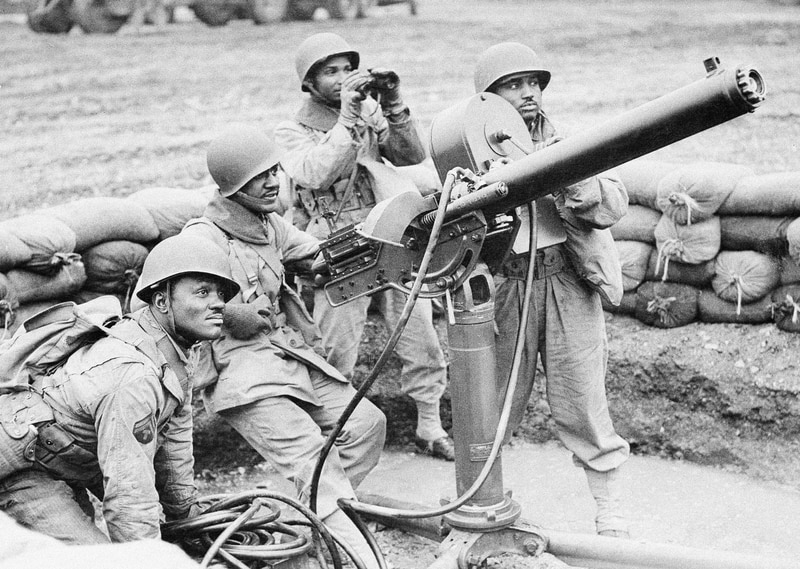
What the experiences of Black and mixed-race Black-racialised communities in Ireland, Scotland and Wales show us, is that Britain is not post-racial and that race matters, both in 2020 and during the war years.
And more importantly, to forget the history we think we know, as seemingly white villages like Abersychan, have diverse histories worth talking and shouting about.
References
Dabiri, E (2018). Don’t Touch My Hair. London: Allen Lane
Fryer, P (1984/2018). Staying Power. London: Pluto
Olusoga, D (2017). Black and British. London: Pan Books.

 Thoughts from the criminology team
