
Home » 2020 (Page 4)
Yearly Archives: 2020

Time to meet our newest colleague: Jessica James

It is quite difficult to write an introductory blog, introducing yourself to new, current and Alumni Criminology students at UoN when you have been there for the past 8 years as either a student or member of staff. What is particularly difficult is figuring out where to start: how do I (re)introduce myself to students, both past and present? What do students want to know? What am I willing to share? What follows is a brief overview of my own journey as a student and with the UoN, as well as a some ‘fun’ (I use this term very lightly) facts about me.
I began my criminological journey in 2012 at the UON. I lived in halls, and had no previous knowledge of anything criminological (or so I thought). I had studied Philosophy and Ethics at A-level which proved helpful throughout my degree (and life in all honesty), but I had not studied psychology or sociology before. I don’t have the fondest memories of year 1; it was all quite overwhelming and A LOT of information to absorb and try to make sense of. And in all truthfulness my grades for the first year were not great (by my standards at least). I think I had feedback from every assessment throughout that first year telling me to check the Harvard Reference Guide! And thankfully in the summer between year 1 and 2, I did check the Guide, in fact I studied the full 100 odd page guide, and never looked back (well occasionally).
Year 2 I decided I was going to get serious about my studies, and serious I got! I didn’t miss a session, I read pretty much everything on the reading lists for my modules and found my voice in a number of seminars. I would say that in comparison to year 1, I really enjoyed my second year of Criminology, especially the placement (yes: even I have completed the placement report and presentation). And my grades reflected the commitment, passion and seriousness which I had applied.
Year 3 was pretty similar to year 2, although the stress levels were heightened. I loved my dissertation, which was an empirical piece on single parenthood and fears around juvenile delinquency. I also loved all the modules I took in year 3, which I cannot say the same for the previous years (sorry team)! Year 3 is when I realised that I would never be bored in Criminology. That is not to say that I do not find some topic areas less interesting than others, or that there are not some theories or perspectives that I do not agree with. But they are not boring (although some topics areas are pushing it). So in one way or another I had decided that my academic journey in Criminology would not end after graduation. And it didn’t.
I became an Associate Lecturer the September after I graduated, and have been on True Crime and Other Fictions and The Science of Crime and Criminals since that first year. I have also led seminars in Research Methods for Criminology, and taken lectures for Violence: From Domestic to Institutional. And basically I never left!
Alongside my AL role, I have completed my MSc in Criminology from the University of Leicester (would have done it at UON but they do not run one: cough cough). I had assumed I would continue my focus on juvenile offending in some capacity, but no I took an entirely different route to one I was familiar with and completed an empirical dissertation on The Prevalence of Rape Myths. Going forward I will hopefully do a PhD, and I currently envisage it being within the realm of Violence Against Women (VAW): but who knows?
In terms of ‘fun’ facts about me, you can know the following:
- I have two house rabbits who are both 6 years old, and have chewed every note book/pad I have ever owned. If the connection goes via online teaching, they might be responsible
- I adore pretty much all of the Disney animations, yes even the outright racist and misogynistic ones
- I eat chocolate every day without fail: pretty sure my body would just stop without it. The same goes for coffee
- And shocker: I love to read!
So to all new Criminology students, I look forward to meeting you (albeit virtually for the time being) and to all returning students (most of whom I shall have met in some capacity) I look forward to meeting you again! And finally I look forward to the next stage in my academic journey as a Lecturer in Criminology.
Share this:


More Grotesque Black Death #BlackenAsiaWithLove
Each time I turn on the news I see more black death.
It’s grotesque. In my country, ‘Merika, there are peaceful protestors all around the country combatting police violence. Initially, when George Floyd was murdered, these peaceful protests spread across the world, as folks rose in solidarity for peace against white supremacy in America. Many more Black bodies have died in dubious police circumstances since. In the popular rhetoric, sadly, the peaceful protestors are held to account for the violence sweeping our streets. One of Dr. King’s major battles was to convince a people who’d been born into a nation of violence, how to be peaceful; we are a nation born of violence. Dr. King believed and taught that “non-violent resistance… [is] a courageous confrontation of evil by the power of love” (King, Stride, 80). That was just to boycott the local busses in the 1950’s. Working people choosing to spend their hard-earned money as they pleased, and still Jim and Jane Crow showed up to verbally and physically harass each one of them. By the 60’s Black university students worked in solidarity with students of all colors to teach, preach and practice non-violent civil disobedience.

It’s in bad faith to focus on the rioters and overlook those attempting to exercise their first amendment rights. I say “attempting,” because even the lone Black woman in Kentucky house of representatives, Attica Scott, can be arrested in our hometown for peacefully protesting #JusticeForBreonnaTaylor, #AtticaScott4Ky. Without the 1st amendment, there’s no second. And let’s not forget all those anti-mask protestors that showed up at city and state halls around the country – in 2020 – armed to the teeth, so-called peacefully protesting any ordinance to protect ‘us’ from the spread of CoVit. How peacefully will the po-po resolve this conflict instigated by their own violence? The white supremacist way, of course. Look at 45, head hood and chief of their klan. “’Cause God’s stopped keeping score,” as George Michael sang.
Back then leading the cause of segregation, we had white supremacists like 4-term Alabama governor George Wallace, and Birmingham public safety commissioner, Bull Connor, (in)famous for sending in fire hoses and attack dogs against children peacefully protesting. Right now, there are all kinds of icons named after ole George. Just a few years ago, I went to my little cousin’s high school basketball game in Tallassee, Alabama, and the public high school gym was named after good ole George’s wife, who’d held onto his governorship for a bit because law forbade him from serving consecutive terms. It’s as if only a few strong survivors believe us when we speak about how white supremacy has its hooves on our necks. It tuns out 8 minutes and 46 seconds changed that.

Read, will you, what good ole George said in a 1986 interview about sending in troops to squash the peaceful protests in Birmingham, after those four little girls got bombed in the 16th Street Baptist Church, on a Sunday in September 1963. As you’d expect, no one was held to account. The good governor says:
“I sent Colonel Lingo there because they were, there was some trouble there, we tried to maintain law and order, we’re not trying to maintain segregation there, it was a matter of law and order, and uh, as I recall that nobody got hurt in any of the things, in the demonstrations, uh, except that whoever those evil mean, minded men were who had something to do with the blowing up of that church.”

Sound familiar? Sounds like 45. Like then, today’s protestors are regularly intimidated and assaulted by the police and troops. This too often seals the cycle of violence instigated by the police, who are further instigated by the commanders and their chief.
It’s grotesque, and understandably, even more grotesque to look at, if you’ve rarely looked at it before, tucked it away, and not thought about it because it did not impact your daily life. “It’s hard to love, there’s so much to hate,” and you sang along. You knew it was happening, but your eyes betrayed you, and because you didn’t see it in your neighborhood, in your schools and streets, you let your faith in humanity go.
You let yourself believe that we, Black people, did something to deserve to be the nightly feature on the news: Weather, sports, celebrities, national headlines, and the local Black criminal; that’s literally fed into our homes each night on the news. And if you’ve been spending your time with Fox and ilk, then certainly you’ve been trained in a language that pits them against us, and posits losers and sinners against the righteous folks like you who are just trying to make it in this world. How could the Blacks live such a radically different existence? You lie to yourself and say that they can’t, that all the opportunities they lose are theirs alone. It’s all down to individual decisions, just like you. We each chose our own fates, right? There’s no system, and certainly no systemic oppression. F #MeToo, too, you say… at home with only the family and kids to hear. The kids repeat it at school, grow up and vote like that. They cycle repeats, whiteness is rendered, effectively, invisible. Only the Blacks are not acting right.

Share this:

Black Postboxes Matter; Black Lives Don’t
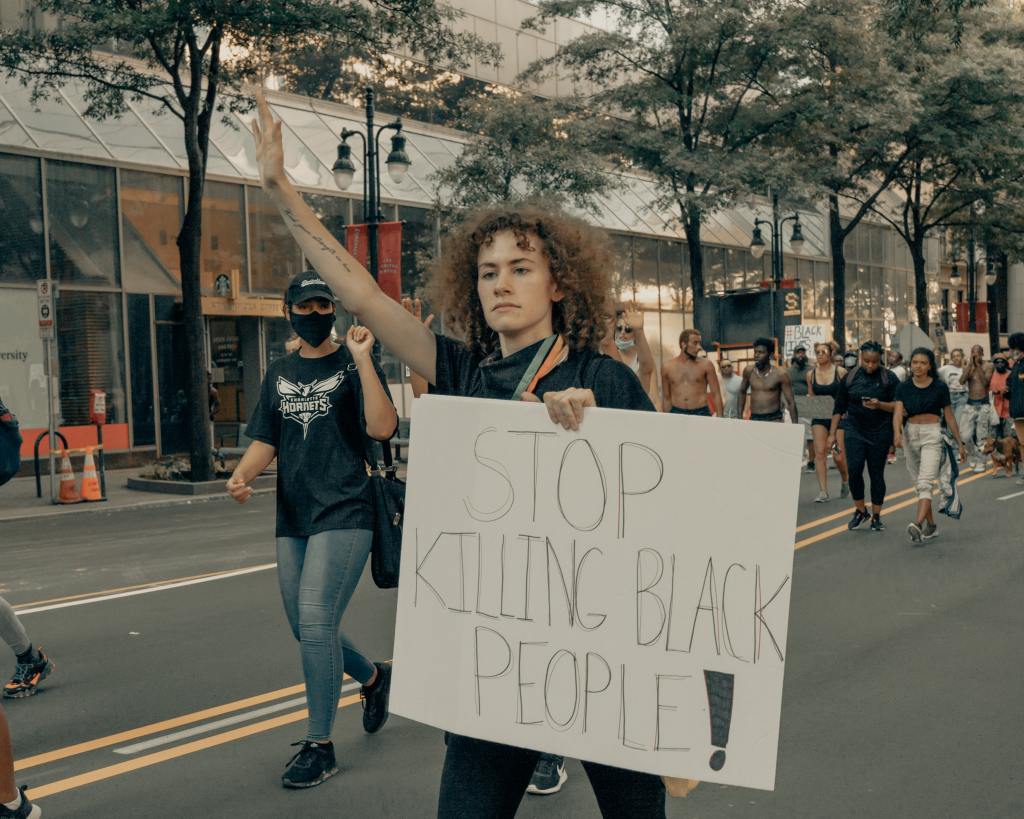
Ignorance, thoughtlessness and apathy are only three of the terms that come to mind when I think about the implementation of the Black postboxes, four across the country: in England, Wales, Scotland and Northern Ireland, respectively. However, in the past few years, particularly, the last few months since the pandemic, I think many of us, regardless of our ethnic backgrounds have had enough symbolic gestures to last a lifetime – from ‘clap for our carers’ (albeit enjoyed by some but really of no real substance) to those female traffic lights. In this epilogue of George Floyd, with a resurgence to decolonise the curriculum, some brightspark thought four Black postboxes would be a good idea to commemorate Black History Month this year.
Postboxes aside, those that they are commemorating have a right to be remembered, though “a bit of copout” in my opinion, and a very easy escape from using these postboxes to discuss any of the less ‘acceptable’ histories… i.e the Cardiff Race Riots (1919) or the Bechuanaland Chiefs (1895)
Black Lives Matter has left many of us in our communities nationwide in deep reflection and introspection, that we really do not know the legacy of Black contributions to the world, particularly to Britain. Walter Tull and Mary Seacole are known, particularly the latter. (Sir) Lenny Henry (CBE) is very safe and indicative of the “good Black British history” that is easy (not too political, not too angry). What these three have in common is their seemingly “non-threateningness”, which fits patrial British depictions of Black people, as if it was pulled from the reels of one of those Old Hollywood films – versions of Black ‘tolerated’ by the ‘great and the good.’
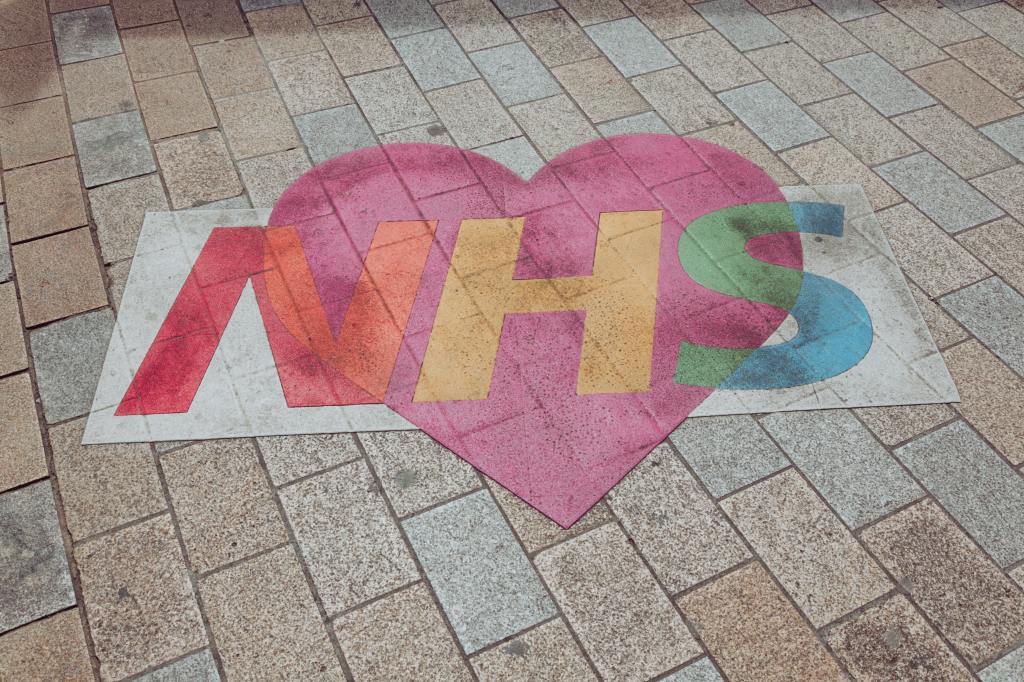
In the thick of the biggest anti-Black racism movement in history, rallied behind the message of “stop killing Black people”, we are subject to more nonsensical symbolic gestures, virtue signalling and performative allyship.
Embedded in the recommendations made in the Wendy Williams Windrush Lessons Learned review (2020) into the Windrush Scandal, included a critique on the lack of institutional memory pertaining to the British Empire, the history of inward and outward migration, and the history of Black Britons. She further talks about an unwillingness to learn from the past, utilise experts, or engage communities. These postboxes are indicative of institutions that think they know it all, and is reminiscent of the Home Office’s blunder with the chicken boxes raising awareness of knife crime.
In Alt History, Professor David Olusoga says “Black people have been living in this country for centuries and the story of the Black presence in the United Kingdom goes all the way back to Roman times.” There are over 100,000 postboxes in the UK and the use of just four is really a tokenistic handout at best. Imagine commemorating the entirity of Black British history like that when this history goes back to Roman times – from Ivory Bangle Lady (middle-class Black woman living in 4th century York) to Quintus Lollius Urbicus, Governor of Britain in 139-142 CE suprervising the construction of the Antonine Wall in Scotland (Adi, 2019: 4).

In four postboxes, the ominous “they” are telling us that Black lives still don’t matter and they are happy with that. The Black nurses that saved the NHS post-WW2; Black soldiers that fought in WW1/WW2 and at Trafalgar; the Black enslaved that died on plantations to give Britain the British Museum and many national trust homes; the lawyers, doctors and civil servants during the interwar years; the Black people that resisted and rebelled against colonial power at every chance; the Black Tudors in the time of Henry VIII; and the Afro-Romans in Beachy Head and South Shields, and those that stood vigil atop Hadrian’s Wall for the best part of 350 years.
In a country where Black people have been present and contributed to some of the most significant parts in British history… let’s give them four postboxes and pat ourselves on the back… I guess you can say I am fuming and I am bitter.
Referencing
Adi, H. (2019) In: Adi, H (ed.) Black British History: New Perspectives. London: ZED Books, pp. 1-14.
Home Office. (2020). Windrush Lessons Learned. (Chair: Wendy Williams). London: TSO.
Share this:


Walter Tull has become a token for the Black history of sports, we can do more
After the murder of George Floyd in May 2020, Sky Sports did a segment on racism, using testimony from veteran West Indies cricketer Michael Holding and former-England women’s cricketer Ebony Rainford-Brent. Whilst the story of racism and West Indies cricket is known to me through films like Fire in Babylon, the inclusion of Brent, showed me how little media attention women’s sports receives, particularly cricket. This is still a man’s world, even when men and women have been victims of the same pandemic of racism.
When I look at the history of sports in England, the inclusion of women is presented as a new phenomenon, despite a 1921 ban on women’s football by the FA in England that lasted decades. A ban on women’s football matches taking places on pitches owned by the Football Association. Institutional violence in sports in the 1920s. Furthermore, is there a Black women’s history here too? I have heard whisperings of an Emma Clarke of the 1890s who may be the first Black woman footballer. Interesting indeed.
Men’s football (and sports), also however, go back over a hundred years. Football has been the go-to for stories of racism in sports and the story of Walter Tull has almost become folk tale and a token symbol of racism in football for Black History Month campaigns up and down the country. Walter was born in Folkestone, Kent, in 1888 and went on to have a glowing career playing for both Tottenham Hotspurs and Northampton Town (Cobblers). Additionally, he was the first mixed-race officer of African heritage in the British Army. At Northampton in 1911, he would have
started under Herbert Chapman – “a manager sympathetic to the additional pressures faced by the few players of colour in the professional game” (Vasili, 2010: 102).
Whilst Walter Tull has been the token for examples of men of colour in team sports, historically, he by far wasn’t the only the Black or Brown player, in late Victorian early Edwardian Britain. Unknown to many, looking at how his story is told in popular consciousness, he was also an avid cricketer and was one of many men of colour that played during this time. One of the big fish of Victorian cricket was K. S Ranjitsinhji, “a thin-built Indian prince who used his willow bat and body to produce fleeting moments of wonder and lasting memories of beauty” (Vasili, 2010: 127).
Vasili also writes of English-speaking Caribbeans playing cricket in England. We must remember this contradicts populist memory of Caribbeans first coming to England in 1948. In early Edwardian Britain, there was a thriving population of Black middle-class doctors:
“Dr John Akindor played for an amateur club in London, as did Dr James Jackson Brown, for the London Hospital. The pioneer professional cricketer was St Vincent-born Charles Augustus Ollivierre, who arrived in England with the West Indies cricket team in 1900. […] According to Jeffrey Green in Black Edwardians, he holds the distinction of being the first African-Caribbean West Indies international to play county cricket”
(Vasili, 2010: 127)
With the existence of other Black and Brown sports players, with their accomplishments, I would argue the constant parading of Walter Tull is problematic. His story is an achievement in the face of adversity but it offends me that our schools do not all look past his story at other Black/Brown sports players in late Victorian/Edwardian Britain. We also know of a Manchurian James Peters, playing rugby for the England team in 1907 and 1908. This narrative in Britain goes as far as there was enough for them to make an argument, the constant focus on Tull is without merit:
“African-American racing cyclist Marshall Taylor beat British and continental opponents in 1902; South African boxer Andrew Jeptha won a world title in 1907; and ex-slave Bobby Dobbs fought in Britain 1898, returned in 1902 […]” (Vasili, 2010: 129).
While today we have Black boxing champions like Anthony Joshua, the legacy of Black pugilists goes back to the 18th century in Georgian Britain, where men like Bill Richmond would be enticed by Britain’s boxing culture, not before “he began his independent life in Britain serving as an apprenticed cabinet maker” (Olusoga, 2017: 98). It was later in life he starts his rivalry with Tom Cribb. In a sport that made the careers of Black activists such as Muhammad Ali, “not only did early pugilists fight without gloves, but practices outlawed in modern boxing, such as shoulder-charging […] were all regarded as legitimate tactics” (Williams, 2015: 63).
Now, in this time where many celebrate Black excellence, the common argument is there are not enough positive Black male role models in history for young Black boys today because Black British history is one enveloped by slavery and immigration. But the existence of Black sports players – those that came here and those that were born here – tell stories of free Blacks, ex-slaves and their descendants that are part of British history and succeeded, from football and rugby to athletics, cricket and cycling.

Positive Black role models for Black men today are there in British history books. Simply, they are needles in haystacks, on the outside of the frame as something “other” or “different – not seen as worthy of academic scholarship or interrogation. However, those interested only need to make the effort and look for it. We cannot be what we cannot see and my references also speak to a profession (History) that is dominated by (white) men and in its lack of diversity is an indictment on the industry at large.
Black men’s (hi)stories in sports go back 150 years. Yet, what about the Emma Clarke and Rainford-Brent characters of today, for young Black girls that want to see themselves? History is written by the conquerors, not the conquered, and the conquerors, even in sports, are almost always men.
Referencing
Olusoga, D (2017). Black and British. London: Pan Books.
Vasili, P (2010). Walter Tull, 1888 – 1918: Officer, Footballer. London: Raw Press.
Williams, L (2015). Richmond Unchained. London: Amberley.
Share this:


A commuting student and how to be as organised as possible

As a commuting student, I have a very different experience to most students. Many go to uni to get a sense of freedom away from their parents and away from their hometown. I knew this was not something for me. I had no reason to want to get away, I have a job and friends around me that I am not ready to leave.
I would say most students think that those of us who commute are not experiencing a sense of freedom, however I found the opposite. I would feel more trapped being in student accommodation and not having the freedom of leaving whenever I pleased. Keeping university and my home life separate meant my life didn’t really need to change that much, compared to the traditional student.
For me, university is a part of my life, not my whole life. This balance was much more manageable for me. I wouldn’t have been able to make my whole life about uni because that is not who I am. Completing my assignments in a quiet place at home, with my dog by my side was much more appealing to me than being in halls surrounded by noise and distractions.
As I have said, I was not ready to leave my job and all the friends I have made there over the years. Without my job, I wouldn’t have the freedom that I do. My job pays for my car and that is my lifeline when it come to getting anywhere. I need it to get to uni and to get my education.
I have really enjoyed the balance of university and home life. However, I can see the appeal of it, it’s just not something for me. I couldn’t imagine moving away from my parents and my little dog. I didn’t want university to change my day-to-day life much and it hasn’t.
As a commuting student, to some it may seem difficult to keep motivated as you are surrounded by home comforts and home life. I do believe you have to be very disciplined with yourself, especially when you have a deadline due and you can’t join in with a family night. Although I did try my best to get assignments done as soon as I could for the sake of this and if I was desperately needed at work. Although at sometimes I felt swamped by assignments and overtime at work, if you manage your time right, in the end you wonder why you even worried yourself about it.
Another way I keep my uni and home separate is by using my uni laptop for assignments and society related tasks. I do not use it for anything else and this helps me keep my two lives completely separate. This way I never get them mixed up and confused. My uni email strictly stays on my uni computer, which keeps it as only a part of my life and not overtaking it.
I would say to anyone wishing to commute to university to go for it. It’s the best thing I have ever done. But you need to remember to keep uni separate and make sure it doesn’t swamp the rest of your life. In my house, uni consists of one shelf and a desk. And if you are fortunate enough to have your own car, it makes a world of difference as you can come and go as you please from uni, with no strings attached.
To anyone beginning their studies, I would say start prepping your assignments before you think you should. Get ahead and then you’ll never fall behind. If you have a day where you just want to take some time to yourself, you will be able to as you have already prepared in advance. If you let it slip and fall behind with assignments, you have no space to breath when it comes to needing a break. I think this may be easier for commuting students due to the lack of distraction, but even in halls, separate your time according to how much work you have to do and if you need to take time out for yourself.
Overall, I would say to those commuting, be organised, be on time and get ahead. And to those in halls, ignore distractions when you have deadlines to achieve, be organised and make time for yourself.
Share this:


It’s Autumn, and my hometown is on fire. #BlackenAsiaWithLove
It’s Autumn, and my hometown is on fire. [Theme song: When You Gonna Learn, by Jamiroquai]
Jay Kay sang: “Yeah, yeah, have you heard the news today?”
Me: Yeah, yeah, my hometown is on fire.
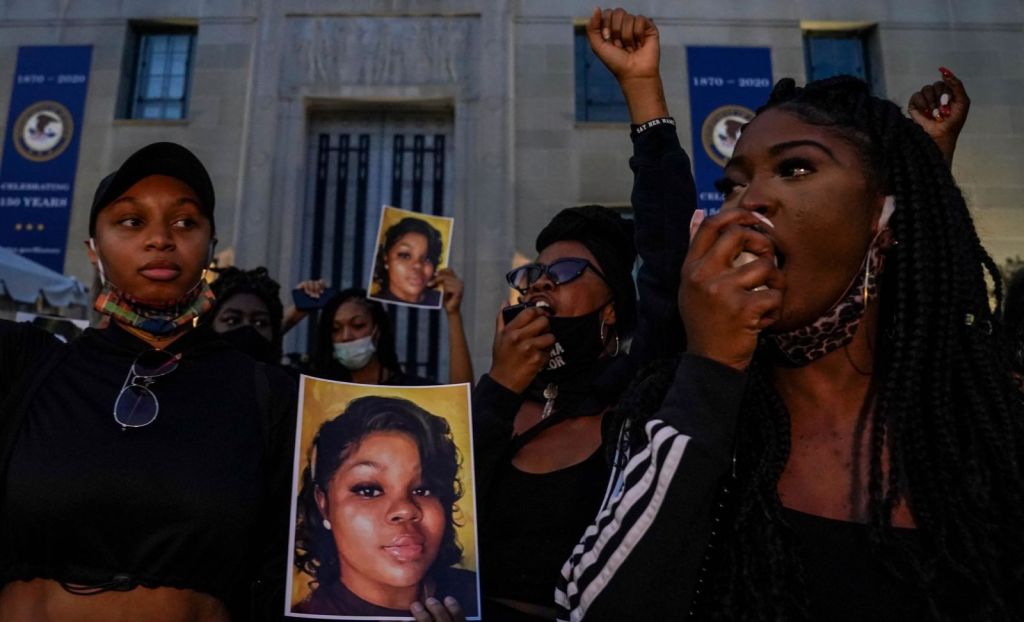
My hometown is on fire. In March, SWAT-armed officers served a warrant, and an EMS worker ended up dead. The deceased was Black and poor, and lived in the poor Black part of town. The officers adhered to the codes of the ruling caste. The media covered the death matter-of-factly. The tag line is: “Breonna Taylor was an innocent person in her own home.” So, by extension, all the other victims were not innocent, and therefore deserved to die. Only Jesus’ death warrants defense…and outrage – according to the actions of the folks who James Baldwin called those who believe themselves to be white. So, Breonna, George Floyd, all of them…these were justifiable killings? Yeah, yeah, casualties of the race war where white supremacy has always had the whip.
My hometown is on fire. The mayor put the city on lockdown days ahead of the grand jury’s announcement, not Corona. Trucks block traffic now; windows were boarded up days ago. All to announce that (only) one of the shooters would be indicted, and on the lower end of charges. The officer was initially denounced and fired, and (only) now charged with “wanton, reckless endangerment.” None of the charges relate to Breonna’s death, so that’s exactly what the courts won’t be able to address.
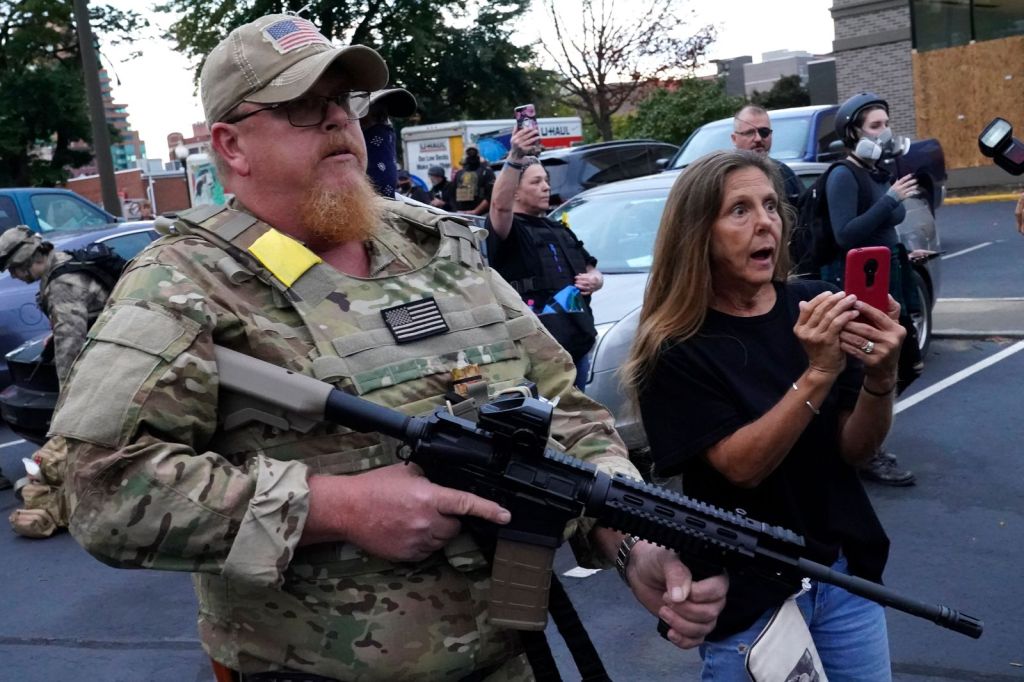
My hometown is on fire. Locals who believe themselves to be white char the memory of the victim, each victim, individually. For Breonna was not perfect, nor was Trayvon, nor George Floyd, nor Sandra Bland, nor countless others … all just human. Not even Amadou Diallo was a perfect-enough-victim for ‘those who believe themselves to be white’. Each family of each victim has had to fight the system individually, as if in a vacuum. Little attention to this incident was paid until the bodies mounted around the country. Everything changed when people of all races marched together, looters rioted and property was lost. Only then did “voters” take notice.
My hometown is on fire. The police have never been held accountable for such deaths. Apparently, the deceased liked bad boys, and was a victim of circumstance. White citizens – the so-called “voters” – resist seeing the systemic causes to these deaths. Just a few weeks ago, after MONTHS of national outrage and protest, the police reached a 12-million-dollar settlement with Breonna Taylor’s family. Every Kentucky tax payer will pay for our collective neglect. My hometown held it down, made the world say her name.
My hometown is on fire. Say her name. “Say her name,” is now a moniker for another fallen Black body. Where whites see no systemic problem, there can be no systemic solutions. Please, “stop it going on.”

Share this:


There is a Black history of thought and innovation that shows Afr-I-Can
I found as a fresher that ‘when life gives you lemons, make lemonade.’
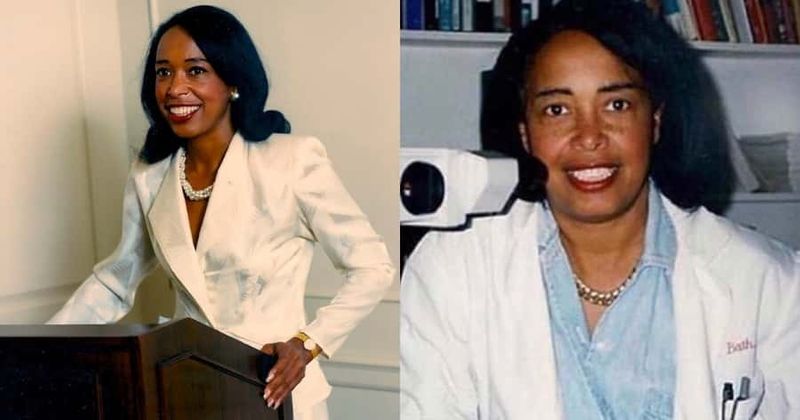
These same individuals, women that are smart and innovative are told by authority figures, including academics, that they are lazy and don’t apply themselves – are running businesses out of their halls. Black women sent white male astronauts into space in 1969; Black women also invented CCTV and laser cataract treatment. Knowing this, in the face of a double-figure Black awarding gap at UK universities (Barradale, 2020), I was not surprised to see they were running businesses out of their halls, with online shops – cake businesses, clothing alterations, and the big one – wigs and weave, and hair products.
Currently, I know a good many Black women turning lemons into lemonade. Through the Coronavirus pandemic there are Black entrepreneurs, like their white counterparts, trying to make a living, make money and get ahead. Yet, their white colleagues won’t be judged for it. However, the “motivation to create a business can spring from the most interesting of places, and for a variety of reasons” (Uviebinené, 2019: 157).

For the women I met when I was an undergraduate student and then as a member of university staff, it was a way to escape the colonising imperatives of whiteness within the institutional frameworks of Britain. Moreover, that despite historic stereotypes of laziness still being on the ascent for Black people, Black women “are achieving additional qualifications and gaining work experience” (ibid). The students I knew were driven and inspiring, graduating and then going on to run businesses, using Instagram and social media as a tool for economic prosperity.
Seeing many Black women in business it looks incredibly strenusous, as systemic misogynoir permeates all of society – a form of discrimination specific to Black women where race and gender both play roles of bias (Bailey, 2010).
The concept of Black successes of both women and men in a society that is institutionally racist is an achievement of monumental proportions, as neoliberalism runs rampant. Bhopal (2019) argues that “within a neoliberal context, policy making has failed in its attempts to champion inclusion and social justice, and in doing so has further marginalised the positions of black and minority ethnic groups.” She discusses that policy making in its current form affirms the position of white people at the expense of those from various Black and Brown backgrounds, in a society where individuals are privileged for being white over those who are not.
White privilege exists and the fact there are successful Black female businesspeople shows the system designed to subjugate the Black race’s success and humanity has failed. In these still very white spaces, do the Black entrepreneurs that break the glass ceiling allow people up behind them, or do they rescind the ladder?
Do they put their money where their mouth is to help their people? Stormzy heads publishing house #MerkyBooks, priding itself on platforming Black authors. Additionally, he funds Black students to go to Cambridge every year. Do those “allowed” to enter Buckingham Palace to be named Member of the British Empire [MBE] see themselves as Black, or does the “acceptance” of the establishment allow them to forget where they came from? I wonder if money and fortune give some Black business-owners a blinkered mindset to concepts like community and togetherness.

Modern questions of success and business aside, let’s take a step back and reflect on the past. Black success in business or any other industry is not a new concept. Simply, it is treated as a new phenomenon within the colonial gaze of the white western world:
“When early European – let’s be generous (always stay gracious) – ‘adventurers’ arrived in West Africa they were astounded by the wealth, abundance and beauty of the land and the people. We know by 1300 AD the Yoruba people had built walled cities surrounded with farms. They had developed extensive trade and exchange networks … They bartered cloth and kola nuts for the goods they needed and desired. There was a lively exchange of ideas, arts and technology, with institutions such as the Islamic University in Timbuktu. By the fifteenth century, the Yoruba people had established the Oyo Empire, located in what is today western and north-central Nigeria.”
(Dabiri, 2019: 65)
Whilst the students I met as an undergrad and then as a staff member were anomalies in accordance to Eurocentric stereotypes of Africans, when you look into the depths of African history one will find that people of the continent are smart and hardworking and innovative and gracious and protective, and so much more, and always have been. In this history, we will begin to understand how Black British people today relate to themselves. This first begins with gaining “a clearer understanding” of other cultures “that is not warped through the biases of colonial documentation” (Dabiri, 2019: 36).
As seemingly corporations want to diversify their workforce and more Black and Brown people seek to go into business, this means having conversations of race and culture away from the proximity of whiteness. When businesses take an anti-racist approach to their everyday, including culture and history, they will see their income increased tenfold.
Referencing
Bailey, M. (2010). They aren’t talking about me… — the crunk feminist collection. Available from: http://www.crunkfeministcollective.com/2010/03/14/they-arent-talking-about-me/
Barradale, G. (2020). Revealed: New stats show how wide the black attainment gap is at your uni. Available from: https://thetab.com/uk/2020/06/17/revealed-new-stats-show-how-wide-the-black-attainment-gap-is-at-your-uni-162142
Bhopal, K. (2018) White Privilege: The Myth of a Post-Racial Society. Bristol: Policy Press.
Dabiri, E (2019). Don’t Touch My Hair. London: Allen Lane.
Uviebinené, E and Adegoke, Y (2019). Slay in Your Lane. London: 4th Estate
Share this:


Standing under the stars with you. #BlackenAsiaWithLove #
Standing under the stars with you.
This is the moment I’ve waited for for so long.
For so long I’ve longed to be with YOU.
To be with you, to just be here, standing underneath the stars is like heaven and earth in one.
It feels like heaven on earth, so softly touching your skin.
Touching your skin, feeling your breath against my face, there is nobody like you.
I LIKE you… a lot.
This is the moment I’ve waited for for so long.
You and I underneath the stars.
Our lives must be as big as the universe for us to have crossed paths.
I can’t believe that I crossed paths with the YOU.
I want to cross your path every single day from now on.
From now on, I want to be with you.
This is the moment I’ve waited for for so long.
I have waited an eternity to see the stars with you.
To see the stars with you feels like the Earth, the Sun, the moon AND all the planets aligning.
The planets must be aligned to night as good as I’m feeling.
I’m feeling good, with every twinkle our lives become more crisscrossed and intertwined.
Crisscrossed and intertwined so much a mobile phone can’t capture this moment.
Please, be here, now, I beg you.
Share this:


Is fake news a crime?

Perhaps this entry needs to start with a declaration; there is no novelty in the term fake news. In fact, fake news is not a term but a description. Odd to start with something as obvious as this but given the boastful claims for those inventing the (non) terms is only logical to start with that. It is true that in news, the term that usually relates to deliberate dissemination of information, is propaganda. It aims at misinformation and as it is reproduced over and over it can even become part of indoctrination.
The 20th century introduced the world to speed. Mass consumption, marketing and two world wars that devastated countries and populations. In the century of speed, mass media and the availability of information became a reality. The world heard, on the radio first and on the television later, world leaders making statements in what seemed to be the spectacle of politics. Interestingly some countries, political parties and professionals realised the value of controlling news, managing information. The representation of positions became an integral part of modern politics. Information became a commodity and the management of the news became big business with social implications.
When we talk deliberate misinformation, we are probably reminded of the Third Reich and the “ministry of public enlightenment and propaganda”. Even now media analysts consider the Nuremberg Rally a clear example of media manipulation and deliberate misinformation. This however was only one of many ministries around the world set up for that purpose. In some countries even censorship laws and restrictions emanate from a relevant ministry or department. The protection of the public was the main justification even when the stories promoted were wrong or even fictitious.
The need to set up some standards on journalism became apparent and awards like the Pulitzer Prize became ways of awarding those who hold journalistic values high. National broadcasting corporations became the voice of their nation and many adopted the voice of neutrality. Post war the crimes of the Nazi regime became apparent and the work of the propaganda machine in contract demonstrated how easy it was to misinform whilst committing atrocities. The United Nations even took a resolution on the issue “Condemns all forms of propaganda, in whatsoever country conducted, which is either designed or likely to provoke or encourage any threat to the peace, breach of the peace, or act of aggression” General Assembly, November 3 1947.
Unfortunately, this resolution remains mostly a paper exercise as the ideological split of the founding members led to a war of attrition of who tells the truth and who is using propaganda. Since then mass media became part of everyday life and an inseparable part of modern living. News became evidence and programmes presented decisive information in the court of public opinion. Documentaries claimed honest realism and news programmes set the tone of political and social dialogue.
In 1988 Chomsky and Herman in Manufacturing Consent: the political economy of mass media, proclaim that propaganda is not the reserve of a totalitarian state but of all states in their attempt to maintain order imposed by the establishment. Under this guise misinformation is part of the mass media’s raison d’etre. It can partly explain why the UN resolutions were not followed up further. So far, we are considering the sociological dimensions of news and information. Nothing thus far is clearly criminological or making the case for criminalising the deliberate misinformation in the news. (interestingly, the deliberate misinformation of a consumer is a criminal offence, well established).
One can ask rhetorically if it is so bad to misinform, spread fake news and manipulate the news through a systematic propaganda process. We presume that most citizens can find a variety of forums to be informed and the internet has democratised media even further. The reality however is quite different. People rely on specific sources even when they go online, finding voices that speak to them. In some ways this kind of behaviour is expected. Nothing wrong with that, is there? Back in the 1990s a radio station in Rwanda was talking about cockroaches and snakes; this led into a modern-day genocide, a crime that the UN aimed to extinguish. In the early 2000s the western world went into war on reports and news about weapons of mass destruction that did not exist, leaving thousands dead and millions displaced. In the mid-2010s a series of populist politicians got into office making claims on news, fake news, utilising their propaganda machine against anyone who tried to take them to account. More recently people, having felt deceived by mainstream media, do not believe anything, even the pandemic. The difficulty in critically evaluating information is obvious but it is also obvious how destructive it can be. In short, yes fake news should be a crime, because they cause lives in so many ways. Question is: Can we differentiate the truth from the fake or is it too late?
Share this:

Standing under the stars with you. #BlackenAsiaWithLove
This is the moment I’ve waited for for so long.
For so long I’ve longed to be with YOU.
To be with you, to just be here, standing underneath the stars is like heaven and earth in one.
It feels like heaven on earth, so softly touching your skin.
Touching your skin, feeling your breath against my face, there is nobody like you.
I LIKE you… a lot.
This is the moment I’ve waited for for so long.
You and I underneath the stars.
Our lives must be as big as the universe for us to have crossed paths.
I can’t believe that I crossed paths with the YOU.
I want to cross your path every single day from now on.
From now on, I want to be with you.
This is the moment I’ve waited for for so long.
I have waited an eternity to see the stars with you.
To see the stars with you feels like the Earth, the Sun, the moon AND all the planets aligning.
The planets must be aligned to night as good as I’m feeling.
I’m feeling good, with every twinkle our lives become more crisscrossed and intertwined.
Crisscrossed and intertwined so much a mobile phone can’t capture this moment.
Please, be here now, I beg you.


 Thoughts from the criminology team