

Time to meet our newest colleague: Jessica James

It is quite difficult to write an introductory blog, introducing yourself to new, current and Alumni Criminology students at UoN when you have been there for the past 8 years as either a student or member of staff. What is particularly difficult is figuring out where to start: how do I (re)introduce myself to students, both past and present? What do students want to know? What am I willing to share? What follows is a brief overview of my own journey as a student and with the UoN, as well as a some ‘fun’ (I use this term very lightly) facts about me.
I began my criminological journey in 2012 at the UON. I lived in halls, and had no previous knowledge of anything criminological (or so I thought). I had studied Philosophy and Ethics at A-level which proved helpful throughout my degree (and life in all honesty), but I had not studied psychology or sociology before. I don’t have the fondest memories of year 1; it was all quite overwhelming and A LOT of information to absorb and try to make sense of. And in all truthfulness my grades for the first year were not great (by my standards at least). I think I had feedback from every assessment throughout that first year telling me to check the Harvard Reference Guide! And thankfully in the summer between year 1 and 2, I did check the Guide, in fact I studied the full 100 odd page guide, and never looked back (well occasionally).
Year 2 I decided I was going to get serious about my studies, and serious I got! I didn’t miss a session, I read pretty much everything on the reading lists for my modules and found my voice in a number of seminars. I would say that in comparison to year 1, I really enjoyed my second year of Criminology, especially the placement (yes: even I have completed the placement report and presentation). And my grades reflected the commitment, passion and seriousness which I had applied.
Year 3 was pretty similar to year 2, although the stress levels were heightened. I loved my dissertation, which was an empirical piece on single parenthood and fears around juvenile delinquency. I also loved all the modules I took in year 3, which I cannot say the same for the previous years (sorry team)! Year 3 is when I realised that I would never be bored in Criminology. That is not to say that I do not find some topic areas less interesting than others, or that there are not some theories or perspectives that I do not agree with. But they are not boring (although some topics areas are pushing it). So in one way or another I had decided that my academic journey in Criminology would not end after graduation. And it didn’t.
I became an Associate Lecturer the September after I graduated, and have been on True Crime and Other Fictions and The Science of Crime and Criminals since that first year. I have also led seminars in Research Methods for Criminology, and taken lectures for Violence: From Domestic to Institutional. And basically I never left!
Alongside my AL role, I have completed my MSc in Criminology from the University of Leicester (would have done it at UON but they do not run one: cough cough). I had assumed I would continue my focus on juvenile offending in some capacity, but no I took an entirely different route to one I was familiar with and completed an empirical dissertation on The Prevalence of Rape Myths. Going forward I will hopefully do a PhD, and I currently envisage it being within the realm of Violence Against Women (VAW): but who knows?
In terms of ‘fun’ facts about me, you can know the following:
- I have two house rabbits who are both 6 years old, and have chewed every note book/pad I have ever owned. If the connection goes via online teaching, they might be responsible
- I adore pretty much all of the Disney animations, yes even the outright racist and misogynistic ones
- I eat chocolate every day without fail: pretty sure my body would just stop without it. The same goes for coffee
- And shocker: I love to read!
So to all new Criminology students, I look forward to meeting you (albeit virtually for the time being) and to all returning students (most of whom I shall have met in some capacity) I look forward to meeting you again! And finally I look forward to the next stage in my academic journey as a Lecturer in Criminology.
Share this:


More Grotesque Black Death #BlackenAsiaWithLove
Each time I turn on the news I see more black death.
It’s grotesque. In my country, ‘Merika, there are peaceful protestors all around the country combatting police violence. Initially, when George Floyd was murdered, these peaceful protests spread across the world, as folks rose in solidarity for peace against white supremacy in America. Many more Black bodies have died in dubious police circumstances since. In the popular rhetoric, sadly, the peaceful protestors are held to account for the violence sweeping our streets. One of Dr. King’s major battles was to convince a people who’d been born into a nation of violence, how to be peaceful; we are a nation born of violence. Dr. King believed and taught that “non-violent resistance… [is] a courageous confrontation of evil by the power of love” (King, Stride, 80). That was just to boycott the local busses in the 1950’s. Working people choosing to spend their hard-earned money as they pleased, and still Jim and Jane Crow showed up to verbally and physically harass each one of them. By the 60’s Black university students worked in solidarity with students of all colors to teach, preach and practice non-violent civil disobedience.

It’s in bad faith to focus on the rioters and overlook those attempting to exercise their first amendment rights. I say “attempting,” because even the lone Black woman in Kentucky house of representatives, Attica Scott, can be arrested in our hometown for peacefully protesting #JusticeForBreonnaTaylor, #AtticaScott4Ky. Without the 1st amendment, there’s no second. And let’s not forget all those anti-mask protestors that showed up at city and state halls around the country – in 2020 – armed to the teeth, so-called peacefully protesting any ordinance to protect ‘us’ from the spread of CoVit. How peacefully will the po-po resolve this conflict instigated by their own violence? The white supremacist way, of course. Look at 45, head hood and chief of their klan. “’Cause God’s stopped keeping score,” as George Michael sang.
Back then leading the cause of segregation, we had white supremacists like 4-term Alabama governor George Wallace, and Birmingham public safety commissioner, Bull Connor, (in)famous for sending in fire hoses and attack dogs against children peacefully protesting. Right now, there are all kinds of icons named after ole George. Just a few years ago, I went to my little cousin’s high school basketball game in Tallassee, Alabama, and the public high school gym was named after good ole George’s wife, who’d held onto his governorship for a bit because law forbade him from serving consecutive terms. It’s as if only a few strong survivors believe us when we speak about how white supremacy has its hooves on our necks. It tuns out 8 minutes and 46 seconds changed that.

Read, will you, what good ole George said in a 1986 interview about sending in troops to squash the peaceful protests in Birmingham, after those four little girls got bombed in the 16th Street Baptist Church, on a Sunday in September 1963. As you’d expect, no one was held to account. The good governor says:
“I sent Colonel Lingo there because they were, there was some trouble there, we tried to maintain law and order, we’re not trying to maintain segregation there, it was a matter of law and order, and uh, as I recall that nobody got hurt in any of the things, in the demonstrations, uh, except that whoever those evil mean, minded men were who had something to do with the blowing up of that church.”

Sound familiar? Sounds like 45. Like then, today’s protestors are regularly intimidated and assaulted by the police and troops. This too often seals the cycle of violence instigated by the police, who are further instigated by the commanders and their chief.
It’s grotesque, and understandably, even more grotesque to look at, if you’ve rarely looked at it before, tucked it away, and not thought about it because it did not impact your daily life. “It’s hard to love, there’s so much to hate,” and you sang along. You knew it was happening, but your eyes betrayed you, and because you didn’t see it in your neighborhood, in your schools and streets, you let your faith in humanity go.
You let yourself believe that we, Black people, did something to deserve to be the nightly feature on the news: Weather, sports, celebrities, national headlines, and the local Black criminal; that’s literally fed into our homes each night on the news. And if you’ve been spending your time with Fox and ilk, then certainly you’ve been trained in a language that pits them against us, and posits losers and sinners against the righteous folks like you who are just trying to make it in this world. How could the Blacks live such a radically different existence? You lie to yourself and say that they can’t, that all the opportunities they lose are theirs alone. It’s all down to individual decisions, just like you. We each chose our own fates, right? There’s no system, and certainly no systemic oppression. F #MeToo, too, you say… at home with only the family and kids to hear. The kids repeat it at school, grow up and vote like that. They cycle repeats, whiteness is rendered, effectively, invisible. Only the Blacks are not acting right.

Share this:


Black Postboxes Matter; Black Lives Don’t
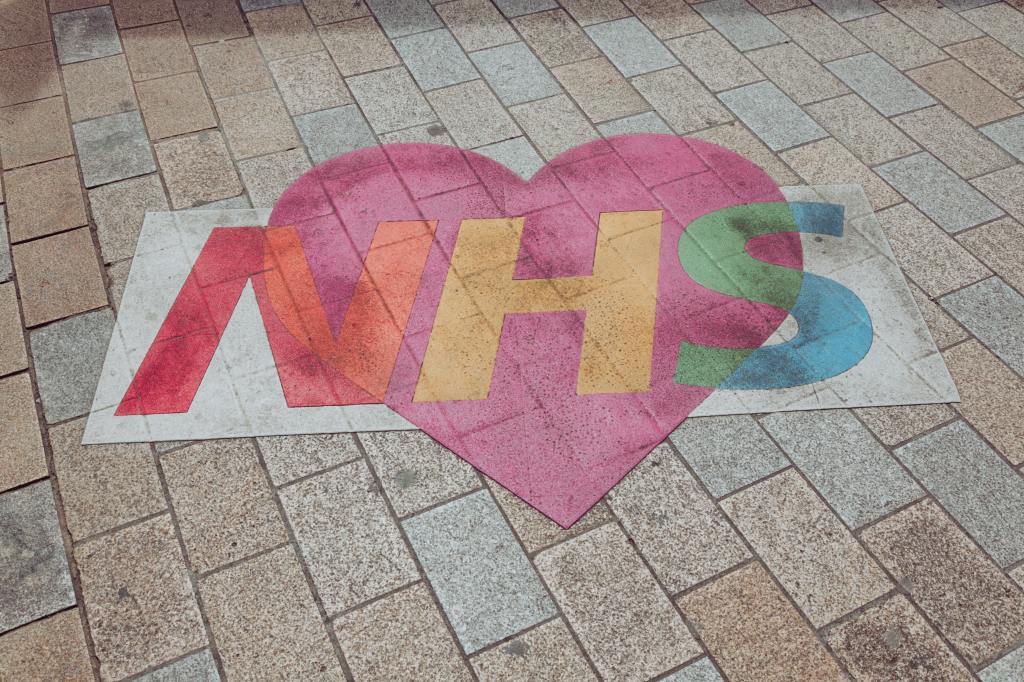
Ignorance, thoughtlessness and apathy are only three of the terms that come to mind when I think about the implementation of the Black postboxes, four across the country: in England, Wales, Scotland and Northern Ireland, respectively. However, in the past few years, particularly, the last few months since the pandemic, I think many of us, regardless of our ethnic backgrounds have had enough symbolic gestures to last a lifetime – from ‘clap for our carers’ (albeit enjoyed by some but really of no real substance) to those female traffic lights. In this epilogue of George Floyd, with a resurgence to decolonise the curriculum, some brightspark thought four Black postboxes would be a good idea to commemorate Black History Month this year.
Postboxes aside, those that they are commemorating have a right to be remembered, though “a bit of copout” in my opinion, and a very easy escape from using these postboxes to discuss any of the less ‘acceptable’ histories… i.e the Cardiff Race Riots (1919) or the Bechuanaland Chiefs (1895)
Black Lives Matter has left many of us in our communities nationwide in deep reflection and introspection, that we really do not know the legacy of Black contributions to the world, particularly to Britain. Walter Tull and Mary Seacole are known, particularly the latter. (Sir) Lenny Henry (CBE) is very safe and indicative of the “good Black British history” that is easy (not too political, not too angry). What these three have in common is their seemingly “non-threateningness”, which fits patrial British depictions of Black people, as if it was pulled from the reels of one of those Old Hollywood films – versions of Black ‘tolerated’ by the ‘great and the good.’
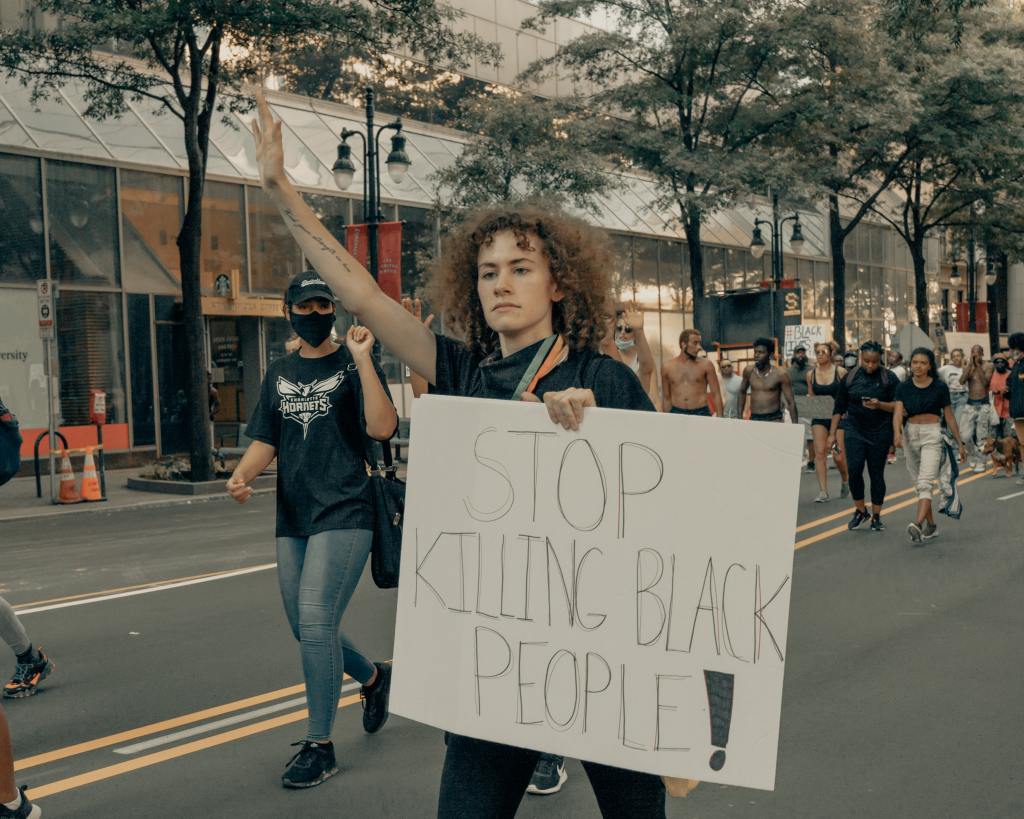
In the thick of the biggest anti-Black racism movement in history, rallied behind the message of “stop killing Black people”, we are subject to more nonsensical symbolic gestures, virtue signalling and performative allyship.
Embedded in the recommendations made in the Wendy Williams Windrush Lessons Learned review (2020) into the Windrush Scandal, included a critique on the lack of institutional memory pertaining to the British Empire, the history of inward and outward migration, and the history of Black Britons. She further talks about an unwillingness to learn from the past, utilise experts, or engage communities. These postboxes are indicative of institutions that think they know it all, and is reminiscent of the Home Office’s blunder with the chicken boxes raising awareness of knife crime.
In Alt History, Professor David Olusoga says “Black people have been living in this country for centuries and the story of the Black presence in the United Kingdom goes all the way back to Roman times.” There are over 100,000 postboxes in the UK and the use of just four is really a tokenistic handout at best. Imagine commemorating the entirity of Black British history like that when this history goes back to Roman times – from Ivory Bangle Lady (middle-class Black woman living in 4th century York) to Quintus Lollius Urbicus, Governor of Britain in 139-142 CE suprervising the construction of the Antonine Wall in Scotland (Adi, 2019: 4).

In four postboxes, the ominous “they” are telling us that Black lives still don’t matter and they are happy with that. The Black nurses that saved the NHS post-WW2; Black soldiers that fought in WW1/WW2 and at Trafalgar; the Black enslaved that died on plantations to give Britain the British Museum and many national trust homes; the lawyers, doctors and civil servants during the interwar years; the Black people that resisted and rebelled against colonial power at every chance; the Black Tudors in the time of Henry VIII; and the Afro-Romans in Beachy Head and South Shields, and those that stood vigil atop Hadrian’s Wall for the best part of 350 years.
In a country where Black people have been present and contributed to some of the most significant parts in British history… let’s give them four postboxes and pat ourselves on the back… I guess you can say I am fuming and I am bitter.
Referencing
Adi, H. (2019) In: Adi, H (ed.) Black British History: New Perspectives. London: ZED Books, pp. 1-14.
Home Office. (2020). Windrush Lessons Learned. (Chair: Wendy Williams). London: TSO.

 Thoughts from the criminology team