

Badlands: In Response to ‘a Racist and No Solution’

In reading @5teveh‘s blog, what immediately struck me is the personalness to it. When someone seemingly attacks a thing you have an attachment to, you will immediately to get defensive. So, Dr. Steve Hallam, now a Criminology lecturer after thirty-year career in policing now hearing different forms of “police are racist” will naturally feel something. Thinking “I was police” and still am. He may have retired but you can’t take thirty years of policing out of someone just like that. Is it fair to call The Police racist? I wouldn’t call it fair but what is true is not always what is fair. The Police use violent practices backed by policies that disproportionately impact Black and brown people.
I think there’s a lot of people right now saying “I don’t consider myself racist” and there’s more backlash to being called racist than the act itself. I’m not sure it is possible to be in the Police and not be part of what Macpherson called “canteen culture” (1999: 46), what I would call “club policing”– where if you’re in, you’re in. But if you’re out, you know you’re out. And police officers that remotely critique police practice in anyway are not part of the club. Compliance is your entry pass, which leads to how someone like George Zimmerman was acquitted after murdering Trayvon Martin. That despite being guilty, he was acquitted because he was club and American laws back “canteen culture” policing (Stand-Your-Ground Law).
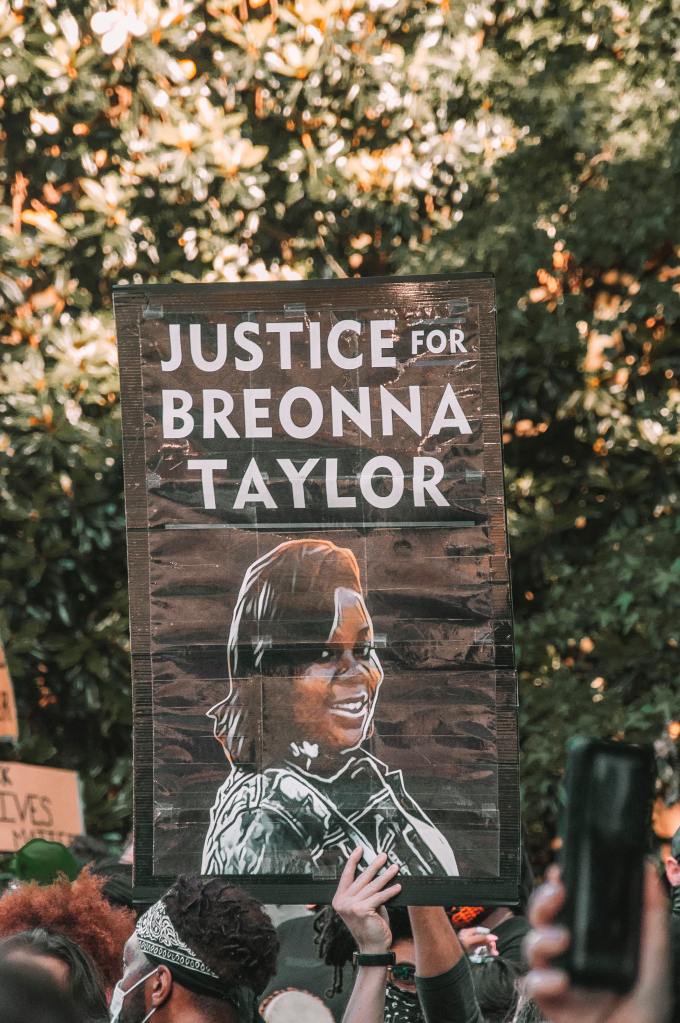
Steve asks, “why the label?” of police being racist. I respond with: as much as his experience of policing has been one where he doesn’t consider himself racist (nor do I consider him to be), The Police rather than police officers is racist. I think in making it about him, there is a fragility there. Not a “white fragility” where “white people have been “socialised into a deeply internalised sense of superiority” (DiAngelo, 2019: 2) but a natural reaction to challenged authority (past or present), as police. Since this concept breaks the boundaries of race, as Black police officers defend the badge before their blackness (as put by NWA in Fuck tha Police, 1988). I may not consider Steve a racist but I do believe that because we all came through the same systems in this country, racial prejudice does lie within him as it does within all people. It’s whether people act on it which turns it into racial discrimination (the act). When there are Black police that racially profile, what stops it being racism is their lack of institutional power in British society. As a white man who worked in a white institution, Steve’s whiteness would be the determining factor because his whiteness is backed by “the power of legal authority and institutional control” (DiAngelo: 2019: 20) separating Steve’s intent from the default power he has in society built in his own image.
From an outsider’s point of view, (though I may be naive), The Police seem to allow no room for juniors to scrutinise the bosses. Yet, senior officers can criticise the juniors. If a junior officer sees their boss acting with racial prejudice, the flawed mechanics in the structure would mean that officer could not in fact challenge their superiors without putting their job at risk, worse if they’re a woman. Policing: where egos can do as much damage as bad policies and where bosses are outside the remit of grassroots critique.

Policing is more than “bad apples”, it’s also a lack of accountability and room to enforce accountability, even to each other. That’s before we think about violent policies; and ill-thought out strategies like arming every Northamptonshire Police officer with tasers, whilst simultaneously trying to improve relations with Black and Asian communities and up diversity in policing. That’s before we think about the institutional racism and overt racism that makes the lives of Black and Asian officers that much harder.
I think in order to develop as well, Steve must think about specifically on how white people don’t live in a society where they have to think of themselves in racialised terms; in society Steve is simply a man, not a white man
He must come to terms that all human beings are varying degrees of prejudiced. Except when police are concerned, that prejudice is often transformed into racism (and violence), which is shown through numbers like 184 Black, Asian and Minority Ethnic [BAME] deaths in police custody (Inquest); or Black people are stopped at nine times the rate of white people (UK) in Northamptonshire (Stopwatch, 2018/2019) – or how over 40% of inmates in youth offenders’ prisons come from Black and Minority Ethnic [BME] backgrounds (Lammy, 2017) – or how Black people are four times more likely to be detained under the Mental Health Act (Gilroy, 2019).
Despite Steve saying that policing in the US is much different, we must remember our history. That race relations in the US is the brainchild of Britain. Colonialism left that behind, just as we left the same police structures in India after partition in 1947. You cannot talk about the history of America and not mention race or British colonialism. That includes how law enforcement treats its Black communities. I agree the British population taking on the US narrative is problematic. We need to write our own story and look at commonalities when they present themselves.
I further agree that over the years “institutional racism”, as popularised by Macpherson (1999) has become synonymous with saying all police are raicst. Especially, with my generation, where Stephen Lawrence is not in our popular memory. Mark Duggan is more our Stephen Lawrence moment and yet, I admit our race literacy needs a lot of work. Steve talks about his experience of students finding out he was once police. When I found out, I was in shock, that I liked him! I also have the same distrust of police his students have, because my family’s history with police is not a positive one.
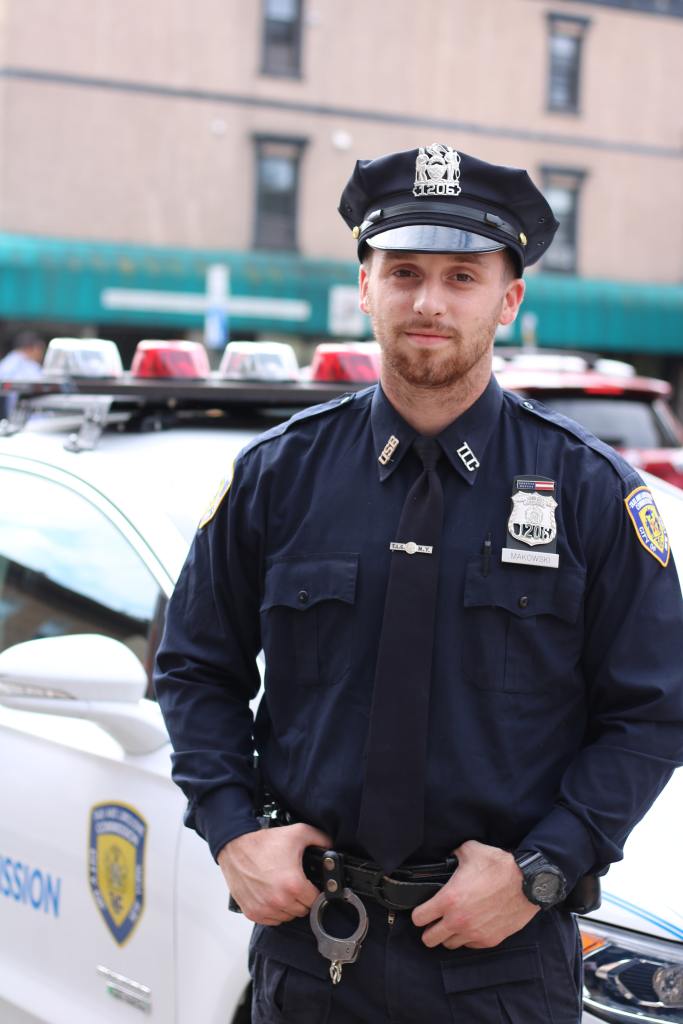
However, with a name like Stephen ‘Steve’ Hallam, I’m quite surprised I did not clock it sooner, as it sounds like it came straight out of The Bill! With Steve, I don’t see the ego or the attituide I see in other officers. Nor the inability to talk about race in policing. I just see a man who was once an officer and is astute enough to admit that the service is flawed, and in that I think he might be an anomaly. That’s a first for me, and that includes my introductions to Black British and British-Asian officers who refuse to acknowledge that you cannot talk about policing without stories of race. I understand Steve feels attacked by what’s going on. Yet, I would say this is nothing new. Black people as victims of police officers goes back to 1919 and the events surrounding the Liverpool Race Riots, where a Black man was lynched by a white mob at Albert Docks. It also speaks to riots in Notting Hill (1958) Detroit (1967) Brixton (1981) and Toxeth (1981).
I would answer Steve’s comment on police distrust and Black communities with stories about racism, as this is a tale blessed by history, in both this country and the United States of America. Whether we call them police, or slave catchers for the criminal justice system is another question. I think many of the answers lie in the history books and for people to truly investigate the relationship between criminality and race as a construct.
Watching A House in Time, David Olusoga shows me that history is more accessible than we think it is. It is fact-finding and contextualising; it is soul-searching and joining dots. It’s making links and telling stories. It looks a lot like journalism. Steve asks “how can community relations be fixed?” My response is, I’m not sure they can. Because they are not broken. The system was designed that way, a system that privileges certain people as “[…] white privilege is an absence of the negative consequences of racism… an absence of your race being viewed as a problem first and foremost” (Eddo-Lodge, 2017: 86) and this is no more evident than how The Police police communities of colour, regardless if that’s by Black or white officers.

Steve says ” […] most policing seems to take place in areas of deprivation where the disadvantaged are committing crimes against the disadvantaged” and it so happens you are more likely to be in poverty in Britain if you are not white [Institute of Race Relations, 2020]. Class issues exasperated by a racial prejudice endemic in British culture. A societal racism that I do not believe will be improved by legislation. Black skepticism to police, is under a wider umbrella of skepticism to authority bodies, since we have no reason to trust them. This is a skepticism evidenced by history: from colonialism to Grenfell to deaths in police custody to stolen DNA to Black and brown
people as labrats being experimented on by scientists; so, is it surprising why Black and brown communities are more skeptical of authorities, even now as COVID vaccines are being targeted at those very same communities?
Some of the answers to Steve’s questions about racist police may lie in stereotyping. However, the story of racism is deep-rooted in how race was made. Race is constructed, so in theory it can be unmade. Police are an easy target for racism because it is so public. And when there is a scandal, it really goes big. Every institution is racist, yet policing is so easy to scrutinise because it is wide open, rather than curricula in the education sector which quite evidently panders to a white supremacist model of knowledge.
Steve goes on to talk about his dissertation student that held bias against police due to bad experiences of racism. Steve says “policing is dominated by white males and despite recruitment drives to address the ethnicity gap, this really hasn’t been that successful. If it was meant to help solve a problem, it hasn’t.” Do police want to address these problems or simply want to be seen to address them? Virtue signalling 101, especially in light of George Floyd and the Black Lives Matter movement when it is now popular to be seen to be advocating for diversity, inclusion and anti-racist causes.

It is beyond reasonable doubt The Police are guilty of racism, but that is not exclusive to the boys in blue. It’s a symptom of a society that fosters a culture of race hate, and that goes back centuries. In Staying Power, historian Peter Fryer talks about the links between transatlantic slavery and the demonology of race, through influential racist writers and “Africans were not merely devilish, monstrous, ape-like, lustful, treachourous and given to cannibalism. They were also inherrently lazy: ‘generally idle and ignorant'” (Charles II’s hydrographer qtd in Fryer, 1984: 143). Scary stuff.
Society made race, racism is a symptom; and the rich, wealthy political elite have benefited from it ever since.
Steve writes about policing from a vantage of privilege, but that does not make his experiences any less valid. We are in a time of reactive policing rather than policing by consent. People of colour, espeically Black communities draw the short straw. The term ‘police racism’ is problematic because it speaks to “The Police and The Rest”. There is racism and that impacts everyone. There is specific anti-Blackness, which is global and practiced by all ethnicities. ‘Police racism’ and ‘police brutality’ are scabs that hide the more important nasty tumour of embedded white supremacy.
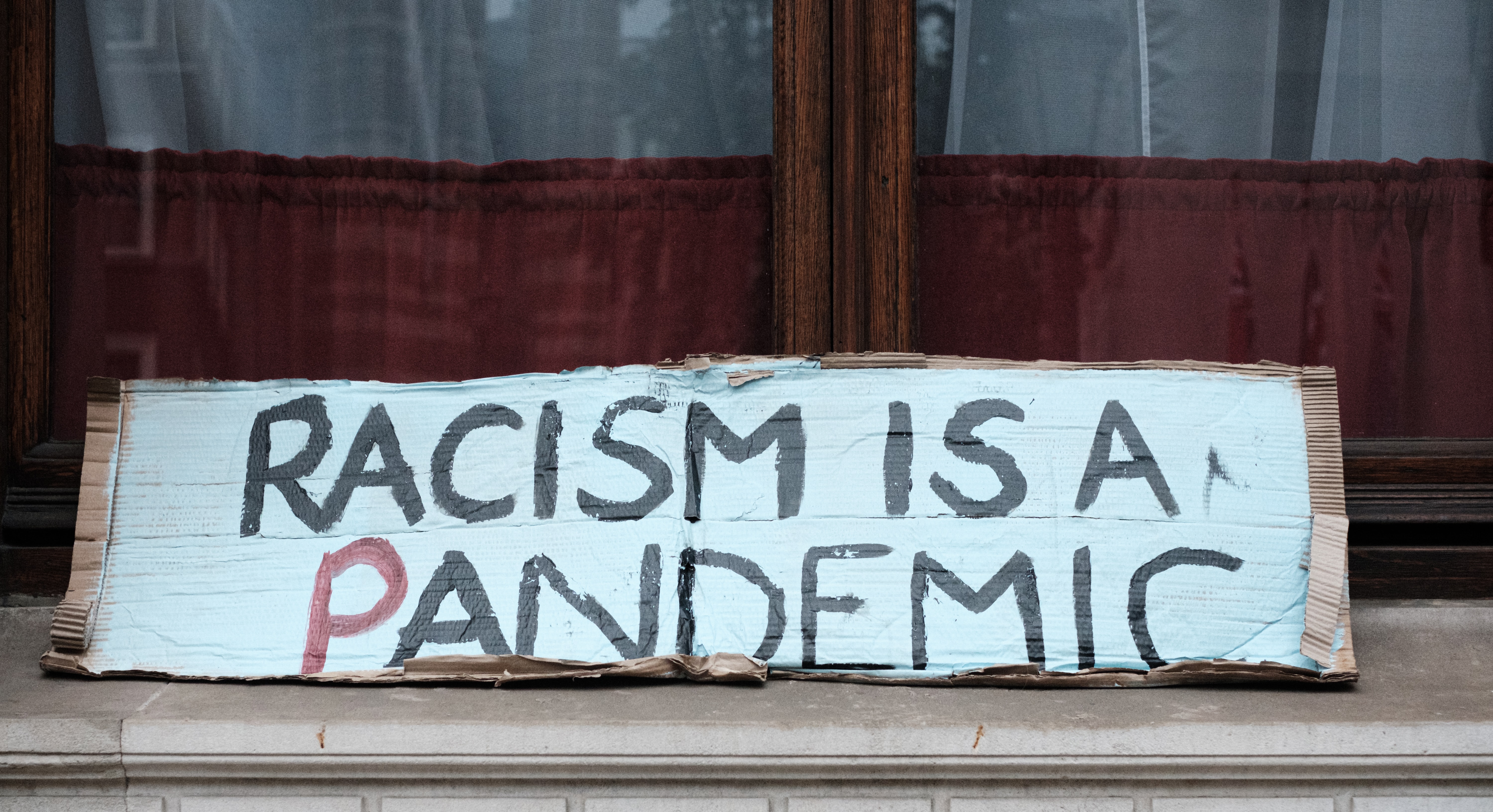
In this time, it would do well for us all to remember that this convenient term ‘police brutality’ is not exclusive to white racists. Black and other minority police are just as problematic. It’s not just white supremacy problem, it’s a supremacy problem that comes with the police as an institution. And how the badge comes before blackness. Black police officers historically shell out for white power. Stephen shells out for Calvin Candie (Leonardo DiCaprio) in Django Unchained. Boris leans on the model minority in recruiting British-Asian MPs to his cabinet but they are just as problematic as white MPs that get branded with the label of racist.
Steve’s experiences are valid even if they are through the lens of white male privilege. I agree in fixing society you will fix policing. Policing is part of the rotten tree I call societal racism, and so is education and corporate. It is very easy to throw policing under the bus; but British society is racist, it’s the society we live in and this label fits like a white glove.
Referencing
DiAngelo, R. (2019). White Fragility. London: Allen Lane.
Eddo-Lodge, R. (2017). Why I’m No Longer Talking to White People About Race. London: Bloomsbury.
Fryer, P. (1984). Staying Power. London: Pluto Press.
Gilroy, R (2019). Mental health detention rate over four times higher for black people. Nursing Times [online]. Available from: https://www.nursingtimes.net/news/mental-health/mental-health-detention-rate-over-four-times-higher-for-black-people-30-10-2019/
Home Office. (1999). The Stephen Lawrence Inquiry. (Chair: William Macpherson). London: TSO.
Inquest (2017). BAME deaths in police custody’, inquest.org.uk, [online]. Available from: https://www.inquest.org.uk/bame-deaths-in-police-custody
Institute of Race Relations (2020). ‘INEQUALITY, HOUSING AND EMPLOYMENT STATISTICS’, irr.org.uk, [online]. Available from: http://www.irr.org.uk/research/statistics/poverty/
Ministry of Justice (2017). The Lammy Review. (Chairperson: David Lammy MP). London: TSO.
Share this:

A racist and no solution
I am a white, middle class some might say (well my students anyway), ageing, male. I wasn’t always middle class, I’m from working class stock. I’m a university lecturer now but wasn’t always. I spent 30 years in the police service in a small, ethnically diverse, county in England. I didn’t consider myself a racist when I was in the police service and I don’t consider myself a racist now. Nobody has called me a racist to my face, so why the title? It’s how I’m constantly labelled. Every time someone says the police are racist or the police are institutionally racist, they are stating that about me. Just because I have left the police organisation doesn’t change who I am, my beliefs or my values. So, if the police are racist, then by default, I must be.
I’m not suggesting that some police officers are not racist, of course some are. Nor am I denying that there has been and probably still is some form of institutional racism within the police service, perhaps as a whole or perhaps at a more localised or departmental level. But bad apples and poorly thought-out, naïve or even reckless policies, strategies and procedures are not enough to explain what is going on in policing and policing of ethnic minority groups in particular. I’m talking about policing in this country, not across the pond where policing is very different in so many ways that it is hard to even suggest a realistic comparison. That of course is the first problem, what happens in the United States of America is immediately translated into what happens here.
As a lecturer, I constantly hear from students and read students’ work about the racist and brutal police, often interchanging commentary from the United States with commentary here in the United Kingdom, whilst also failing to recognise that there is different policing in Scotland and Northern Ireland. Institutional racism, as defined by Macpherson, is now part of the lexicon, but it no longer has the meaning Macpherson gave it, it is now just another way of saying the police are and every police officer is racist. Some students on finding out that I was a police officer show an instant dislike and distrust of me and sometimes it can take the whole three years to gain their trust, if at all. Students have been known to request a different dissertation supervisor, despite the fact that their research subject is in policing. This is not a complaint, just a statement of facts, painful as it is.
As I try to make sense of it all, I have so many unanswered questions. What is exactly going on? What is causing this conflict between the police and ethnic minority groups? Why is there a conflict, why is there distrust? More importantly, how can it be fixed? Some of the answers may lay in what the police are asked to do, or at least think they are asked to do. Reiner suggests that policing is about regulating social conflict, but which conflict and whose conflict is it? Other authors have suggested that the police are simply a means to allow the rich and privileged to maintain power. There may be some merit in the argument, but most policing seems to take place in areas of deprivation where the disadvantaged are committing crimes against the disadvantaged. The rich and powerful of course commit crimes but they are nowhere near as tangible or easy to deal with. One the problems might be that the rich and powerful are not particularly visible to policing but the disadvantaged are.
Maybe some of the answers lay in notions of stereotyping, sometimes even unconsciously. Experience or narratives of experiences cause a wariness, even a different stance to one people might normally assume. Being thumped on the nose by a drunk, does tend to make a person wary of the next drunk they encounter. So, could stereotyping be a problem on both sides of the divide? My dissertation student that didn’t want me as a supervisor was later to reveal experiences of racist abuse aimed at the police officers she went out on patrol with. Policing is dominated by white males and despite recruitment drives to address the ethnicity gap, this really hasn’t been that successful. If it was meant to help solve a problem, it hasn’t.
I get the sense though that the problem is much deeper routed than policing. Policing and the problems of policing is just a sub plot in a much wider issue of a divided society and one that is in constant conflict with itself. If the police are guilty of racism, then it is society that has caused this. Our society’s values, our society’s beliefs. An unequal society where the poorest suffer the most and the rich get richer regardless. A society where we are all equal but only because someone somewhere said so at some time, it is not reality. I think of Merton’s ‘American Dream’, I don’t buy into the whole concept, but there is something about not having opportunities, equally when I think of Lea and Young and the concept of relative deprivation, whilst not explaining all crime, it has some merit in that notion that the disenfranchised have no voice.
As I write this I am conscious that I have commentated on a very emotive subject particularly at this time. As I watch the events unfold in America, I fear the worst, action followed by reaction. Both becoming increasingly violent and I see the possibility of it happening in this country. I fear that the term ‘police racism’ will become another convenient label. Convenient in the sense that the problems are seen solely as that of policing. If we examine it through a different lens though, we might just find that policing is simply part of the whole rotten tree, society. Fix society and you fix policing. If the label racist fits, it fits the society we live in.


 Thoughts from the criminology team