

Some lessons from the lockdown
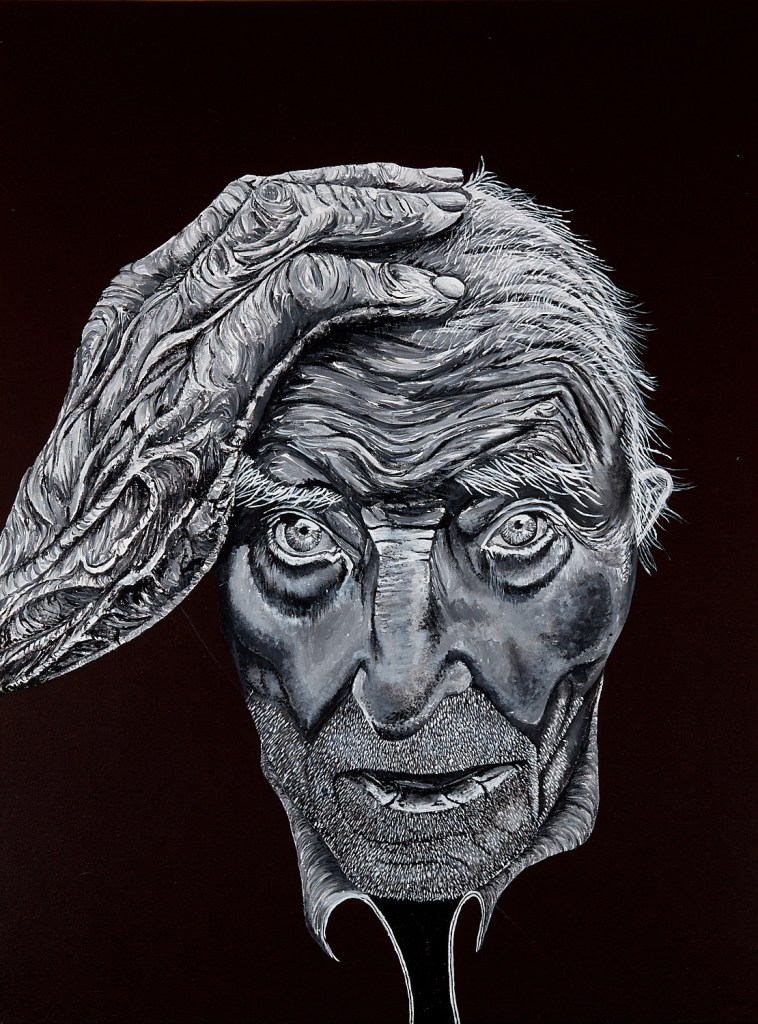
Koestler Arts (2019), Another Me: The Redwoods Centre (secure mental health unit), James Wood QC Silver Award for Portrait, 2019
In March 23, 2020, the UK went into lockdown. The advice given, albeit conflicting in parts, was clear. Do not leave your home unless absolutely necessary, banning all travel and social interactions. This unprecedented move forced people to isolate at home for a period, that for some people will come to an end, when the WHO announces the end of the pandemic. For the rest of us, the use of a face mask, sanitiser and even plastic gloves have become modern day accessories. The way the lockdown was imposed and the threat of a fine, police arrest if found outside one’s home sparked some people to liken the experience with that of detention and even imprisonment.
There was definite social isolation during the pandemic and there is some future work there to be done to uncover the impact it has had on mental health. Social distancing was a term added to our social lexicon and we discovered online meetings and working from home. Schools closed and parents/guardians became de facto teachers. In a previous blog entry, we talked about the issues with home schooling but suffice to say many of our friends and colleagues discovered the joys of teaching! On top of that a number of jobs that in the past were seeing as menial. Suddenly some of these jobs emerge as “key professions”
The first lesson therefore is:
Our renewed appreciation for those professions, that we assumed just did a job, that was easy or straightforward. As we shall be coming back eventually to a new normality, it is worth noting how easy it will be to assign any job as trivial or casual.
As online meetings became a new reality and working from home, the office space and the use of massive buildings with large communal areas seemed to remain closed. This is likely to have a future impact on the way business conduct themselves in the future.
Second lesson:
Given how many things had to be done now, does this mean that the multi occupancy office space will become redundant, pushing more work to be done from home. This will alter the way we divide space and work time.
During the early stages of the lockdown, some people asked for some reflection of the situation in relation to people’s experiences in prisons. The lockdown revealed the inequality of space. The reality is that for some families, space indicated how easy is to absorb the new social condition, whilst other families struggled. There is anecdotal information about an increase on mental health and stress caused from the intensive cohabitation. Several organisations raised the alarm that since the start of the lockdown there has been a surge in incidents of domestic violence and child abuse. The actual picture will become clearer of the impact the lockdown had on domestic violence in future years when comparisons can be drawn. None the less it reveals an important issue.
Third lesson:
The home is not always the safest place when dealing with a global pandemic. The inequality of space and the inequality in relationships revealed what need to be done in the future in order to safeguard. It also exposed the challenges working from home for those that have no space or infostructure to support it.
In the leading up to the lockdown many households of vulnerable people struggled to cope with family members shielding from the virus. These families revealed weaknesses in the welfare system and the support they needed in order to remain in lockdown. Originally the lack of support was the main issue, but as the lockdown continued more complex issues emerged, including the financial difficulties and the poverty as real factors putting families at risk.
Fourth lesson:
Risk is a wider concern that goes beyond personal and family issues. The lockdown exposed social inequality, poverty, housing as factors that increase the vulnerability of people. The current data on Covid-19 fatalities reveal a racial dimension which cannot longer be ignored.
During the lockdown, the world celebrated Easter and commemorated Mayday, with very little interaction whilst observing social distancing. At the end of May the world watched a man gasping for breath that died in police custody. This was one of the many times the term police brutality has related to the dead of another black life. People took to the streets, protested and toppled a couple of statues of racists and opened a conversation about race relations.
Fifth lesson:
People may be in lockdown, but they can still express how they feel.
So, whilst the lockdown restrictions are easing and despite having some measures for the time being, we are stepping into a new social reality. On the positive side, a community spirit came to the surface, with many showing solidarity to those next to them, taking social issues to heart and more people talked of being allies to their fellow man. It seems that the state was successful to impose measures that forced people indoors that borderline in totalitarianism, but people did accept them, only as a gesture of goodwill. This is the greatest lesson of them all in lockdown; maybe people are out of sight, appear to be compliant in general but they are still watching, taking note and think of what is happening. What will happen next is everyone’s guess.
Share this:


Mobile-impaired drivers. #BlackenAsiaWithLove
Mobile-impaired drivers.
So, try to imagine a man driving a motorbike, a 5-year-old standing on the tiny platform between him and the handlebars, a tall toddler standing behind him on the seat, clinging round his neck, and a woman sitting side-saddle behind the baby. Both adults are bent over scrolling on the phone. In the middle of traffic. I see this every day, but a few days back, I saw a toddler playing peek-a-boo with his dad while he was driving. Interestingly, as he struggled to move the baby’s hands away, the man never shifted his eyes away from his phone.
Between the two adults described above, nobody had one good eye on the road. Said plainly, the man was impaired; he drove with one eye, one hand. Look around, so many are. All I could do was laugh. I didn’t find the spectacle funny. I chuckled to myself, mostly about my own helplessness. I feel like there’s nothing I can do about the risk they face, or the danger they place on others. Their kids are at a severe disadvantage, being precociously exposed to such mindlessness. Many of the motorists around here are similarly disabled. It’s a common affliction.

What if the baby decides it’s not time to stop peek-a-boo, as babies do, despite the man using his hand to wave him away in frustration? What if they hit a bump – because he wasn’t looking – and either child slipped? Or, what if some driver is speeds towards you in the exact same scenario? Or, what if either dropped their phone? We know that there is a strong impulse to reach for a falling object – even in traffic. Imagine dropping something that holds great value for you. Would instinct kick in? Could it be worse now since heavy social media usage paves neural pathways of impulsive behaviours?
As I move around on the streets, it’s as if most people have only one hand and one eye on the road. It’s nothing to see someone driving a motorcycle holding their phones to their ear, enthralled in conversation, just one hand guiding their vehicle through torrid traffic and very bumpy roads. Potholes and sewage covers, for example, are regularly too deep to tackle with two wheels, so drivers usually swiftly go around. A quick swerve. What’s more, it’s the normal thing to carry one’s entire family along on these adventure rides. Yet, even with two-to-three generations in tow, I’ve seen drivers driving around with their phone in one hand, dialing, texting or scrolling, lifted so they could see it.
I can count on one hand the number of moto-taxi drivers I’ve had with any hands-free brace to hold the phone as it displays our route. Some, at least, leave their devices in their pockets, and only check-in at stoplights. (I should start mentioning this in my ratings – not just stars.)

Devices? Mobile phones sold in this part of the world have two SIM card slots, but it’s also quite common to see people jostling two phones at a time. Perhaps one for private use, and the other professional, and so forth. It suggests a deeply entrenched mobile phone culture here, now.
In any public space, on any form of transportation, no matter what’s going on, you can look in any given direction and see most people glued to their phones. Alone, with friends, families, co-workers all are online. Face-to-face is never enough. The most distressing is seeing adults snub kids for their phones – or worse get them hooked early and stuff device in their hands, too. What’s a kid supposed to think if mommy and daddy drive while mobile impaired? Yes, kids, it’s not gone unnoticed that parents are spending more time with their phones than their own kids. Even during a commute. Ah, riding with my folks used to be such good quality time.
Smartphones are powerful. So, it comes to no surprise that folks would take to squeezing in every free moment to scroll through social media. If folks aren’t handling it directly, their phones are sitting right there in front of them, the perfect escape for even a moment’s silence, uncertainty, doubt, loneliness, longing, or even curiosity. The mobile provides it all. It has disabled our ability to focus, even when operating heavy machinery.
Why not take time during that long drive to pick and jive with friends on the net? What’s a matter with liking a few of my friends’ Facebook posts at the traffic light? It’s not like my kids have anything interesting to say. I can respond to a few work messages by the time I get to where I’m going; who cares if I slow-up traffic. Oh, let me stop right here, in the middle of the road, to finish this text. This has to be done now; I am unable to refuse. While cruising along, why not just let my friends know that I’m just a few minutes away (even if I’ve already shared my live locations and texted them just as I set off on my way).
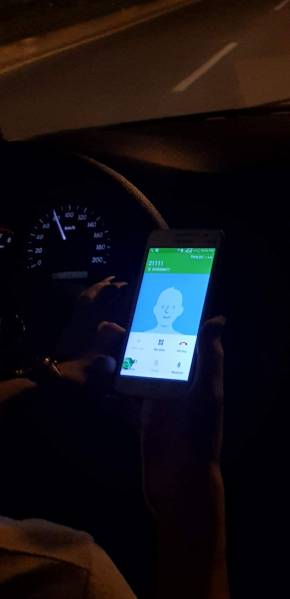
Though cognitively we know that we tend to overestimate the things that we can divide our attention between. Vehicles are keenly designed to allow drivers to focus on the road ahead, having a forward-facing display and any needed amenity at one’s fingertips. On two wheels, acceleration and brakes, blinkers and even widely used horns are all there at drivers’ fingertips. Cars compete for the easiest to reach radio, seat, and climate controls. In my last car, I could even do all these things and more from my steering wheel. Yet here, I even seen the biggest, most fully equipped cars being driven around by mobile disabled drivers. These brand-spanking new vehicles come with hands-free technology, but it’s a miss to me as to why there’s no widespread usage of these. Plus, no moto-makers have designed these two-wheelers for one-handed, one-eyed driving.
Share this:


Watching “Black trauma” films isn’t as anti-racist as you think
Previously published on Medium
Following the murder of George Floyd, I have seen a (re)interest in “Black trauma” films, as conduits for (white) audiences wanting to self-educate — meaning slavery and stories relating to crime. I am writing this post in response to the number of people I have seen watching “trauma films” as their only entry into anti-racism. As far as film is concerned we must treat anti-racist education in modules. Police brutality and slavery are part of one module, the trauma narrative. Just like how we would treat a degree. There are more perspectives to Black lives than “trauma”, audiences must remember that.
Films depicting slavery, and “police violence” (really hate that term) work to a certain extent but what the plethora of films promoted on these subjects fitting that narrative show, is really an indictment on an industry that still refuses see us outside of the realms of suffering and subordination. We had Marvel’s Black Panther, which is great, but that was one. We need more and this Black renaissance needs to keep going.
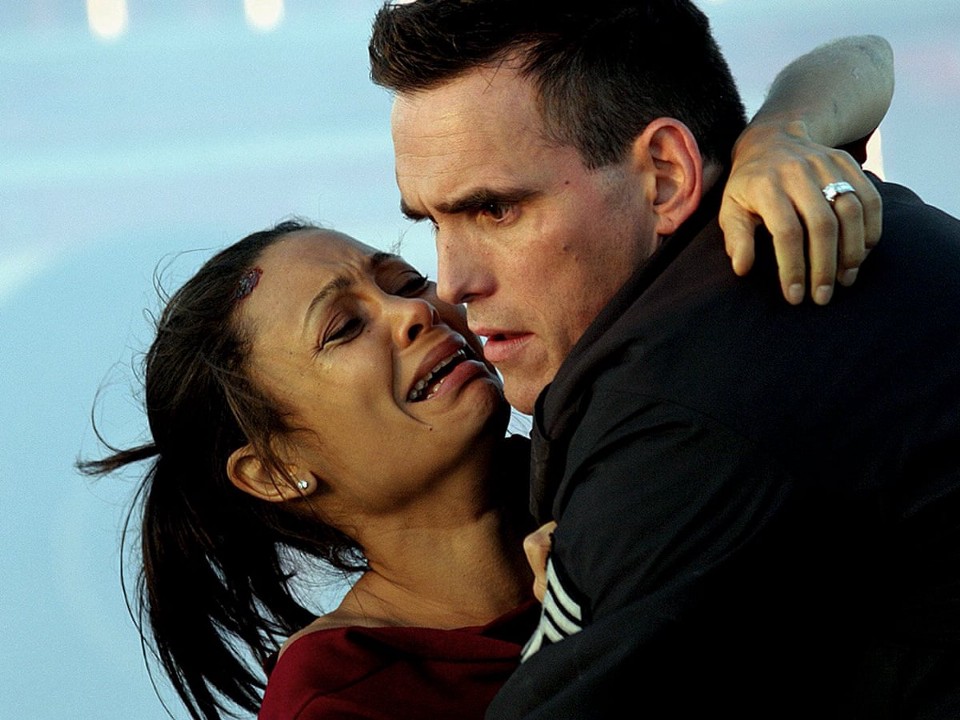
In this historical moment, where many of us are trying to educate ourselves on these issues, I want to remind people there are more types of films than “trauma flicks”… and I would also caution people about films like The Help and Paul Haggis’ Crash (both of which are problematic, and should only really be watched in the knowledge of this is what not to do). I am by no means saying not to watch those films but both should be watched through the lens of “Hollywood effed up here”, as they are by no means anti-racist narratives. For people starting out on this journey, a road that many of us Black and brown people have been on since our first encounter of racism, which for many of us was as infants / children — white people now starting out on this need to be aware of the problem films and the issue of representation in the film and television industry.
There are more images of Black people we could see; it’s telling in this moment that the images of Black people being pushed are ones of suffering and servitude. By all means self-educate on these issues, but we must also remember that “anti-blackness” strips us of humanity and those films — from Get Out to Moonlight — do somewhat play into the hands of the establishment even if they are telling stories that need to be told.
Here, are five films with varied perspectives and viewpoints that may not even talk about race or fall into the stereotypes of ‘police brutality’, ‘slavery’ or ‘immigration.’ I admit this list was harder to make than I first thought, which just shows the industry can do better. The lack of films sitting outside of “trauma” narratives shows the deficit of ethnic representation in the industry and I hope in this post to show people there are other images out there too.
I have done my best in finding films that draw audiences away from Black trauma flicks, but I admit even in that I think I might have failed in my goal.
Queen of Katwe (2016), Dir. Mira Nair
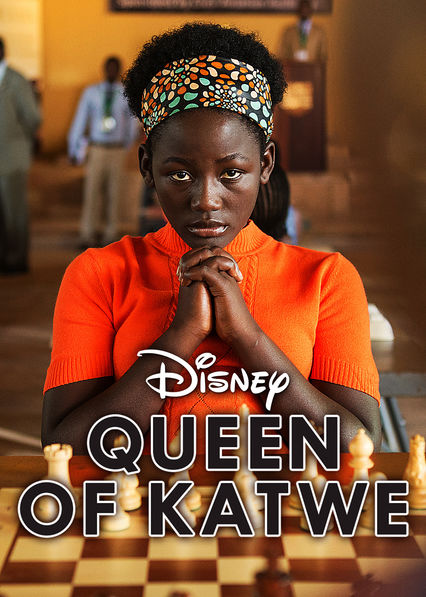
Set in Uganda, Disney’s Queen of Katwe follows ten-year-old Phiona (Madina Nalwanga), who lives in a slum in Kampala with her mother Nakku (Lupita Nyong’o) and other members of her family. Helping her mother sell maise at the local market, as well as care for her brother, one day, her life changes forever when she meets Robert Katende (David Oyelowo), a football coach, and a chess teacher at a centre. Wanting to find out more, Phiona learns how to play the game of chess. And under Katende’s firm but fair guidance, she becomes the best player in the group ready to take on the world as a chess prodigy. As someone who played a lot of chess as youth, this film is so heartwarming and wholesome. Not only because I have an affinity and love for the game, but because it is also about BLACK people. And by Black I do not mean me, I mean dark-skinned people. Particularly, a film featuring dark-skinned women in prominent roles that did not fall into the “adultification” of Black girls (Georgetown Law, 2019). And seeing as this film has an all-Black cast and does not feature the Black trauma of police violence or slavery, seeing David Oyelowo in this elevated image of a Black man is also worthy of comment.
Availability: Disney+
A Pool of London (1951), Dir. Basil Dearden
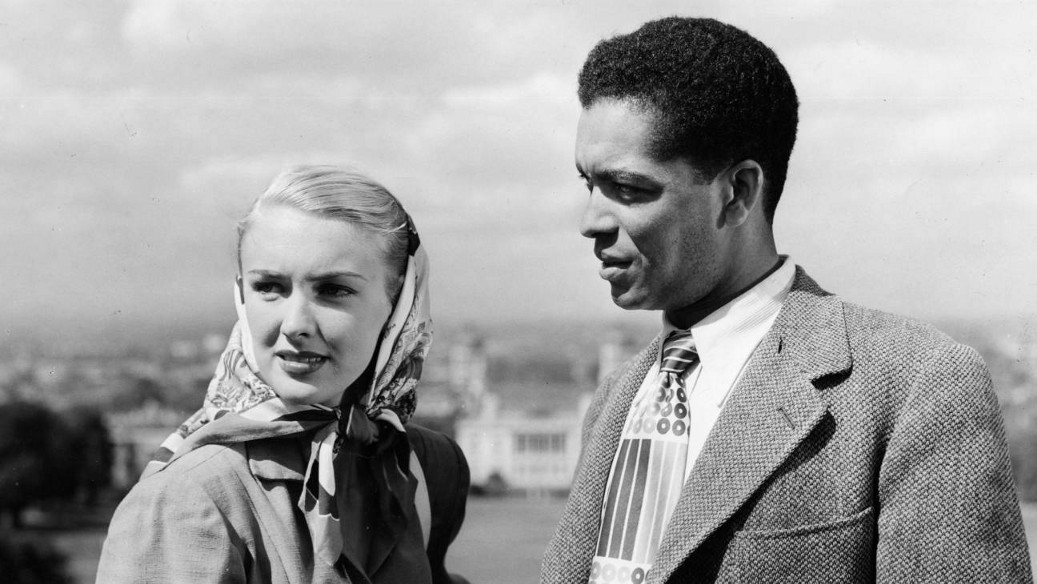
Summary: Dan McDonald (Bonar Colleano), a sailor, has a “side business” in smuggling illegal goods ashore. While their ship is docked in London, he and best friend Johnny Lambert (the late Earl Cameron) get themselves tied up with a gang of jewel thieves. Complications arise when Lambert falls in love with Pat (Susan Shaw), and is charged with a murder he did not do.
‘A Pool of London’ is an early example of “social conscience” in British cinema and it could just have been “another crime film” had it not been in such well-practiced hands.
Not only is this a fantastic film, it is also one of the first British films in which a Black actor featured. Whilst Lambert is noticeably a Black man, his character did not need to be. There’s only a handful of times when his character’s race is raised. Director Basil Dearden (Flame in the Streets) directs Earl Cameron as an actor, (in comparison to many Hollywood directors), not a Black actor.
Availability: Amazon Prime (rent), BFI Player
Claudine (1974), Dir. John Berry
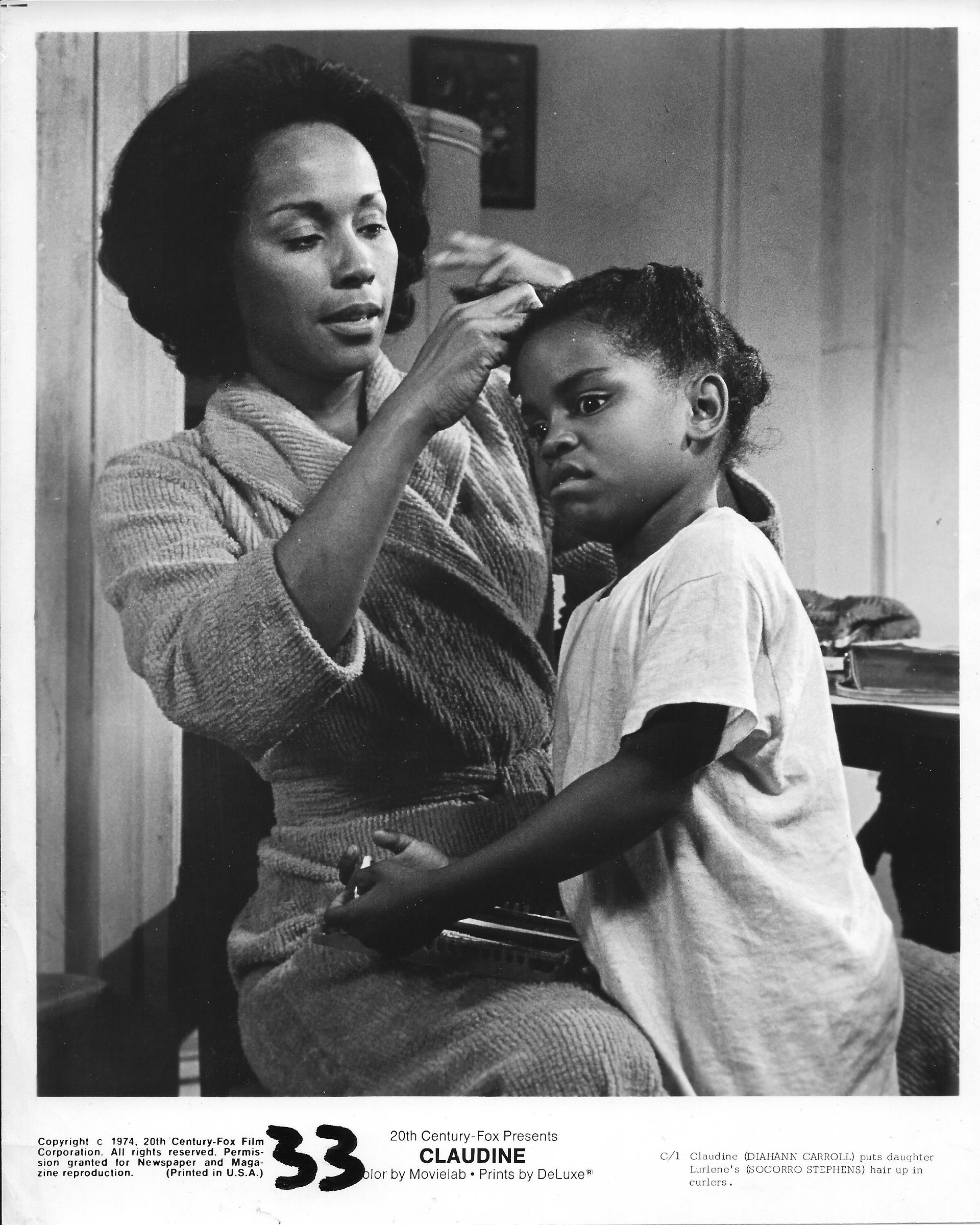
Claudine Price (Diahann Carroll) is a single mom in New York City. She works hard as a maid at a white middle-class house. Out of the blue, she meets binman Roop (James Earl Jones) — charming and charismatic, but also works hard. Romance develops, but she doubts this relationship is good for her children. And despite his nature, Roop is hesitant to take on parenthood.
An intelligent look at welfare that does not criticise the need that working class communities can need help from the state. Very much an American prologue to British films such as I, Daniel Blake by British veteran filmmaker Ken Loach. Claudine is also empathetic and just full of so much love for ‘The Black Family’. You thought you loved the Obamas? You’ll love Claudine, Roop and the children. A film that unpicks the napsack of welfare regulations, made harder still by systemic racism — a term that is on everybody’s minds, pertinent, in the recent discourse on Black Lives Matter.
Unlike films such as Network, Sidney Lumet satire taking on big gov, 1974’s Claudine is more personal directing that critique on how the Black working class have also been impacted. Berry, a victim of Joseph McCarthy’s Blacklist — you can feel his sympathy to working class families. Much alike Earl Cameron in A Pool of London, they did not need to cast Claudine with an all Black cast but they did and you can’t help but love it.
It’s one of the few films I have seen which depicts the struggles of the working-class without the tears of liberal piety, condescension or “feel sorry” attitude — it’s a film that shows there is absolutely nothing wrong with being working-class and there many proud of that label, especially Black people living in a class system that is also anti-Black. At its ninety(ish) minutes, it uses every minute wisely and I really did not want it to end.
Whilst this film has its moments of pure comedy, it also has pure drama, with one such episode detailing the intricacies of an underage pregnancy, as well as the to-be grandmother Claudine’s reaction, not making a spectacle of Black trauma. A film carried by Diahann Carroll, written for her in mind… without having the audacity to make a spectacle of Black women suffering.
Availability: If you are committed enough, you will find it!
Hollywood Shuffle (1987), Dir. Robert Townsend
Aspiring actor Bobby Taylor (Robert Townsend) endures the wrath of his grandmother for auditioning for a role in the crudely titled exploitation film Jivetime Jimmy’s Revenge. When Taylor is cast in the title role, he has a series of odd dreams satirising Black stereotypes in Hollywood, and must do better by his goals with his desire to remain a role model to his younger brother. This film makes the list because it subverts common tropes. Over thirty years has passed since it was released and not much has changed. It’s a satire on the role Black actors get in Hollywood. What has changed is that there are more Black actors but the types of roles has barely moved an inch.
Hollywood is still has progress to be made for better representation on grounds of race, let alone other discriminated groups. Even popular films with Black actors still feature stereotypes. Narrating the issues of representation in Hollywood today would only be giving this film a recap.
The issues this film addresses will only change if the system takes a radical shift. Will BLM initiate that shift?
Its cultural references are of its time, especially with Eddie Murphy. Hollywood Shuffle is over the top madness but it’s the message of “representation needs to change” has not aged in over 30 years, emphasising the injustices of the film industry. We needed Hollywood Shuffle, so we could have film like Barry Jenkins’ Moonlight (2016) and Boots Riley’s Sorry to Bother You (2018). It just sucks it’s quite homophobic.
Availability: Amazon Prime (Rent)
Fire in Babylon (2011), Dir. Stevan Riley
Stevan Riley’s British documentary film Fire in Babylon is the true-to-life story of how the West Indies cricket team (1974–1995) rose above their colonial masters through becoming one of the greatest sporting teams in the history of team sports. In the unsettling era of apartheid in South Africa, race riots in England and civil unrest in the Caribbean, the West Indies led by Clive Lloyd, and Viv Richards, dealt a critical blow at the white world.
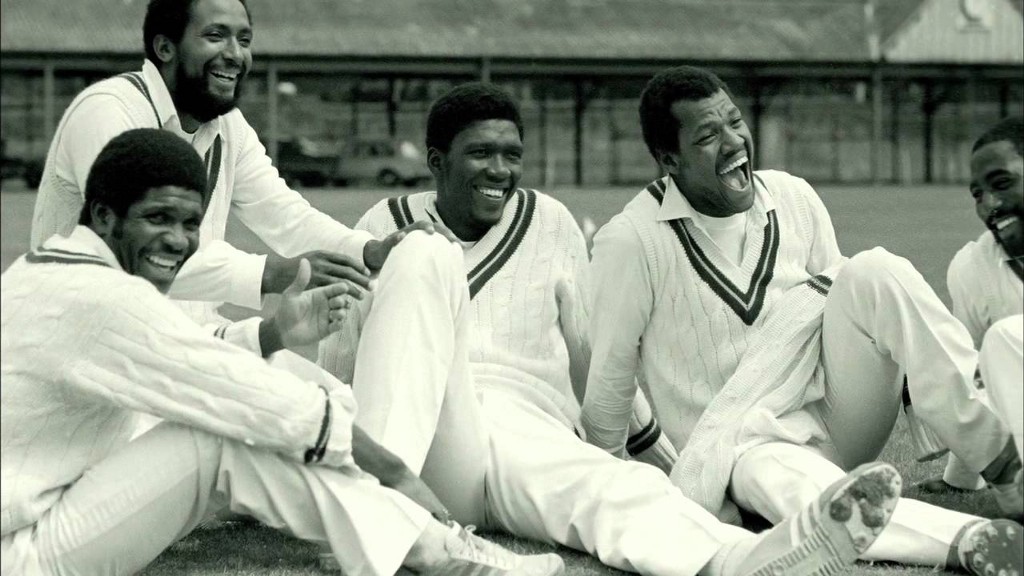
They defeated racism on the field of play, making the cricket field a level playing field. For anyone looking to understand more about Black politics as well as the cultural and sociopolitical context of the game during the 1970s and 1980s, this is a must watch. These players used cricket as a tool to strike back at white power, weaponising whiteness running contrary to the circumstance to which it was made. Truly hitting racism for a BIG six.
Availability: YouTube
In these five films, I have seen elements of Black trauma but nothing compared to the bloodiness of what is being promoted in the lists in response to the recent international civil rights movement. Anti-racist reading and watch lists are advocating for texts and films on police brutality, the prison system and slavery, for example. There are some fantastic reads and watches here but we must also remember that
Black lives also means — Black love; Black smiles; Black families; Black sports; Black friendships; Black arts; Black innocence, Black excellence… and more. These are our lives and there is humanity in that. We cannot forget.
Share this:

HMP Science Competition 2020: “Thank God”
The last few months have been challenging for all of us, in one form or another, regardless of personal circumstances. Many of us have faced loneliness, illness, bereavement, as well as a range of other challenges. Prisoners have particularly been hit hard, with the cessation of family visits as well as, an extremely restrictive regime. As a response to the Covid-19 lockdown, the Criminology team have created a range of different activities which can be undertaken in cell and which have hopefully helped to pass the long hours. Similarly, colleagues within Geography have created a number of different quizzes which have tested both staff and prisoners. As part of this initiative, Professor Nick Petford, Vice Chancellor of UoN kindly offered to run a writing competition focused on science. Along with the winning entry which can be read here, the following entry was highly commended by the judges as an imaginative response to the questions posed:
Thank God: Everything is not always as it seems when you are only three. A short story written by M. C. using subjects 4 and 5*
September the 22nd 1959, my third birthday. The day the Spirit of the universe, Divine Power greater than myself, Supreme Being, God made his presents [sic] known in my life.
I had just climbed to the top of a Wicksteed Park slide it was 33 feet high made of steel and iron set in a concrete base. It was in Castlefields Park at the bottom of Brook Street, Wellingborough.
My lovely mother was standing at the bottom, a beautiful 22yr old young woman. I fell from the top landing directly on my head onto the concrete base. My mother was horrified, she thought I was dead!! But I just stood up and shook my head without a tear. So that was my first experience of the power that does not live on this earth stepped in and saved me Thank God!!!
That when Dad came home from work. I remember him saying one of God’s favourites boy!!
I know that I am made in the image of God and God as [sic] manifested many miracles throughout my life, and blessed me with so many gifts. The gift of tongues which I can also translate, the gift of using the blood of Jesus for healing, I can look into the future through meditation allowing me to open my third eye. The holy spirit that is not in the form of man. It’s more of a magical being of the universe. I can call on the holy spirit any time that I want instantly and straight away achieve the spirits peace and happiness in my life. Plus in deep meditation the spirit great powers can transform me to heaven. I have been a few times and believe me it’s not a place on earth. Most of this can be proved, and is written down in the Chronicles of the Kingdom Life Church.
The universe can be measured by holy string. Which comes in three sizes Large Medium and Small. So the exact size of the universe is a large piece of holy string by a small and medium piece!! Not forgetting Heaven is 41.000 miles cubed in one corner of it.
M.C. (2020)
*Question 4: How big is the universe and how is it measured? Question 5: Will humans ever met space aliens?
Share this:


Nothing is black and white: the intransigence of fools

One thing we criminologists know is that it is impossible to prevent crime. Many a great criminologist has tried to theorise why crime occurs (my shelves are full of their books) and whilst almost all have made valuable contributions to our understanding of crime, it is an unfortunate fact that crime continues. But then crime itself is difficult to define and has its basis in time, power, opportunity and social discourses. What is criminal today will not be criminal tomorrow and what is important today will lose its importance tomorrow, in favour of some new or maybe, old, manifestation of that elusive concept we call crime. Perhaps we should we grateful, for in the industry of crime lies mass employment. From criminologists to those that attempt to stem the tide of crime, those that deal with its aftermath and those that report on it or write about it (real or fictional), there is money to be made. If we stopped crime, we would all be out of a job.
Most, if not all of us have at some stage in our lives committed some sort of crime. Most crimes will fortunately be almost inconsequential, maybe a flouting of a law such as driving a car over the speed limit. Other crimes will be more serious and whilst some criminals will be brought to book most are not. The inconsequential crime of driving over the speed limit, albeit perhaps due to a lapse of concentration, can have dire consequences. There is clear evidence that the survival rates of pedestrians struck by cars has a direct correlation with speed. So the inconsequential becomes the consequential, the ephemerality of crime, the reality.
When we think of crime, we often have little concept of its reality. We apply labels and our own rules to that we know and find acceptable. Speeding is not criminal, well not generally, unless it’s a boy racer. Drink driving is a no-no, but we might take it to the alcohol limit when having a drink. Drugs (the criminalised type) are ok, well some are and some aren’t, it all depends on your viewpoint. Drugs (the prescription type) are ok, even if they impair our ability to drive. Alcohol, well that’s absolutely ok, even if the abuse of it leads to more deaths than drugs and the consequences of that misuse has a really significant impact on the NHS. Tax evasion, illegal if you get caught, ok if you don’t. A bit like fraud really, ok if you can get away with it but then maybe not, if the victim is a little old lady or me. Assault, well it depends on the seriousness and the situation and probably the victim. Robbery, not good to go into an off licence with a gun and threaten the shopkeeper, bullying if you take lunch money off the lad outside the school gates.
Criminals don’t walk around with a label that says ‘criminal’ and even if they did, there would have to be a method of bestowing the label in an instance. Nonsense of course, only a fool would suggest such a thing. What about the people that committed a crime but have changed their ways I hear my colleagues ask? What about those that haven’t, or have and then relapse, I reply.
Nothing is black and white; the concept of crime is elusive, as are criminals (both by concept and nature). And yet we happily castigate those that attempt to uphold the law on our behalf and in doing so view crime and criminals as clear concepts. Each has a clear label, each is clearly identifiable, so how can they get it so wrong so many times. Whilst criticising those that attempt, and let’s be quite honest, fail most of the time to stem this tide of crime, perhaps we might also think about the impossibility of the job in hand. That’s not to say that a lot of the criticisms are not justified, nor that things should not change, but if we only examine all that is wrong, we lose sight of reality and only an intransigent fool would continue an argument that sees the problems and solutions as simply black and white.
Share this:


Black In Sanity #BlackenAsiaWithLove
One of the most intriguing aspects of being black today is sanity.
How can an individual living in such desperate times exist alongside insane denial of said existence?
How does one remain sane in an insane world?
One that denies we matter?
At the start of my new school in the second grade, my new teacher gave me a nickname.
No one can say your name, she explained, so she’d call me by my initials, DK.
And that’s how things remained for years.
I grew to love that teacher and my classmates, many of whom studied with me until graduation 11 years later.
Needless to say, our small class got to know one another really well.
It’s that knowing of others that I draw upon now to stay sane.
See, I know white people.
I’ve grown up in a diverse world, one where all our differences were brought to light and respected.
I learned that my teacher – then a middle-aged, middle-class white woman- had marched alongside Dr. King in all his major marches for his struggle for Civil Rights.
I knew Jewish kids who I learned were seen as outsiders like me.
I learned that Catholics were marginalized in our city, despite being the largest health care providers.
I learned that the poor white kids where, too, regarded as others.
I saw that not all the black kids could escape.
I learned that despite the school’s efforts at integration, life would segregate us then and now.
As soon as the last bell rang, race and class separated us once again.
We all went to our respective neighbourhoods,
And have largely remained in our respective places as adults.
Now, I as an adult, I am ‘diversity’.
I accepted that you can never judge a book by its cover.
See, in my state, the rural areas are generally considered backwards- and this is taught to us city kids as a fact.
We even had a biology teacher in high school who told us that she’d taught in the hills of Kentucky and the people were in fact born stupid…damaged by oxygen deprivation.
I listened to what was said about ‘them’
But what I heard was the same shit that had been said about us.
No, it didn’t destroy my ability to trust white people,
But it did give me pause for thought:
How is it that ‘they’ could arrive at respect for my people, but then turn around and diss others who are struggling?
This was all just one more piece of the puzzle I was putting together to help me understand society’s cruelty towards me as a kid.
Why did I grow up in total fear of how strangers would react to me?
It’s like a sixth sense that I honed and developed throughout my life- this is one of the many benefits of being a minority.
But tis sixth sense suggests that we live in a world that is largely unsafe for people like me.
That’s the burden I’d like to ease for those who come after me.
I want to develop the implicit assumption that Black Lives Matter.
Unquestionably, unapologetically and unconditionally.
Blackness is no excuse, nor whiteness.
Racism erodes empathy.
That’s insane.
Share this:


#CriminologyBookClub: The Perplexing Theft of the Jewel in the Crown

As you know from our last #CriminologyBookClub entry a small group of us decided the best way to thrive in lockdown was to seek solace in reading and talking about books. Building on on what has quickly become standard practice, we’ve decided to continue with all seven bloggers contributing! Our fourth book was chosen by all of us (unanimously) after we fell in love with the first instalment. Without more ado, let’s see why we all adore Inspector Chopra (retired) et al.:
Another great edition to the Baby Ganesh agency series. After thoroughly enjoying the first book, I was slightly sceptical that book 2 would bring me the same level of excitement as the former. I was pleasantly surprised! The Perplexing Theft of the Jewel in the Crown, will take you on a picturesque journey across Mumbai. The story definitely pumps up the pace giving the reader more mystery and excitement. We now get more of an insight into characters such as inspector Chopra (retired) and his devoted wife Poppy. We also get to meet some new characters such as the loveable young boy Irfan, and of course the star of the show Ganesh, Chopra’s mysterious elephant. This novel has mystery within mystery, humour, suspense and some history, which is a great combination for anyone who wants to have an enjoyable read.
@svr2727

In the second instalment of detective Chopra’s detective (retired) adventures he is investigating the disappearance of the infamous Koh-i-noor diamond. The mythical gem disappears from a well-guarded place putting a strain on Anglo-Indian relations. In the midst of an international incident, the retired inspector is trying to make sense of the case with his usual crew and some new additions. In this instalment of the genre, the cultural clash becomes more obvious, with the main character trying to make sense of the colonial past and his feelings about the imprint it left behind. The sidekick elephant remains youthful, impulsive and at times petulant advancing him from a human child to a moody teenager. The case comes with some twists and turns, but the most interesting part is the way the main characters develop, especially in the face of some interesting sub-plots
@manosdaskalou
I am usually, very critical, of everything I read, even more so of books I love. However, with Inspector Chopra et al., I am completely missing my critical faculties. This book, like the first, is warm, colourful and welcoming. It has moments of delightful humour (unicycles and giant birthday cake), pathos (burns and a comforting trunk) to high drama (a missing child and pachyderm). Throughout, I didn’t want to read too much at any sitting, but that was only because I didn’t want to say goodbye to Vaseem Khan’s wonderful characters, even if only for a short while…
@paulaabowles
It was a pleasure to read the second book of the Inspector Chopra series. Yes, sometimes the characters go through some difficult times, the extreme inequalities between the rich and poor are made clear and Britain’s infamous colonial past (and present) plays a significant part of the plot, yet the book remains a heart-warming and up-beat read. The current character developments and introduction of new character Irfan is wonderfully done. Cannot wait to read the next book in the series!
@haleysread
One of the reasons for critiquing a book is to provide a balanced view for would be readers. An almost impossible task in the case of Vaseem Khan’s second Baby Ganesh Agency Investigation. Lost in a colourful world, and swept along with the intrigue of the plot and multiple sub plots involving both delightful and dark characters, the will to find a crumb of negativity is quickly broken. You know this is not real and, yet it could be, you know that some of the things that are portrayed are awful, but they just add to the narrative and you know and really hope that when the baby elephant Ganesha is in trouble, it will all work out fine, as it should. Knowing these things, rather than detracting from the need to quickly get to the end, just add to the need to turn page after page. Willpower is needed to avoid finishing the book in one hit. Rarely can I say that once again I finished a book and sat back with a feeling of inner warmth and a smile on my face. If there is anything negative to say about the book, well it was all over far too quickly.
@5teveh
The second Inspector Chopra book is even more thrilling than the first! As I read it I felt as though I genuinely knew the characters and I found myself worrying about them and hoping things would resolve for them. The book deals with some serious themes alongside some laugh out loud funny moments and I couldn’t put it down. Can’t wait to read the third instalment!
@saffrongarside
I have always found that the rule for sequels in film is: they are never a good as the original/first. Now, there are exceptions to the rule, however these for me are few and far between. However, when it comes to literature I have found that the sequels are as good if not better than the original- this is the rule. And my favourite writers are ones who have created a literature series (or multiple): with each book getting better and better. The Perplexing Theft of the Jewel in the Crown (Chopra 2.0) by Vaseem Khan has maintained my rule for literature and sequels! Hurray! After the explosive first instalment where we are introduced to Inspector Chopra, Poppy and Baby Ganesha, the pressure was well and truly on for the second book to deliver. And By Joe! Deliver it did! Fast paced, with multiple side-stories (which in all fairness are more important that the theft of the crown), reinforce all the emotion you felt for the characters in the first book and makes you open your heart to little Irfan! Excellent read, beautiful characters, humorous plots! Roll on book number 3!
@jesjames50

Share this:


Brooklyn Nine-Nine is prime time copaganda
Something outgoing NUS Black Students Officer Fope Olaleye tweeted about the police sitcom Brooklyn Nine-Nine stayed with me (see above). It made me think about the ACAB (All Cops are Bastards) acronym and whether I can talk about police in broad strokes. I was pushed on to Brooklyn Nine-Nine by a friend, after avoiding it for years. One reason because it just looked ridiculous, but the more important reason is that I did not feel comfortable that a comedy should be made of an inherently violent institution. I like the show, but in hindsight of George Floyd, Breonna Taylor and the other victims of the recent spate of murders by police, I am re-evaluating these shows and television like it.
No matter how pretty the writers try to dress up the Nine-Nine; no matter how diverse the cast is (great), police will always be police and this show is a prime time copaganda.
My degree is in creative writing and I do spend a lot of time watching film and television series. I do believe artists and storytellers, especially screenwriters and TV writers have a responsibility to accurately portray the institutions they are depicting. Brooklyn Nine-Nine is in a fairy tale version of the world we live in and is nowhere close to a true likeness of the NYPD (New York Police Department), the same department that prosecuted five Black and Latino boys for a rape and attempted murder they didn’t commit, of a white woman. Linda Fairstein, the prosecutor of the exonerated Central Park 5 then went on to have a career as a crime novelist, also advising on the early seasons of Law and Order: Special Victims Unit (more copaganda).

When I think about television depictions of police and law enforcement more generally, most of it is copaganda. Then I think about how the rap group N. W. A were on the FBI’s most-wanted for speaking their truth about personal experiences with the Police and how they began to empower Black people all over the world. In the late 1980s, Black Britons resonated with the conscious lyrics N. W. A wrote, which speaks volumes. Public Enemy’s Chuck D in ‘Louder than a Bomb‘ said “your CIA, see I ain’t kiddin’ / both King and X, they got ridda both” but the depictions of law enforcement in film and television are always positive. They’re the good guys. Supposedly.
There’s a privilege in believing law and order have your best interests at heart, even if you’re not the guilty party; often this comes with a whiff of class and / or white privilege.
Then we come to shows like Cops that do not even try to hide their anti-Black sentiment. In Bowling for Columbine, Michael Moore argues that white America has an innate fear of Black people. Black people are entertainment for white people. They always have been: from blackface minstrelsy that came after slavery to public lynchings in the Jim Crow era. Yet, Blacks, historically have been stereotyped as the violent ones. In Ava DuVernay’s 13th the activist-academic Angela Davis says how the FBI branded her “armed and dangerous”, and that ties into to how historically criminality is just code for Black, which leads into Reagan’s War on Drugs.

Network television has portrayed Black people as a race that carry weapons and if you try to talk to them they will kill you. Whenever someone is stabbed in the UK, I know in some circles I will be expected to have an opinion because more often than not the mugshots I see of the victims and perpetrators are young Black boys. Anti-blackness is global and Black police also fall into the trap of racial profiling, even their own people. Police officer first, Black second; that tribalism, that supremacy is pervasive and we cannot pretend that police violence is just about racist police officers.
I first listened to ‘Fuck tha Police’ at 13 years old; I recall Ice Cube saying “Cause they’ll slam ya down to the street top / Black police showin’ out for the white cop / Ice Cube will swarm / On any motherfucker in a blue uniform…
If you’re Black in this country or the United States, you’re branded a criminal. The prison / stop and search data speak for themselves. Shows like Brooklyn Nine-Nine and Cops, are, to say the least, problematic, especially as a Black viewer, someone that does not fit into the pretty little box of white privilege. I try to watch shows like Nine-Nine in the same mind I watch a Disney film, within the realms of escapism. Pure fiction. Yet, in light of the recent international civil rights movement against racial inequality, including institutional racism, I am struggling to even accomplish that.
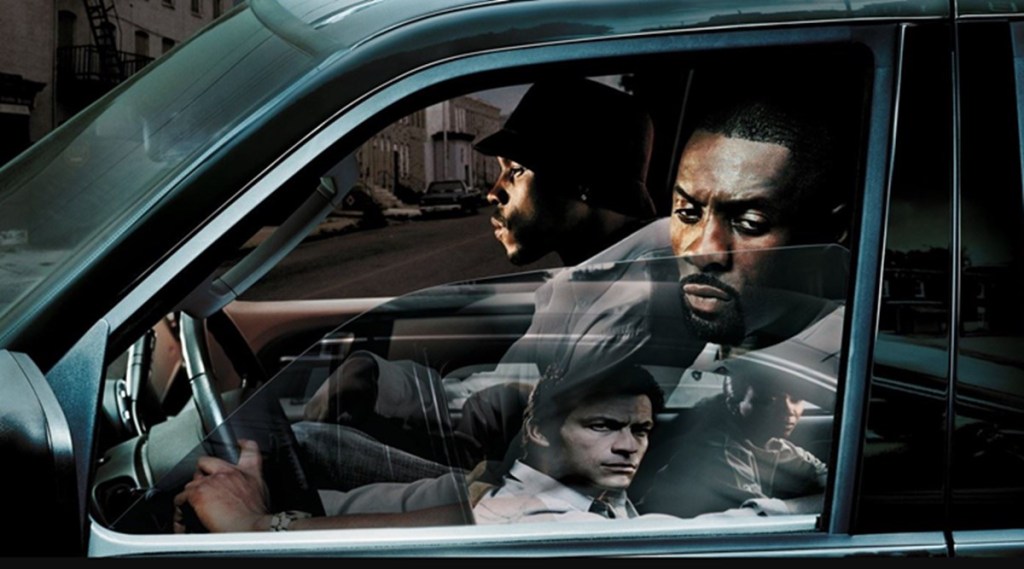
I bet it’s ironic that one of my top ten shows of all time is a police crime drama. The Wire, a show that does not glamorise policing and truly shows how ineffective it can be due to the flawed internal structural mechanics and other hidden agendas, that lean on the political. It paints a grim picture of US crime, where 1 in 4 of the world’s inmates are in US prisons (13th). David Simon’s show also supports #ACAB where Brooklyn Nine-Nine does not. That despite doing their jobs, the show says “all cops are bastards” because they carry out the horrific acts, at the behest of the institution.
There needs to be more shows like The Wire and fewer like Brooklyn Nine-Nine. Post-George Floyd, I don’t think there’s a place for shows like Nine-Nine, glorifying bumbling cops and glamorising office violence as innocent. Maybe it’s time to let it die with the same dignity police allow their Black victims.
Share this:

HMP Science Competition 2020: “Will humans ever meet space aliens?”
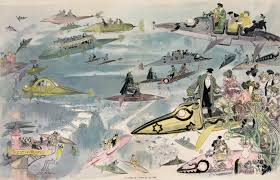
The last few months have been challenging for all of us, in one form or another, regardless of personal circumstances. Many of us have faced loneliness, illness, bereavement, as well as a range of other challenges. Prisoners have particularly been hit hard, with the cessation of family visits as well as, an extremely restrictive regime. As a response to the Covid-19 lockdown, the Criminology team have created a range of different activities which can be undertaken in cell and which have hopefully helped to pass the long hours. Similarly, colleagues within Geography have created a number of different quizzes which have tested both staff and prisoners. As part of this initiative, Professor Nick Petford, Vice Chancellor of UoN kindly offered to run a writing competition focused on science. The winning entry can be read below
There is a near 100% certainty that humans will indeed meet space aliens – and if not within our generation, then most likely within the lives of our children or grandchildren.
However, whilst generations built up on visions of Star Wars and Star Trek might envisage us clasping hands with humanesque visitors from outer space, Babel fish in their ears, the first and perhaps only encounter ever likely to happen is that of a scientist peering at the screen of an electron microscope, to study the truly spectacular and epoch-making vision of an alien self-replicating molecule, or single-celled proto organism, retrieved from a volcanic rent on volcanic vent on Io [moon of Jupiter], Mars or another near neighbour.
The mathematician von Neumann’s concept of the ‘von Neumann probe’, or self-replicating space vehicle capable of travelling interstellar distances, to replicate itself on other planets, from where it would then head off to further star systems, populating the entire Milky Way in less than a million years, does neatly encapsulate the question: If there is intelligent alien life out there, why haven’t we seen it? The only answer to which must be, to the extent it does exist, it must be a long, long way away, in remote galaxies, perhaps too distant to ever be reached by man, as the universe expands more rapidly than we could ever travel.
Initial results from the studies of now thousands of exo-planets have also failed to give chemical indications of oxygen, or other synthesised chemicals likely to indicate life in detectable quantities on our near neighbouring planets.
However, on the smaller scale, if scientists such as Langland are correct in their view that the evolutionary adaptation of self-replicating molecules, leading to early life forms, can be explained by the laws of thermodynamics, prior to any Darwinian pressures on replication, mutation and inheritance traits, life in its most basic forms is likely to be a common phenomenon. Rather than needing a primeval chemical soup struck by lightening to foster the creation of RNA-like molecules, any simple source of energy such as volcanic spark could, over time give rise to simple life forms. Indeed, this is seen here on earth, where a bewildering variety of non-oxygen based simple life forms exist in the plumes of deepwater volcanic rents.
Such life forms may be simple, and their environmental conditions not far extensive enough or long-lived enough for complex life to form, or spread from the immediate vicinity. Even here on earth, life may have existed for two billion years or more before that fateful day when two became one, and complex cellular life came into being.
Sometimes in the near future, life will no doubt be discovered elsewhere than just on earth – with all the implications that will doubtless bring to the monotheistic religions placing God and Man at the centre of creation. But one thing is certain, our first encounter with alien life will be through a microscope, not a spaceship.
M.R. (2020)
Share this:


“Things you need to know about criminology”: A student perspective – Mary Adams, recent Graduate and mature student.

We are all living in very strange times, not sure when life will return to normal...but if you're thinking about studying criminology, here is some advice from those best placed to know!

The most important module to my understanding of criminology is: I would have to say they are all equally important for understanding different aspects of Criminology. In first year I loved The Science of Crime which showed how things have evolved over time, and that what we now see as funny was actually cutting edge in its day. True Crime also makes you look beyond the sensational headlines and separate fact from fiction. In second year Crime & Justice gave a brilliant grounding in the inner workings, and failings, of the criminal justice system. And in third year, the Violence module explores personal and institutional violence, which is especially relevant in current times

The academic criminology book you must read: Becker’s Outsiders and Cohen’s Folk Devils and Moral Panics are a must. I also found Hopkins-Burke’s An Introduction to Criminological Theory and Newburn’s Criminology essential reading for first year as well as Finch & Fafinski’s Criminological Skills. For second year I recommend Davies, Croall & Tyrer’s Criminal Justice. If you choose the Violence module in third year you will be grateful for Curtin & Litke’s Institutional Violence. And don’t forget Foucault’s Discipline & Punish!

The academic journal article you must read:
There are so many excellent journal articles out there, it’s difficult to choose! Some of my favourites have been:
'Alphonse Bertillon & the measure of man' by Farebrother & Champkin;
'Bad Boys, Good Mothers & the ‘’Miracle’’ of Ritalin by Ilina Singh';
'Detainee Abuse & the Ethics of Psychology' by Kathryn French;
'Attachment, Masculinity & Self-control' by Hayslett-McCall & Bernard;
'Grenfell, Austerity & Institutional Violence' by Cooper & Whyte;
'The Phenomenology of Paid Killing' by Laurie Calhoun;
'A Utilitarian Argument Against Torture Interrogation of Terrorists' by J. Arrigo.

The criminology documentary you must watch:
Without a doubt, a must-see is the Panorama documentary London Tower Fire: Britain’s Shame. I would also highly recommend the movie The Stanford Prison Experiment

The most important criminologist you must read:
Of course you must read Lombroso, Beccaria & Bentham. I also enjoyed reading work by feminist criminologists like Pat Carlen, Carol Smart & Sandra Walklate. And of course, Angela Davis is a must!

Something criminological that fascinates me:
What fascinates me is how the powers that be, and a good proportion of the public, cannot seem to realise that social injustice is one of the major factors behind why people commit crime. And the fact that putting more & more people in prison is seen as a ‘good’ thing is mind-boggling!

The most surprising thing I know about criminology is:
The fact that it is such a diverse subject & incorporates so many other disciplines

The most important thing I've learnt from studying criminology is:
Question everything! Don’t take anything at face-value. Try to look beyond the attention grabbing headlines to find out the real story. Read, read, read!

The most pressing criminological problem facing society is:
Unfortunately I think there are many pressing problems facing society today, the main ones being social injustice & inequality, systemic racism, institutional violence, and mass incarceration


When family and friends ask, I tell them criminology is:
Some people joke that I’m learning how to be a criminal! Others think it’s all about locking people up! I tell them it’s all about looking at the mechanisms in-built in our society that disadvantage & discriminate against whole groups of people, and that, unless we are part of the rich & powerful elite, any one of us could find ourselves in the ‘out’ group at any time. I also tell them to stop reading The Daily Mail, vote Labour, and question everything!!

 Thoughts from the criminology team