

10 Things I Want to Say to Jane Austen
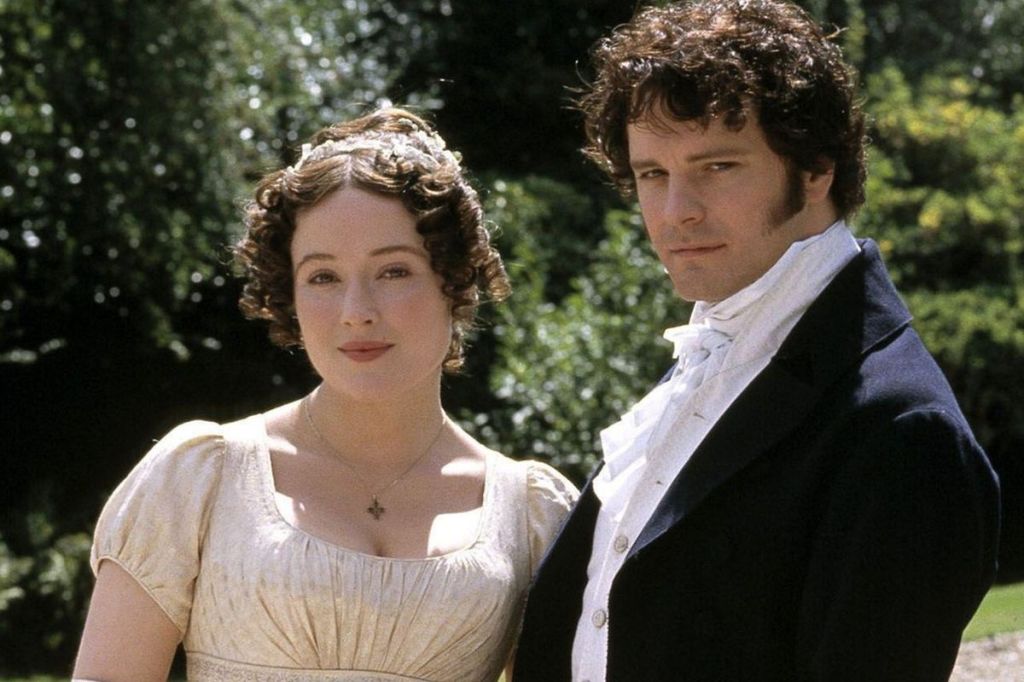
I
Why are you the go-to of all the women writers in history?
II
It’s so hard to cut through the whiteness of your novels. The ongoing enduring whiteness pontificating, reflected in almost all English literary canon. Not impressed.
III
Your books have no heroes or villains that look like me, despite you living in a time where you shared these British streets and roads with the Black Georgians.
IV
Thank God for Andrew Davies’ re-imagining of your unfinished Sanditon. I loved Miss Lambe! #BlackExcellence

V
George Wickham is a wasteman.
VI
Seeing Black people portrayed as actual human beings in a period drama [Sanditon] put butterflies in my stomach. Any time I saw them, I was smiling for a week. With their natural hair as well… truths universally acknowledged and all that #fightme #BlackistheNewWhite
VII
When you see these characters, you remember every detail. You recall it as memory, as a a vivid as a ballroom dance – corsets, violins and the flesh Mother Africa.
VIII
Why couldn’t you have characters like Rhoda Schwartz or Sam from Vanity Fair by Thackeray? #ohshityoudeadthen
IX
If you were around today, you’d be unstoppable on Twitter with your idealised femininity and blinding whiteness. You’d be what they call an influencer #wokeAF #edgelord
X
Badly Done, Jane.
Share this:


DNA Tinkering/Pandora’s box. #BlackenAsiaWithLove
Who would choose to be black?
To have dark skin?
Dark brown eyes?
A wide nose?
Or yellow skin?
A round face?
Not-so-blue eyes?
Who would choose this?
If given a choice, if you could go to the store…
And pick out a kid?
Now remember, like every parent, you want your kid to have a happy life.
Successful, easy, fulfilled…
All those things.
So, don’t blonds have more fun?
OK, so those of you who bleach your hair,
Would you choose to have blond kids?
Skip the bleach?
Or, for those who bleach their skin…
Would you tweak your kid’s DNA to give them lighter skin?
Or a more narrow, acauline nose?
Thinner calves and longer legs?
Plumper lips and longer eyelashes?
Or double eye-lids?
An angular jawline?
Breast size?
Would you have a kid that looked like you?
Do you hate yourself so much that if given the choice,
Would you erase you?
There is a race for technology right now…
One that would allow gene editing,
And needless to say, I don’t mean ‘jean’ editing like painting your denim,
Or taking a pair of shears to them, trimming them in places, selectively poking holes in others…
Needless to say, I don’t mean that,
But, ‘genes’ as in genetics,
As in DNA editing.
And not just going to a doctor to choose to have a kid- or not.
And no, I don’t mean going to a medical professional and having them test you and your partner’s blood to see if you both carry the same deteriorating genes.
Did you know that
In some places, if you and your fiancé carry the gene for some diseases, then
The state won’t sanction your relationship.
And no, I don’t mean like your fiancé being of the so-called wrong religion or the same gender.
But what about so-called diseases like Huntington’s Disease?
There are literally a litany of diseases that require better research and funding just to save lives.
And they jailed that doctor in China who gene-edited HIV immunity.
Though clearly more people are willing to pay for a thinner nose than a Sickle Cell test.
But now we have designer babies: Eye color, intelligence and height?
Freckles?
Earwax stickiness can be selected in a lab.
Fertility clinics routinely remove cells from embryos to check for diseases, sex, eye-color…
But you can go to the shop on the corner now, and
Change your hair color, and
On the next corner, you can change boring brown eyes to blue, magenta, hazel…
Anything but boring brown of the majority of the planet, BTW.
Select babies?
I am black.
And gay.
And in spite of my many other attributes – like my faith, my values or my politics –
These two singular characteristics have uniquely marked my life.
What if I could change these?
Being gay has caused me to doubt my own mother’s love,
Doubt my own allegiance to my community due to open homophobia towards me.
For many, now,
A gay foetus is NOT a viable foetus.
For them, gays are an ugly smear that must be erased.
Gay life is so abhorrent that they cause it harm at every turn…
Eschewing every opportunity god gives them to show compassion.
Would you edit us out of existence?
Share this:


Why do HEIs task diversity leads with solving systemic issues?
“While it is of utmost importance that universities reflect the demographic diversity of the societies they are supposed to serve, the question of demographic diversity falls short of addressing the question of decolonisation.”
(Icaza and Vázquez, 2018: 115).
When equality, diversity, inclusion work is left to a few good eggs in our universities, there is a problem. Hiring EDI leads will not make your institution less racist, sexist, ableist, homophobic or transphobic. Equity must be part of how a company hires and makes decisions, and that goes to to the very top of any establishment. From healthcare to policing and education, public and private bodies claim equality, diversity and inclusion is a priority. However, there is a gap between what institutions say, and do.
Diversity officers, equality leads, and roles with “BME” and “BAME” in their titles are blue plasters for what is essentially a tumour. Whilst I recognise these roles need to exist, EDI and race equity should be in the main objectives and KPIs of all universities. Decolonisation needs to run hand-in-hand with diversity work, and whilst universities give lip service to EDI while simultaneously not engaging in decolonial projects, what you’re telling the victims of colonisation is you don’t belong here.
Colonisation, and then its flip, decolonisation, is systemic and far-reaching. To hire an individual (singular) in these roles, often on a part-time basis to tackle systemic problems is both short-sighted and cruel. There is no quick-fix to say, institutional racism, and it’s everyone’s responsibility.

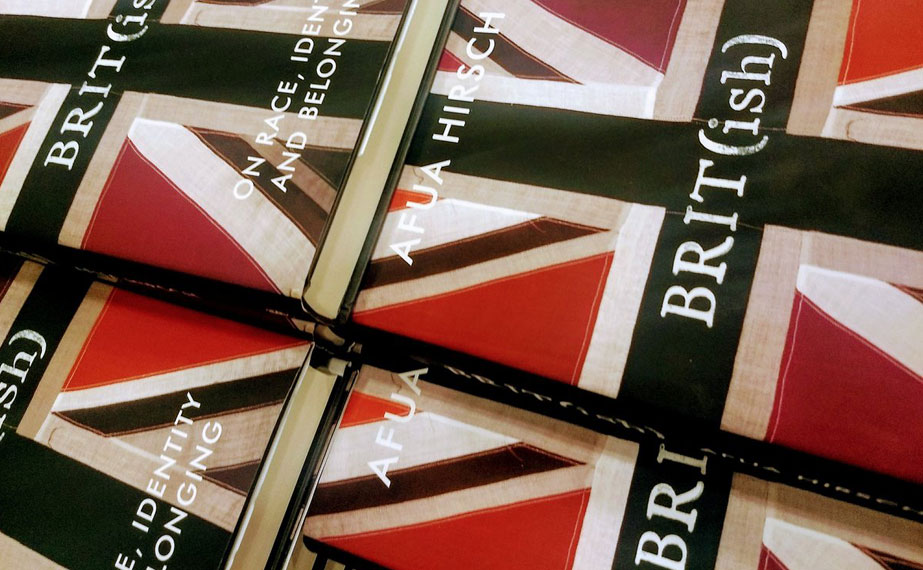
Having attended conferences ostensibly focused on racism, it is evident another profound challenge to higher education is a reluctance from institutions to talk about race – and to implement race equity as a separate division to generic EDI practice. Under race, we have: whiteness, White Privilege and (race-specific) unconscious bias, as well as identity politics impacting the life experiences of people of colour. What the African-American cultural theorist W. E. B DuBois (1903: 2) called “double consciousness,” and more recently with Afua Hirsch (2018) in Brit(ish).
Universities need to support student campaigns for race equity and diversity, including student union initiatives around decolonisation (and blacktivism) in response to national (and global) narratives, as political activism is one of the movements pushing for a more equal and fair society.
Consistently, Britain’s national response to race issues has swayed from varying degrees of reluctance to negligence and this is no more evident than in the education sector. Britain’s response to discussing its colonial past is what Shashi Tharoor called “historical amnesia” (Independent) and “today’s student movements are confronting universities with their colonial histories […] of segregation […] and the recognition of the universities’ own participation in the modern/colonial order” (Icaza and Vásquez, 2018: 122).
HEIs need to support campaigns, including those around decolonising education (and blacktivism) regardless of their source. Icaza and Vásquez discuss decoloniality as a conduit to seeing “the dynamics of power differences, social exclusion and discrimination” in relation to inequality under the umbrella of race, gender, and socioeconomic deprivation (2018: 113). Whilst their research centres on Amsterdam, contemporary Britain, is also built in the ruins of empire.When White, able-bodied heterosexual male is the default in a heteronormative society, it is safe to presume the same occurs in HE. After all, universities as with all British institutions, are part of society and thus cannot escape the same colonising imperatives.
Elite universities, such as Oxford, have been scrutinised for their part in British colonial history. The Academy was built to exclude people who were not White, rich, male, able-bodied and straight, ensuring that minorities often find themselves scaling the walls into The University.
Student equality, or lack of, can be seen reflected in those teaching them on a day-to-day basis. To feel equal in the classroom, one focal point of conversation is the lack of role models – the deficit of professors in HE to be like, from varied diasporic African and Asian backgrounds.
In the Equality in higher education: statistical report 2018, Advance HE stated only 85 Black professors work at British universities (in relation to over 10,000 White). This statistic is an indictment on the lack of visibility at the very top of academia, and representation needs to extend further than race to also include disability, sexuality and religion. It is about seeing your story in those that have gone through it before, to show the next generation of potential leaders and academics it is possible.
Whilst efforts to make universities more inclusive have been implemented through initiatives like decolonising the curriculum this is a drop in the ocean in terms of diversifying the workforce, including senior management teams (Icaza and Vásquez, 2018: 115). To reach the fullest potential of diversity in HE it is essential to have as many nonnormative voices as possible in the decision-making processes. In including them, we can then more openly critique what knowledge is being produced, how it is being produced and what’s being created. How it is implemented directly impacts student equality and how they feel included in their university community:
“The implications of this whiteness and Eurocentrism go beyond history. This state of affairs mediates our whole education experiences considerably, so much so that attempting to study anything outside of the white and Eurocentric requires going the extra mile.”
Ore, 2019: 56
For race equity, especially in a student body as culturally diverse as at Northampton, it is important to consider whether the continuing use of homogeneous groups for minorities, such as BAME [Black Asian Minority Ethnic] inculcates equality or creates further division. Certainly such homogenisation inherently excludes discourses of intersectionality so necessary in ensuring equity. When universities enrol these students, it is imperative to consider if there are ample, appropriate support systems in place – from race equity to working class, sexuality and disability.
Across the sector, the dropout rate of specifically Black students is high, and one would think there would be support prevention systems to reduce the number of drop outs. At UK universities, Black students are 50% more likely to drop out than their Asian colleagues and one in ten Black students drop out, in comparison to 6.9% of all students – according to the University Partnership Programme, Social Market Foundations (Adegoke, 2019: 32-33).
Goldsmith’s Dr Nicola Rollock, for instance, believes not enough is done to investigate the cause and believes there’s a fear of talking about race in the sector:
“My concern is that these issues aren’t look at in any fundamental way: when they are, all black ethnic groups are amalgamated into one mass, and they shouldn’t be. The data doesn’t speak to distinct differences. And there’s also a fear of talking about race. If they’re talking about black and minority ethnic students, race needs to be a fundamental part of the conversation, but I would argue that as a society, and […] within education policy, race is a taboo subject” (Rollock, 2019, quoted in Adegoke, 2019: 34).
For a university as culturally diverse as Northampton (as far as students are concerned), is it right to put people into homogeneous groups, like BAME? Is there equity in grouping this way? Why are students not born into White Privilege amalgamated into one mass? Why is there a fear of talking about race in classroom but also in wider society? What if they were lesbian, gay, bisexual or transgender, as well as from the African or Asian continents?
Do HEIs have ample support systems in place – from race, gender to sexuality and disability? Moreover, universities often think it is enough to have more Black people in the building. Emotional labour is not something higher education institutions think about (Adegoke, 2019: 33).
What providers can do is engage with national reports, including the Race Equality Charter (REC) – but also 2017’s Lammy Review, and the 1999 Macpherson Report (both focused on the criminal justice system but no less relevant to universities) – and research into LGBTQ+ experiences in higher education, as shown in Education Beyond the Straight and Narrow by the National Union for Students [NUS].
Where universities see equality, diversity and inclusion work as a legal requirement under the Equality Act (2010), important and vital discussions around ethics and moral duty need to happen as well. Where HEIs often think about the money, there is a human case to be made for students!
When EDI is seen as an add-on to general practice, it can often be viewed as a “tick-box exercise.” It can frequently have an image of transitioning or adaptation, often describing “their missions by drawing on the languages of diversity as well as equality” (Ahmed, 2018: 333). Diversity should be the default setting but hiring people with BME, BAME, diversity, equality or inclusion in their title is simply a blue plaster for what is a far-reaching nasty tumour. To do diversity work, you must do decolonial work.
So, really, higher education institutions need to be thinking about how the emotional labour of equality and diversity work impacts their employees, especially women of colour.
Referencing
Acciari, L (2014). ‘Education Beyond the Straight and Narrow,’ nus.org, [online]. Available from: https://www.nus.org.uk/global/lgbt-research.pdf [Last accessed 30 December 2019]
Adegoke, Y and Uviebinené, E. (2019). Slay in Your Lane. London: 4th Estate.
Advance HE (2018). ‘Equality in higher education: statistical report 2018,’ ecu.ac.uk, [online]. Available from: https://www.ecu.ac.uk/publications/equality-higher-education-statistical-report-2018/ [Last accessed 30 December 2019]
Ahmed, S. (2018). Rocking the Boat: Women of Colour as Diversity Workers. In: Arday, J., Mirza, S. (eds). Dismantling Race in Higher Education: Racism, Whiteness and Decolonising the Academy. London: Palgrave Macmillan, pp. 331 –348.
Bhopal, Kalwant (2018), ‘The Persistence of White Privilege in Higher Education: Isn’t it Time for Radical Change?,’ Social Sciences Birmingham, [online]. Available from: https://blog.bham.ac.uk/socialsciencesbirmingham/2018/05/24/the-persistence-of-white-privilege-in-highereducation-isnt-it-time-for-radical-change/ [Last accessed 30 December 2019]
Broomfield, Matt (2017) Britons suffer ‘historical amnesia’ over atrocities of their former empire, says author. Independent [online]. Available from: https://www.independent.co.uk/news/uk/politics/shashi-tharoorbritain-india-suffer-historical-amnesia-over-atrocities-of-their-former-empire-says-a7612086.html [Last accessed: 31 December 2019]
Bulman, May (2017) Black students 50% more likely to drop out of university, new figures reveal. Independent [online]. Available from: https://www.independent.co.uk/news/uk/home-news/black-students-drop-outuniversity-figures-a7847731.html [Last Accessed: 31st December]
DuBois, W. E. B. (1994). The Souls of Black Folk. Dover Edition. New York: Dover Publications. Inc
Equality Act 2010. London: TSO.
Fanon, F. (1967). Black Skin, White Masks. New York: Grove Press.
Hirsch, A (2018). Brit(ish). London: Vintage.
Home Office. (1999). The Stephen Lawrence Inquiry. (Chairperson: William Macpherson). London: TSO.
Icaza, R., Vásquez, R. (2018). Diversity or Decolonisation? In: Bhambra, G. K., Gerbrial, D., Nişancioğlu, K. (eds). Decolonising the University. London: Pluto Press, pp. 108 – 128.
Kwakye, C and Ogunbiyi, O. (2019). Taking Up Space. London: Merky Books.
Lawton, Georgina (2018). Why do black students quit university more often than their white peers? The Guardian [online]. Available from: https://www.theguardian.com/inequality/2018/jan/17/why-do-blackstudents-quit-university-more-often-than-white-peers [Last accessed: December 31 2019]
Lodge-Eddo, R. (2017). Why I’m No Longer Talking to White People About Race. London: Bloomsbury.
Ministry of Justice (2017). The Lammy Review. (Chairperson: David Lammy MP). London: TSO.
Social Market Foundation (2017) SMF and the UPP Foundation to investigate continuation rates in higher education in London. smf.co.uk [online]. Available from: http://www.smf.co.uk/smf-upp-foundationinvestigate-continuation-rates-higher-education-london/ [Last Accessed: 31 December 2019]
Social Market Foundation with University Partnership Programme (2017). ‘On course for success? Student retention at university,’ smf.co.uk [online]. Available from: http://www.smf.co.uk/wpcontent/uploads/2017/07/UPP-final-report.pdf [Last accessed: 31 December 2019]
Share this:


Behind Closed Doors
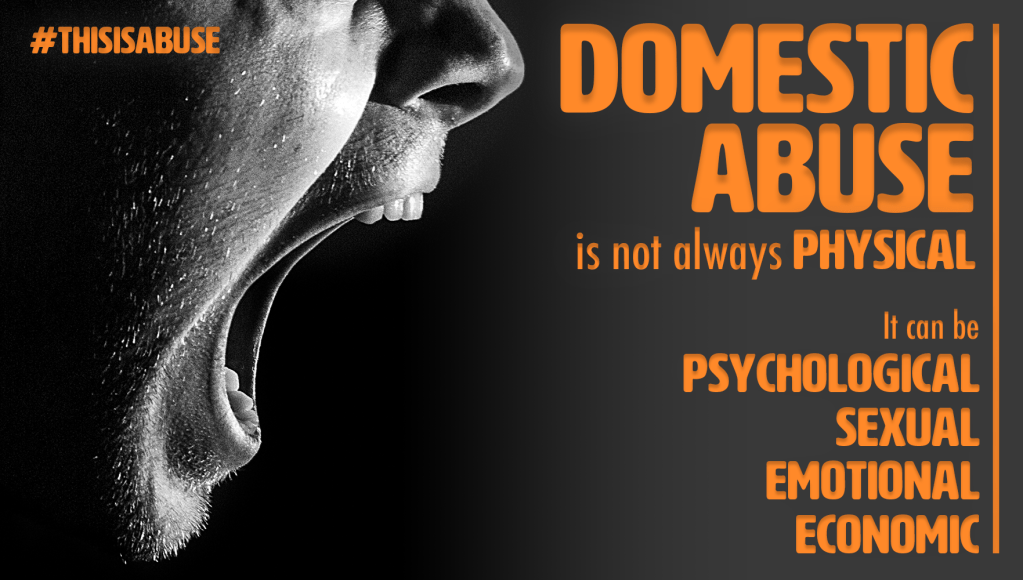
1 in 4 women will be affected by intimate partner violence (1).
I remember when I first heard that statistic in my teenage years, I thought to myself ‘that’s a lot of women! That’s a scary statistic!’ Having never been in a relationship till my mid-twenties, it was something I had never personally experienced, but saw it happen to some of my friends, and I know many people, and have met so may women, (and some men) who have been in violent and abusive relationships…
At the age of 17, whilst doing my A-levels, I saw some of my close female friends suddenly not show up to class. 6 months later, she came back and opened up about being in a violent relationship, and how her partner made her sick, and used to physically beat her.
When I was a university student, another friend of mine was in a violent relationship and struggled to cope with the ordeal whilst doing her degree. To this day, I still do not know how she pulled through being a university student whilst going through what she experienced.
At my local food bank, I have met many women who escaped violent relationships, and were living in supported accommodation. One lady I helped had even escaped honor based violence! She was no longer allowed to go back to her home country otherwise she would be killed for divorcing a violent man.
Following an event with the Himaya Haven (2) with a guest speaker talking about her experience of domestic violence, I was inspired and felt compelled to do more to help women affected by domestic abuse. After weeks of planning, praying, preparations and getting everything arranged, the event took place. October 25th 2018, with the help of a dear friend, we hosted and ran a domestic violence workshop, followed by a beauty therapy session to help women who had been affected by domestic violence. This was blogged about here: Incredible Women!
The types of domestic abuse I encountered was not just physical or psychological… I met women who were affected by financial domestic abuse, sexual violence and rape, honor based violence, coercion, possessiveness, controlling behavior, stalking, manipulation and gas-lighting, and some had even been banned from seeing family members and friends, and were not allowed to leave their homes unless their partners/husbands went with them….
Whilst I aim to raise awareness of this for International Women’s Day, let’s also highlight that women are extraordinary! All of my friends, family members and colleagues who have been affected by the scourge that is intimate partner violence, are still exceptional and exemplary human beings who are unique and amazing in their own special way.
Women are powerful – whatever is thrown at us, we will power through it and overcome it! Every single one of my friends and family members who have been affected by domestic abuse are powerful women who overcame all odds; regardless of the situation.
More statistics from Living Without Abuse and Office for National Statistics
- Domestic abuse will affect 1 in 4 women and 1 in 6 men in their lifetime
- 2 women are murdered each week and 30 men per year from domestic abuse
- Has more repeat victims than any other crime (on average there will have been 35 assaults before a victim calls the police) (3)
- The year ending March 2019, 2.4 million adults had experienced domestic abuse (1.6 million women and 786,000 men) (4)
References
(1) Living Without Abuse (LWA) Statistics Available online at: https://www.lwa.org.uk/understanding-abuse/statistics.htm Accessed on 08/03/2020
(2) Himaya Haven About Us Available online at: http://himayahaven.co.uk Accessed on 08/03/2020
(3) Living Without Abuse (LWA) Statistics Available online at: https://www.lwa.org.uk/understanding-abuse/statistics.htm Accessed on 08/03/2020
(4) Office for National Statistics ‘Analysis of Domestic Abuse Data’ Available online at: https://www.ons.gov.uk/peoplepopulationandcommunity/crimeandjustice/bulletins/domesticabuseinenglandandwalesoverview/november2019 Accessed on 08/03/2020
Share this:


News Flash #BlackenAsiaWithLove #SpokenWord
This Spoken word piece was inspired by watching the TV news with my aunt Shirley. Shout-out to Evelyn from the Internets, because I’m calling in Black tomorrow.
Audience/Reader: Hum, snap, step, clap, sing ‘Another One Bites the Dust’
Newsflash at dawn:
After several overnight reports of disturbances,
Police are on the lookout this morning for a smart negro male,
Accused of bringing up racism and angering the masses.
The suspect is considered armed with intelligence,
and other deadly weapons such as pen and paper.
Bang!
9 0’clock morning News:
Police are on the lookout for a smart negro male,
Accused of bringing up racism and angering the masses.
Suspect is considered armed with intelligence and other deadly weapons.
The public is advised NOT to approach the suspect,
And notify authorities immediately…
Immediately…
So he can be shot.
Bang!
Bang! 
News at noon.
Police are on the lookout for a smart negro male,
Accused of bringing up racism and angering the masses.
This station has obtained exclusive video of today’s deadly police shooting captured by a member of the public.
This exclusive footage posted to social media shows the suspect reading a book on colonization, before advising authorities who responded immediately…
When authorities arrived,
Suspect was found holding a book,
Defacing it with pens and markers as officers approached.
This exclusive video captured by several members of the public shows suspect refusing the officers’ orders to release the book.
Suspect is seen raising the book,
At which point officers fired 32 shots,
Twelve of which landed in the suspect’s head.
After anti-terrorist units spent several hours clearing the area of any potential radical activity,
Emergency services were allowed on the scene at which point the suspect was pronounced dead.
Bang! Bang!
Bang!
Evening news flash:
This station has new, exclusive CCTV footage from the Central Library where the suspect loitered for several hours.
The suspect is captured on several different cameras,
And can even be seen interacting with several members of the public.
An anonymous informant who works for the library claims that the suspect left several notes in the suggestion box, demanding the library, quote:
“…rectify the deafening void of Black autobiographies in the library’s Great American biographies collection.”
The anonymous library informant said that the suspect always sat at the same table near the ‘African-American literature’ section,
And had been seen furiously taking notes while going through stacks of books.
The anonymous informant says that the library received
“Several complaints about these disturbances.”
None of the complainants ever went on record.
News at 5!
This station’s investigations have also uncovered the Central library’s exclusive files on the suspect.
The suspect joined the library on September 11th of 1984 under a student account and a different name. That’s right.
We’ve obtained an exclusive ‘News at 5’ interview with the suspect’s fourth-grade teacher who initially helped the suspect set-up the library account.
The teacher describes the suspect as quote disruptive and “radical to the core,”
The teacher claims that during a history lesson, the suspect once referred to this nation’s founding fathers as “Unpatriotic, patriarchal, racist oligarchs with a God complex.”
Indeed, this suspect has a pattern of radical, anti-American sentiments.
While these troubling incidents were well before the terrible radical Islamic attacks of 9-11,
The pattern suggests early radicalization!
Authorities are still trying to understand why the suspect checked out a Koran,
And other books on Islam,
Just days after those terrible, Islamic attacks.
The suspect visited the library regularly and checked out biographies of other known negro Muslim radicals such as Malcolm X and Muhammad Ali.
Experts believe that reading these texts lead to the suspect’s radicalization.
From 2006 to 2007,
The suspect checked out every collection of essays by James Baldwin.
This triggered the FBI’s terrorist watch protocols.
Nightly news flash:
New evidence has surfaced regarding today’s tragic case of domestic terrorism.
Authorities have found that the suspect was quote very active
In the known radical hate group Black-and-Proud.
Our investigative reporters have uncovered proof that
The suspect was a key member of this radical hate-group.
Apparently, authorities had infiltrated Black-and-Proud’s on-line forum as early as 2006.
An anonymous police informant closely tied to the case believes that the suspect may have worked within an organized cell within Black-and-Proud.
Authorities are not calling it a terrorist plot,
But are calling on the public for any leads.
This station has obtained exclusive footage of Black-and-proud operatives conducting an indoctrination program for kids as young as five.
In this newly obtained footage from Black-and-Proud’s own website,
The suspect can be seen reading portions of the autobiography of Malcolm X to what looks like a negro kindergarten class.
Authorities are calling it a justified homicide.
Case closed.
—
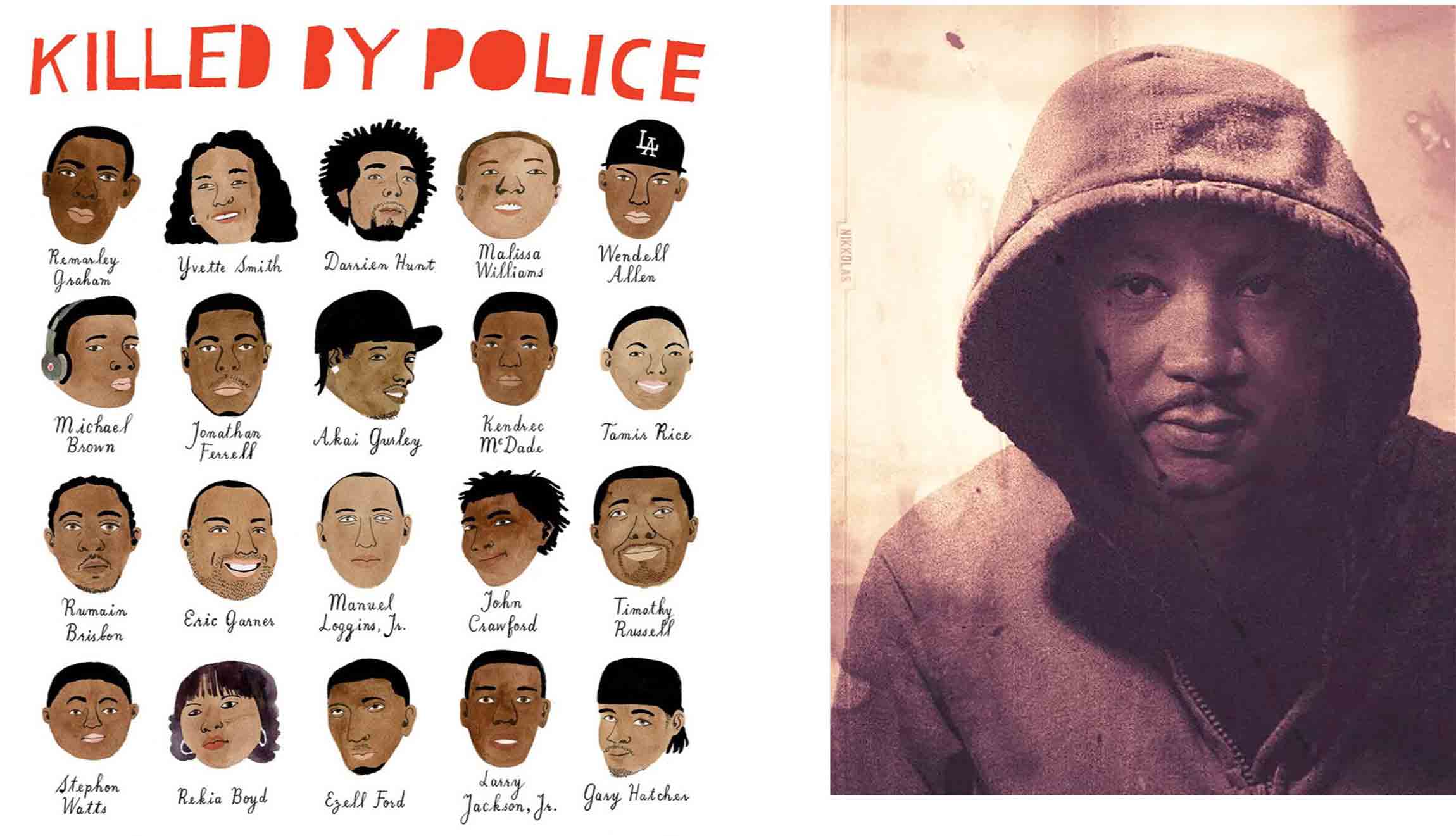
Photo credit:
The most powerful art from the #BlackLivesMatter movement, three years in
Washington Post, July 2016
Share this:


If universities are serious about decolonisation, why do they continue with BAME?

One thing I’ve noticed in my term at the Student Union but working with university departments and staff, and going to other universities, is how many different terms there is to describe people who do not happen to be born into the comfort of White Privilege. At the University of Northampton, this demographic of students are the majority, so why refer to them as ethnic minorities? We are also the global majority. However, the term “ethnic minority” is only in reference to when take into account the colonial borders that divide us. And in my role at the Union, I had no say in the naming of this role, since it was before my time.
Yet, it is a trend at universities that we have White senior leaderships speaking for what I will refer into this post as the global majority. This very European paternalism in the tint of Out of Africa, Passage to India, and Boris Johnson reciting the lines to Kipling’s Mandalay in Burma! In the public and private sector, we have many acronyms and initialisms and seldom are they properly thought out. i.e BAME / BME. Not only are these terms not widely understood by those they are about (i.e students), they also homogenise identities that don’t happen to be White Anglo-European.
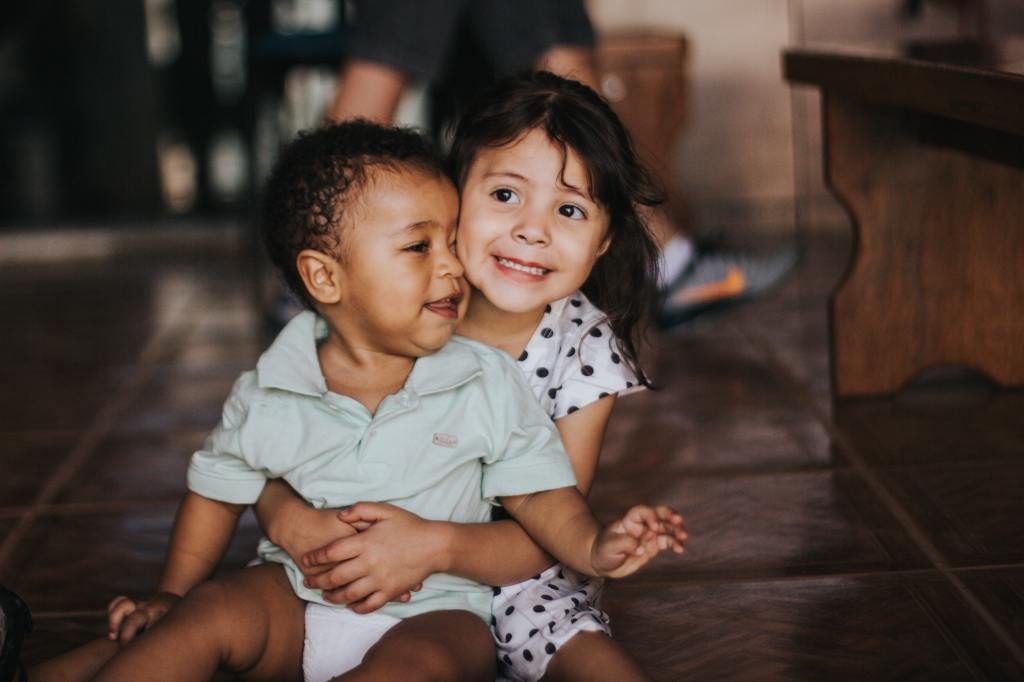
“BAME” [Black, Asian, Minority, Ethnic] and “BME” [Black and Minority Ethnic] are commonly used by public bodies, including the education sector, policing and the health service when referring to the global majority. These are not household terms and you don’t know unless you know.
People of Irish heritage in the Traveller communities are also supposedly included within the acronym too; not including them in the overall term is astounding, as they are some of the most marginalised groups in the country.
With the term “BME” in my job title, I admit it is extremely ironic that I disagree with it. I do not see myself ethnically as BAME or BME, and don’t particularly like it when staff describe students in this way, or even members of staff. What ever happened to individuality? I am a very proud British man of Grenadian and Jamaican descent. In this homogenisation, higher education institutions are disregarding individuals’ cultural heritage. It’s really unacceptable, and at universities, it has often been used as term interchangeably for Black students. And even Black, is not a homogenous. Race is nuanced, and identity politics, nuanced, further still.
Furthermore, “non-White” is problematic, still showing that we only exist as an extension of whiteness. Moreover, the term “people of colour”, it’s not a homogeneous group; skin folk ain’t kin folk and diversity doesn’t equal representation
Do we say non-Black when referring to White people? No, as “to be white is to be human; to be white is universal; I know this because I am not” (Eddo-Lodge, 2017). The term BAME / BME disregards geography and cultural heritage, the loaded histories of colonialism and the fact that my country, the country I was born and raised, colonised and enslaved my grandparents’ country. It ignores customs, traditions and language and that “anyone who isn’t white, all us brown-skinned immigrants from Far Far Away, we get lumped together and put in a drawer” (Boakye, 2019)
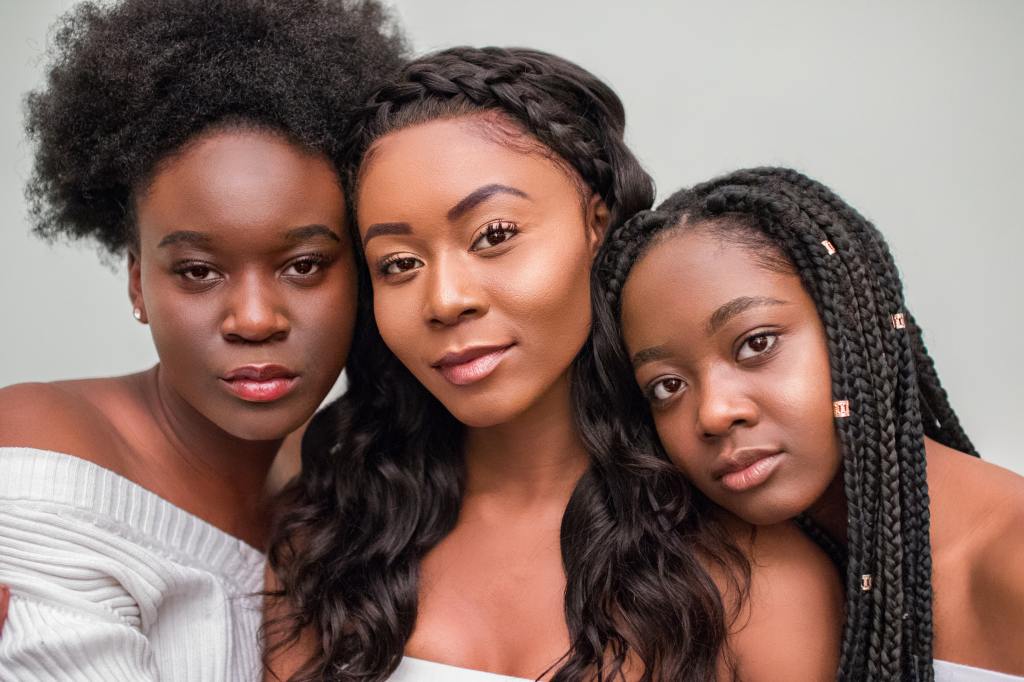
Whilst higher education institutions often give lip service to decolonial work, they continue to preach diversity and inclusion with terms like BAME, as “the words and terms we use to describe ourselves remain central to the ways we relate to our bodies. Certainly, if we want to set about work of decolonization we need to consider language” (Dabiri, 2019). Dabiri goes onto discuss the disparity between “cornrowing” (US English) and “canerowing” (Caribbean and British English) hair as a sad overhang of slavery. It could be argued that acronyms like BAME are a new brand of colonisation, keeping these Black and brown people in their place.
Universities know that they need to challenge the histories from which they were built. Just, are they a bit reluctant to do so? Yes. Is British traditionalism often standing in the way? Yes. We are living in the ruins of empire, and institutional racism is an overhang of that. And if academics and non-academics are using terminology that’s offensive and that people don’t understand, is it fit for purpose? Knowing what is appropriate language in discussions on race is the first step in this conversation.
If universities are serious about decolonisation, they need to look at more than just adding diverse authors to curricula!
Referencing
Boakye, J. (2019). Black, Listed. London: Dialogue Books.
Dabiri, E. (2019). Don’t Touch My Hair. London: Allen Lane.
Eddo-Lodge, R. (2017). Why I’m No Longer Talking to White People About Race. London: Bloomsbury.
Please Note

Any questions, email me at tre.ventour@northampton.ac.uk

 Thoughts from the criminology team