

Hate crime in The Period Drama fanbase is endemic

After reading a blog by History’s Drew Grey on ‘Racism, Diversity and Contested Histories: Some Reflection on Christmas Just Past’, I began to think about my favourite television genre (by some distance), the Period Costume Drama. Reading his post took me back to when I saw David Olusoga presenting Black and British for the first time on the BBC, but more specifically his monologues about mixed-race families in Georgian Britain. Whilst Drew’s post boasts diversity in the latest adaptation of A Christmas Carol (based on the Charles Dickens story) by Peaky Blinders‘ Stephen Knight, diversity in the Period Drama fanbase is a contentious discussion.
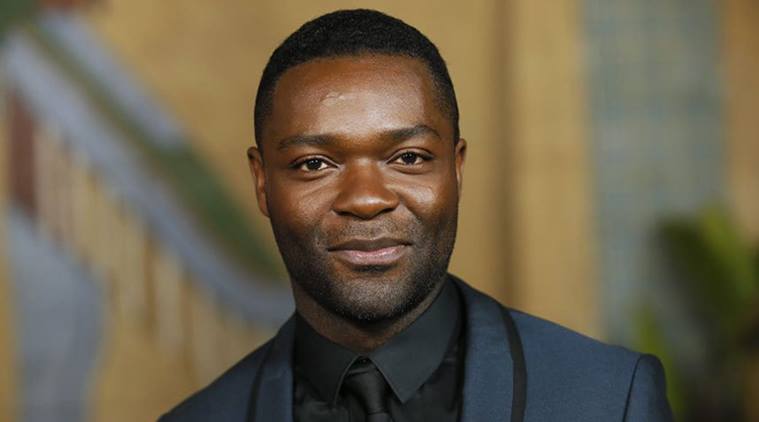
His post reminded me of my dissertation where I was looking at my roots. Finding myself. Lost in my race-identity politics, it feels like a decade ago reading Reni Eddo-Lodge’s Why I’m No Longer Talk to White People About Race for the first time. A text that colleague and blogger @paulaabowles calls “a machine gun,” (with a smirk). It’s simply relentless. However, it was David Oyelowo’s quote in the Radio Times that’s stayed with me ever since.
“We make period dramas [in Britain], but there are almost never any black people in them, even though we’ve been on these shores for hundreds of years. I remember taking a historical drama with a black figure at its centre to a British executive with greenlight power, and what they said was if it’s not Jane Austen or Dickens, the audience do not understand.” – David Oyelowo (in Eddo-Lodge, p55)
Oyelowo goes on to say “I thought – OK – you are stopping people having a context for the country they live in and you are marginalising me.” So, is it any wonder why so many of our Black actors have gone to Hollywood and made it big? Idris Elba made it as Stringer Bell in The Wire before we knew him as DCI John Luther. Oyelowo was Martin Luther King in Selma (as well as his British co-star Carmen Ejogo as Coretta Scott King), and has had roles in The Help, Queen of Katwe and Disney’s Star Wars Rebels. John Boyega was in Star Wars and Daniel Kaluuya slayed as Chris Washington in Get Out.
Whilst many of these works aren’t all costume pieces, the fact that Black actors have to go overseas bothers me. Yet, Black History to British audiences has always been African-American history. To find Black British history, you really have to look for it. So, when we see characters like Kitty Despard (Poldark) or Miss Lambe (Sanditon) or even Dev Patel as David in the upcoming The Personal History of David Copperfield, it’s in opposition to the histories we think we know, the histories we were taught at school.
So, why is there such a backlash to non-White people in this genre? Is it one more example of Black and brown people being where they shouldn’t? You know Black faces in White spaces? From the streets of Georgian London to Walter Tull mobbed by 20,000 Bristol fans in 1909. Or is it a consequence of a population bludgeoned by historical misinformation? After all, isn’t the best way to have complacent people, to cut them off from knowledge? And if you don’t know your own history, do you know who you really are?
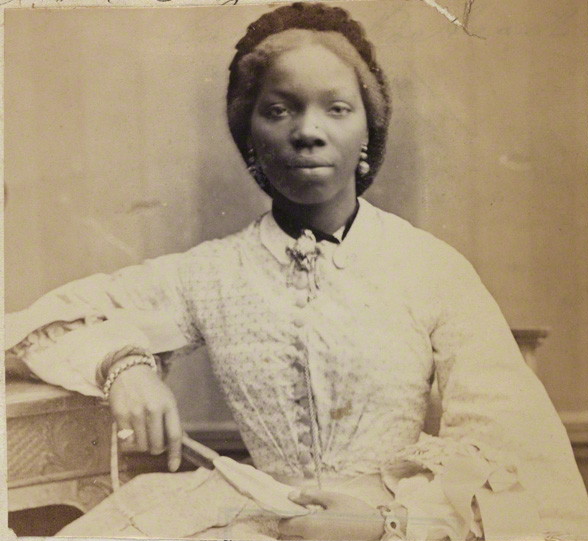
Photo Credit: Camille Silvy (September 1862)
In the same century Charles Dickens was writing about Jacob Marley, Scrooge and Tiny Tim, Queen Victoria’s African goddaughter Sarah Forbes Bonnetta was growing up in England wondering the streets of London, as “part of Britain’s imperial project.” It’s the story of Black Victorians, many of which could “only be told through the words of others” (Olusoga, p331).
Whilst these discussion forums, are majorly female, they are some of the most misogynistic places I’ve seen on the internet. There’s one Facebook group where I have been labelled a “troublemaker” for calling out racism and homophobia, as many members are also American, card-carrying Republicans who voted for Donald Trump. And feminism is only White. They see intersectionality as an inconvenient myth and the stories of non-White women in history an afterthought. That’s how White Privilege works.
This culture of hate against non-normative voices is dominant in the Fandom Menace, as I like to call it. The online forums are infested with racism, misogyny and homophobia: from Gentleman Jack to Beecham House, Drew’s descriptions of the backlash to the mixed-race Cratchit family act as a metaphor for a toxic fanbase, and contesting these histories can often be a homophobic act, a racist act, even if it’s born from ignorance.
There is an endemic problem within society, where we allow older generations, including “sweet old ladies” in The Period Drama fanbase to get away with hate speech because that’s “how they are” and they “don’t really know any different.”
What’s more, and what was great about A Christmas Carol was how unapologetic the makers were about their diversity. This family were Black and they were White. This was mixed-race Britain in the 19th century. Moreover, Mary Cratchit and how Black women take on everyone’s emotional labour. Be it modern times or Victorian times, Black women are in the business of saving grown-ass men from their own emotional work!
Mixed-race inclusion is a testament to our history and a thumb bite to Englishness as a synonym for whiteness, and the colonised imperatives that continue to dominant storytelling, as said (but not so bluntly) by Darren Chetty in ‘You Can’t Say That! Stories Have to be About White People‘. Due to the inherent whiteness of institutions, they recruit in their own image, and history is no different. What’s that saying about apples and trees?
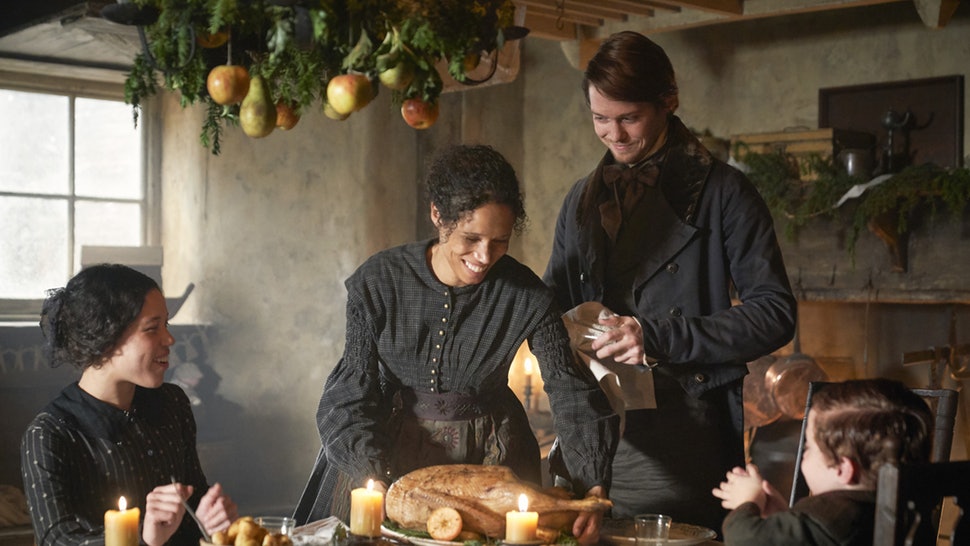
Certain members of the Period Drama community would like to believe Britain was only White before the 1950s. No, it’s simply the establishment has done a grand job of writing us out of British history books, but Black people have been part of every era of British history. I can tell you that.
BBC’s A Christmas Carol shows why representation matters and that history is not only the responsibility of historians. Artists also carry the load of telling these social histories (that’s what Dickens is) accurately and they can do better when it comes to the spectrum of diversity in the Period Drama.
And due to how History has been taught to every generation at all levels of education, is it surprising I encounter “sweet old ladies” using “historical (in)accuracy,” as a conduit to enable their racist, homophobic and misogynistic views?
Works Mentioned
Chetty, D. (2017). You Can’t Say That! Stories Have to Be About White People. In: Shukla, N (ed). The Good Immigrant. London: Unbound Publishing, pp. 96 – 107.
Kwakye, C and Ogunbiyi, O. (2019). Taking Up Space. London: Merky Books.
Lodge-Eddo, R. (2017). Why I’m No Longer Talking to White People About Race. London: Bloomsbury.
Olusoga, D. (2017). Black and British. London: Macmillan.
Share this:


“Back to the future”: 2019 A Year of Violence?

When I was young, 2020 seemed like the stuff of science fiction. Programmes like Tomorrow’s World held the promise of a future full of leisure, with technology taking the strain in all aspects of human life. Now we’re in 2020 it appears we have plenty of technology, but whether it adds or subtracts from the lived human experience, is still very much up for discussion. Certainly, it is increasingly difficult to separate work from leisure with the liquidity technology brings.
As is traditional for this time of year, the mind turns to reflection on the year gone by. This year is no different, after all it, like many others, has been packed with both good and bad experiences. Personally, 2019 was challenging in a number of different arenas, my patience, temerity and resilience have been tested in many novel ways. Events have caused me to reflect upon my own values and philosophies and my moral and ethical compass has been and continues to be tested. I don’t intend to go into lots of detail here, but it feels to me as if violence is increasingly impinging on all aspects of life. The first few days of 2020 suggests this perception is likely to continue with Trump’s decision to assassinate ‘Iran’s top general and second most powerful official, Qassem Suleimani’.
In December, 2019 we saw yet another general election. Whatever your particular persuasion, it is difficult to view British politics as anything other than increasingly personalised and aggressive. Individuals such as David Lammy MP, Diane Abbott MP, Caroline Dinenage MP, as well as campaigners such as Gina Miller and Greta Thunberg are regularly attacked on twitter and through other media. However, it is not all one sided, as Drillminster showed us in 2018 with his artistic triumph Political Drillin. It is clear that these verbal attacks are beginning to become part and parcel of political life. Such behaviour is dangerous, on many levels, political discourse is a necessity in a mature democracy and shutting up discordant voices cannot lead to unity in the UK.
In November, we were shocked and horrified by the terrorist attack at Fishmonger’s Hall. This attack on colleagues involved in prison education, raised questions around individual and collective decisions to engage with criminology with convicted criminals. Nevertheless, despite such horrific violence, the principles and practice of prison higher education remain undaunted and potentially, strengthened.
October, saw the publication of Grenfell Phase 1. This document identifies some of the issues central to the horrific fire at Grenfell Tower in 2017. Whether this and later publications can ever really make sense of such complexity, offer the victims and survivors comfort and go some way to ensuring justice for all those involved, remains to be seen. Those who have studied CRI3003 Violence with me are likely to be cynical but it is early days.
For much of September, the focus was on the prorogation of parliament and the subsequent court case. As with December, there were many complaints about the violence of language used both inside and outside parliament. Particularly, notable was the attack on MP Jess Phillips’ constituency office and arguments around the inflammatory language used by PM Boris Johnson.
In August, the media published video footage of Prince Andrew with his friend, the convicted sex offender Jeffrey Epstein. This story rumbles to the end of the year, with more allegations made toward the prince, culminating in an infamous interview which threatens to continue unabated.
July saw the end of a trial into modern slavery, leading to prison sentences for 8 of those involved. The judge concluded that slavery was still thriving in the UK, often ‘hiding in plain sight’. What support is available to those subjected to this violence, is not clear, but prison sentences are unlikely to make any material benefit to their lives.
In June, shocking footage emerged of MP Mark Field forcibly removing a female protester. Strikingly his colleague, MP Johnny Mercer tweeted ‘if you think this is “serious violence” you may need to recalibrate your sensitivities’. After some years teaching around violence, I have no idea what Mr Mercer feels qualifies as violence, but putting your hands on another’s throat would seem to a reasonable starting point.
May saw attention drawn to the media, with the racism of Danny Baker and inherent cruelty of the Jeremy Kyle Show. Arguments which followed suggest that, for many, neither were seen as problematic and could be dismissed as so-called “entertainment”.
April saw the collapse of the first trial of David Duckenfield, police commander at the 1989 Hillsborough disaster. Although put on trial again, later in the year, he was found not guilty on the 28 November, 2019. The chair of the Hillsborough Family Support Group, Margaret Aspinall perhaps spoke for everyone involved when she asked ‘When 96 people – they say 95, we say 96 – are unlawfully killed and yet not one person is accountable. The question I’d like to ask all of you and people within the system is: who put 96 people in their graves? Who is accountable?’ After 30 years, it seems justice is still a long way away for the victims, survivors and their families.
After years of growth in life expectancy, in March the Institute and Faculty of Actuaries published data suggested that this was no longer the case in the UK. Although they offered no conclusions as to why this was the case, evidence indicating that the ideology of austerity costs lives, cannot be discounted.
In February, the Office for National Statistics announced homicidal knife crime was at the highest level for over 70 years. Despite harsher sentences for those carrying knifes, evidence from the College of Policing indicates that such penalties exacerbate rather than improve the situation.
The new year began with squabbling about Brexit and the expected impact on Northern Ireland. On the 20 January 2019 a bomb detonated in Londonderry, fortunately with no injuries. For those of us old enough to remember “The Troubles”, footage of the incident brings back many horrific memories. Nevertheless, discussions around Northern Ireland and Brexit continue throughout 2019 and into 2020, with little regard for the violence which has ensued in the past.
Many events have happened in 2019, as with every other year and what stays in the mind is an individual matter. I feel that my world has become more violent, or maybe I have just become more attuned to the violence around me. I make no apology for my adherence to pacifist ideology, but this perspective has been and no doubt, will continue to be challenged. I must consider whether there comes a time when ideology, values, philosophy, temerity and resilience, are little more than good old-fashioned stubbornness. Until that point of no return comes, I will stand my ground and for every violent action that occurs, I will try my best to work toward a better world, once in which equality, peace and social justice reign supreme.

 Thoughts from the criminology team