
Home » 2019 (Page 9)
Yearly Archives: 2019

Damned if you do, damned if you don’t: it’s a funny old world.
“Did you just look at me?” says Queen Anne to the footman and, as he shakes his head staring into oblivion clearly hoping this was not happening, she shouts “Look at me”. He reluctantly turns his head, looking at her in obvious discomfort when she screams “how dare you; close your eyes?” A short vignette from the television commercial advertising the award-winning film ‘The Favourite’ and very much a case of damned if you do and damned if you don’t for the poor hapless footman.
A few weeks ago, I accompanied my wife to a bear fair in London; she makes vintage bears as a hobby and occasionally takes to setting up a stall at some fair to sell them. As I sat behind the stall navel gazing and wandering what the football scores were, when I was going to get something to eat and when would be an appropriate time to go for a wander without giving off the vibe that enthusiasm was now waning, my wife said, ‘did you see that’? ‘What’ I asked peering over a number of furry Ursidae heads (I’m told they don’t bite)? ‘That woman in the orange top’ exclaimed my wife. Scouring the room for a woman that had been Tango’d, I listened to her explaining that a 30ish year old woman had just come out of the toilets wearing a bright orange top and emblazoned across her generous chest were the words ‘eye contact’. ‘I suppose it’s a good message’ said my wife as I settled back down to my navel gazing.
I thought about the incident, if you can call it that, on the way home and that was when the film trailer came to mind as a rather good analogy. I get the message, but it seems a rather odd way to go about conveying it. From a distance we are drawn to looking but then castigated for doing so. A case of look at me, why are you looking at me? And so, it seems to me that the idea behind the message is somehow diluted and even trivialised. The top is no more than a fashion item in the sense of it being a top but also in a sense of the message. The message is commercialised; I wonder whether the top was purchased because of the seriousness of the message it conveyed or because it would look good and attract attention?
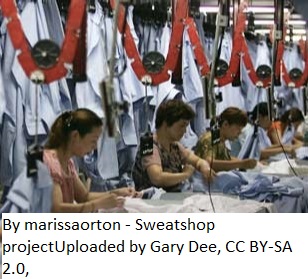
I discussed this with a colleague and she brought another dimension to the discussion. Simply this, where was the top made? Quite possibly, even likely, in a sweat shop in Asia by impoverished female workers. And so, a seemingly innocent garment symbolises all the wrong things; entrapment, commercialism and inequality. I can’t help thinking on this International Women’s Day that it’s a funny old world that we live in.
Share this:


The Bride of Frankenstein

The classic novel by Mary Shelley back in the early 19th century was an apocalyptic piece of work that imagined the future in a world where technology appeared to be a marvel that professes to make everyday people into gods. The creation of a man by a man (deliberately gendered) in accordance to his wishes, and morals. The metaphysical constraints of the soul seemingly absent, until all comes to head. This was dystopic, but at the same time philosophical, of the future of humanity.
In the 20th century John B. Watson believed that he could shape the behaviour of anyone, mostly children in any possible way. Some of his ideas even made it into popular psychology where he offered advice to parents of how to raise their children. Although no monster is mentioned, there is still the view that a man can shape a child in whatever way he chooses. A creationist and most importantly, arrogant view of the world.
Decades later Robert Martinson, a sociologist will look at all these wonderful and great programmes designed to challenge behaviours and change people, so they can rehabilitate leaving criminality behind. He found the results to be disappointing. In the meantime, child psychologists could not achieve this leap that Watson seem to think they could make in changing people.
In the 21st century we began to realise at a discipline level that forcing change upon people is rather impossible. How about a man creating a man? Can you develop a new human that will be developed espousing the creator’s desired attributes and thus become a model citizen? In recent years we have been talking about designer babies, gene harvesting and genetic modification. Such a surprising concept considering the Lebensborn experience during the Nazi regime. That super-man concept was shattered in thousands little pieces, and for many relegated to history books. Therefore, designer babies are such a cautionary tale.
As a society we are still curious on what can technology can achieve, how far can we go and what can we develop. Still in science there are seeds of creationism proposing ideas of that we can develop; a world of people without illness, disorder and deviance. Pure, healthy and potentially exceptional individuals who may be physiologically right but sadly devoid of humanity. Why devoid? Because what makes a person? Our imperfections, deviances and foibles. These add to, rather than substract from, our uniqueness and individuality.
In a recent twitter discussion one of my colleagues engaged in a discussion about the repatriation of one of those women called “Isis brides”. The colleague posed the question, why not allow her to return, only to receive in response, because these are no humans. As I read it I thought, well this is a new interpretation of the monster. A 21st century monster that we can chase out of the proverbial village with torches because its alive and it shouldn’t be. We can wish for people to be good to us, open armed and happy all the time, but that is not necessarily how it is. We know that this is the case and of course we want to be reminded of our humanity, not for the positives but for the negatives. Not what we can be but what the others are not. So, we can always be the villagers and never the monster.
Mary Shelley (1888) Frankenstein or The Modern Prometheus, London, George Routledge and Sons.
Share this:


Ignorance to curiosity
My name is Sean, I started studying Criminology at the University of Northampton in 2012, graduating in July 2016.
I started University as a switched off young man. I was very much in tune with media and social attitudes as wearing them cost very little and seemed to reap gratification. Studying was always enjoyable as it sparked my brain in ways television and games, or at least my choices in such, didn’t. Appreciating the concept and the opportunity however was always lacking in my 18 year old self. Coming to University and experiencing the electricity of passion mixed with contempt was very perplexing time. Not for long had I decided to think freely or passionately; choosing to study Criminology was a start. Meeting peers and idols of simultaneous do-good and work little nature, was an intense influence. Gratification ultimately came from within and this was the basis to which I began to restructure myself.
Personally, the highest credit should be placed with my course leaders and the content provided. Never in an academical setting had I experienced someone ask me so many questions, yet rather than make me feel stupid; made me feel unprepared. Rather than build themselves up to be superior and towering; made them feel wise and welcoming. It was this, paired with the already enticingly dark yet morally complex content of Criminology that lead to me to free many barriers and much ignorance. This is when the real questions followed and the search for real answers began. Never before had I truly questioned what I had read, seen, heard, even felt or experienced and wholly questioned myself.
This change truly opened a new way of living for me. I am fully aware that such reasoning and ways of thinking could been explored previously, however it was my ignorance and choices, rebellion and ego, that locked these gates. In reference to the timeless ‘Nature vs Nurture’ topic; it was within my path that University, Criminology, @paulaabowles and @manosdaskalou were to be the ones to trigger the break in the lock. Now, admittedly, this was not just an overnight spawning of a butterfly from a larva. I still, like many in life, held onto what was familiar with a tight grasp as for an ignorant; change is to admit defeat. Furthermore, to change, to really change, requires dedication and belief. But once logically thinking, questioning and reasoning, alongside giving in to pure curiosity; it is extremely hard not to follow the exciting direction within a moral compass.
From here I can genuinely say I have enjoyed life more and all of its experiences. I have appreciated people more, and taken much more time to try and understand exactly where they stand and come from. I have spent a long time questioning everything, looking for answers or options wherever I can, trying to better myself as a human and continuing to do so. I am honestly far from where I would like to ideally be, but I am truly proud of my experience and change. When I finished University I saw this as the end of my further education, and having worked full time for a few years I could feel my curiosity shift towards less academic interests and the passion begin to fade. However it was not long before a shift back began. This is where I came to a conclusion, which fills me with a happy heart when taken with a positive perspective, that we are all students; students of life. The stronger my curiosity is, the more passionately I will study. So thank you, Criminology Team, for igniting mine. I intend to try and share this passion wherever I go.
Share this:


Am I a criminologist? Are you a criminologist?
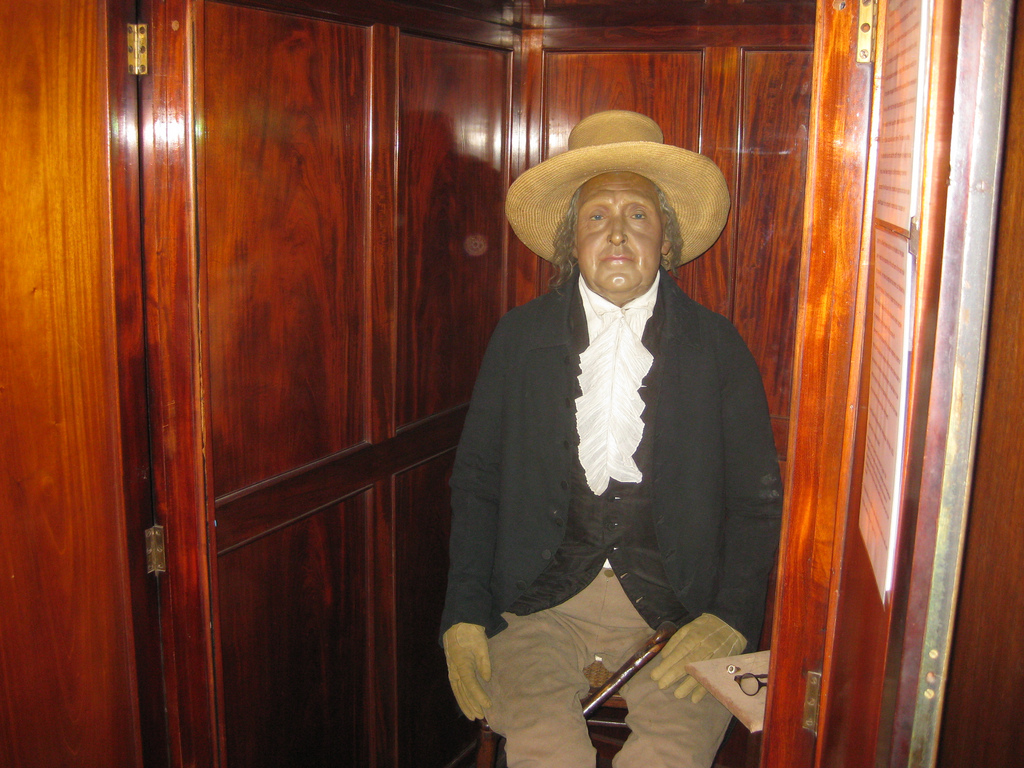
I’m regularly described as a criminologist, but more loathe to self-identify as such. My job title makes clear that I have a connection to the discipline of criminology, yet is that enough? Can any Tom, Dick or Harry (or Tabalah, Damilola or Harriet) present themselves as a criminologist, or do you need something “official” to carry the title? Is it possible, as Knepper suggests, for people to fall into criminology, to become ‘accidental criminologists’ (2007: 169). Can you be a criminologist without working in a university? Do you need to have qualifications that state criminology, and if so, how many do you need (for the record, I currently only have 1 which bears that descriptor)? Is it enough to engage in thinking about crime, or do you need practical experience? The historical antecedents of theoretical criminology indicate that it might not be necessary, whilst the existence of Convict Criminology suggests that experiential knowledge might prove advantageous….
Does it matter where you get your information about crimes, criminals and criminal justice from? For example, the news (written/electronic), magazines, novels, academic texts, lectures/seminars, government/NGO reports, true crime books, radio/podcasts, television/film, music and poetry can all focus on crime, but can we describe this diversity of media as criminology? What about personal experience; as an offender, victim or criminal justice practitioner? Furthermore, how much media (or experience) do you need to have consumed before you emerge from your chrysalis as a fully formed criminologist?
Could it be that you need to join a club or mix with other interested persons? Which brings another question; what do you call a group of criminologists? Could it be a ‘murder’ (like crows), or ‘sleuth’ (like bears), or a ‘shrewdness’ (like apes) or a ‘gang’ (like elks)? (For more interesting collective nouns, see here). Organisations such as the British, European and the American Criminology Societies indicate that there is a desire (if not, tradition) for collectivity within the discipline. A desire to meet with others to discuss crime, criminality and criminal justice forms the basis of these societies, demonstrated by (the publication of journals and) conferences; local, national and international. But what makes these gatherings different from people gathering to discuss crime at the bus stop or in the pub? Certainly, it is suggested that criminology offers a rendezvous, providing the umbrella under which all disciplines meet to discuss crime (cf. Young, 2003, Lea, 2016).
Is it how you think about crime and the views you espouse? Having been subjected to many impromptu lectures from friends, family and strangers (who became aware of my professional identity), not to mention, many heated debates with my colleagues and peers, it seems unlikely. A look at this blog and that of the BSC, not to mention academic journals and books demonstrate regular discordance amongst those deemed criminologists. Whilst there are commonalities of thought, there is also a great deal of dissonance in discussions around crime. Therefore, it seems unlikely that a group of criminologists will be able to provide any kind of consensus around crime, criminality and criminal justice.
Mannheim proposed that criminologists should engage in ‘dangerous thoughts’ (1965: 428). For Young, such thinking goes ‘beyond the immediate and the pragmatic’ (2003: 98). Instead, ‘dangerous thoughts’ enable the linking of ‘crime and penality to the deep structure of society’ (Young, 2003: 98). This concept of thinking dangerously and by default, not being afraid to think differently, offers an insight into what a criminologist might do.
I don’t have answers, only questions, but perhaps it is that uncertainty which provides the defining feature of a criminologist…
References:
Knepper Paul, (2007), Criminology and Social Policy, (London: Sage)
Lea, John, (2016), ‘Left Realism: A Radical Criminology for the Current Crisis’, International Journal for Crime, Justice and Social Democracy, 5, 3: 53-65
Mannheim, Hermann, (1965), Comparative Criminology: A Textbook: Volume 2, (London: Routledge and Kegan Paul)
Young, Jock, (2003), ‘In Praise of Dangerous Thoughts,’ Punishment and Society, 5, 1: 97-107
Share this:


Everyday harms: Policing in an age of austerity
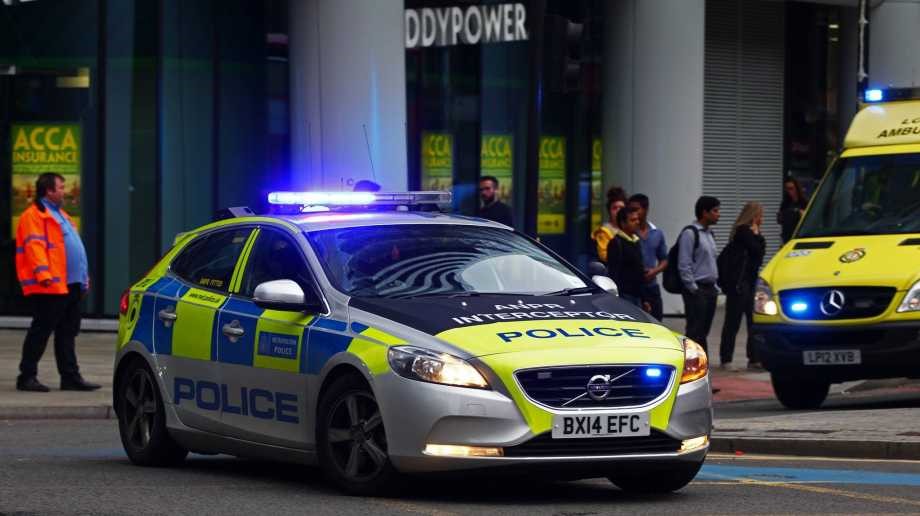
On recently seeing a news story is about a police officer being diagnosed with PTSD, I wanted to reflect on the broader contexts which led to this. The officer was assaulted during a single crew shift, and inevitably, found himself dealing with a dangerous situation, with no back up, leading to being injured. It struck me that this impact on physical and mental health is a form of social harm, which can all to easily be disregarded as ‘part of the job’, and a risk all police officers must expect, as action-oriented risk-takers, keen to do what is necessary to protect and serve. The link to social harm came to me from having recently taught students about this in relation to gambling as a form of deviant leisure (see Smith and Raymen, 2017), who cited the impact of gambling addiction affecting personal relationships, physical and mental health. We discussed the wider implications of this, and the need to acknowledge social harms which cause injury, violate rights and lead to ill health, but which stem from accepted behaviours and working conditions. There is also a wide body of literature which analyses structural harms resulting in discrimination, poverty and neglect of considerations for citizens’ safety (Pemberton, 2016). The perpetrators of such harms are not criminals as many people understand them, but corporations, states and politicians who could act to prevent harm and choose not to, or act with the full knowledge of the risks they are creating.
The study of social harm, zemiology, has much more to say on this perspective than this blog allows, but PC Johnson’s story, to me, reflected a society and a government who are implementing policies they know will cause harm, neglecting their responsibilities when downplaying the harms caused and who insist on placing blame on individuals or other organisations when incidences occur. It is clear there are there are various factors which created this situation for this officer, including the reduction of police officer numbers in the name of austerity. We do not know the details behind the perpetrator’s behaviour enough to attribute causes or contributory factors, but from this short story we can easily see the harms being caused, to those who wish to protect and serve citizens, resulting from an officer being out on a single crew shift. PC Mick Johnson is very clear that staff shortages led to him operating on his own on the day he was stabbed, a problem echoed by 90% of 18,000 officers of all ranks who reported to a Police Federation of England and Wales survey that they are understaffed. The health impact of this understaffing was also reported, in that 79% reported feelings of stress and anxiety in the past 12 months and 61.7% reported suffering at least one traumatic experience in the past 12 months.
A key rationale behind double crewing is to avoid having officers alone in vulnerable situations with no back up, a situation which single crewing creates, and which is described by the Police Federation as ‘unacceptable’, in a service feeling the ‘brunt of issues around resilience’ (Police Federation, 2017). Work pattern analysis shows many having to work overtime, routinely on 10 hour shifts and having rest days cancelled, and being unable to take break entitlements. The survey also shows a 14% fall in police officer numbers from 2009 to 2016, and is described as having ‘significant repercussions’. This is manifest in officers mental and physical well-being and it is having an impact on family life, childcare and officers’ skills development as they cannot spare the time for additional training. PC Johnson’s story clearly reflects these issues, as he reported that his assault led to symptoms of mood swings, lack of sleep and reported that the incident ‘utterly changed him as a person’. His unit has shrunk from 20 officers in 2009, to 10, and he expressed the frustration at not being able to do the job he once loved; that the conditions of his employment now meant he was counting down the days until retirement.
The motivation for becoming a police officer and staying in the job has been widely attributed to police culture characteristics which attract and are reinforced through a process of socialisation and acceptance of this culture; key characteristics which represent positive aspects of this are being action oriented, risk takers and pragmatic (Reiner, 1992). While there are negative connotations associated with police culture as impediments to reform and change (Loftus, 2009), it is difficult to imagine how cutting numbers will help with this in anyway, and in fact, to add to the stress on officers, could arguably bring out the worse aspects of police culture in the form of prejudices and discrimination, borne out of frustrations with the job and every day stress. The demonstration of personal and social harms caused by austerity cuts, stagnating wages and fewer staff are clearly demonstrated by PC Johnson’s final quote, and raise some serious questions for those responsible for keeping communities and citizens safe, and for those tasked with managing this service:
“We are all devastated, as we joined to protect our communities and to serve the public, we didn’t expect to have to sacrifice our families and our physical and mental health.” (PC Mick Johnson, BBC News, 2019).
References
BBC News (2019) Police shortages: ‘Working alone left me with PTSD, Ian Westbrook, available from https://www.bbc.co.uk/news/uk-47212662.
Loftus, B. (2009) Police Culture in a Changing World, Oxford University Press: Oxford.
Pemberton, S. (2016) Harmful Societies: Understanding social harm, Policy Press: Bristol.
Police Federation (2017) Three quarters of officers ‘often or always’ single-crewed, available from http://www.polfed.org/newsroom/4094.aspx
Reiner, R. (1992) The Politics of the Police, Oxford University Press: Oxford.
Smith, O. and Raymen, T. (2017) Lifestyle gambling, indebtedness and
anxiety: A deviant leisure perspective, Journal of Consumer Culture, 0(0) 1–19.
Share this:


And time waits for no one, and it won’t wait for me*

Last week in my blog I mentioned that time is finite, and certainly where mere mortals are concerned. I want to extend that notion of finite time a little further by considering the concepts of constraints placed upon our time by what might at times be arbitrary processes and other times the natural order of things.
There are only 24 hours in a day, such an obvious statement, but one which provides me with a good starting point. Within that twenty fours we need to sleep and eat and perform other necessary functions such as washing etc. This leaves us only a certain amount of time in which we can perform other functions such as work or study. If we examine this closer, it becomes clear that the time available to us is further reduced by other ‘stuff’ we do. I like the term ‘stuff’ because everyone has a sense of what it is, but it doesn’t need to be specific. ‘Stuff’ in this instance might be, travelling to and from work or places of study, it might be setting up a laptop ready to work, making a cup of coffee, popping to the toilet, having a conversation with a colleague or someone else, either about work or something far more interesting, or taking a five-minute break from the endless staring at a computer screen. The point is that ‘stuff’ is necessary but it eats into our time and consequently the time to work or study is limited. My previous research around police patrol staffing included ‘stuff’, managerialists would turn in their graves, and therefore it became rapidly apparent that availability to do patrol work was only just over half the shift. So, thinking about time and how finite it is, we only have a small window in a 24-hour period to do work or study. Reduced even further if we try to do both.
I mentioned in my previous blog that I’m renovating a house and have carried out most of the work myself. We have a moving in date, a bit arbitrary but there are financial implications of not moving in on that date, so the date is fixed. One of the skills that I have yet to master is plastering. I can patch plaster but whole walls are currently just not feasible. I know this, having had to scrape plaster from several walls in the past and the fact that there was more plaster on the floor and me than there was on the wall. I also know that with some coaching and practice, over time, I could become quite accomplished, but I do not have time as the moving in date is fixed. And so, I employ plasterers to do the work. But what if I could not employ plasterers, what if, I had to do the work myself and I had to learn to do it whilst the deadline is fast approaching? Time is finite, I can try to extend it a little by spending more time learning in each 24-hour segment but ‘stuff’, my proper job and necessary functions such as sleeping will limit what I can do. Inevitably the walls will not be plastered when we move in or the walls will be plastered but so will the floor and me. I will probably be plastered in a different sense from sheer exacerbation. The knock-on effect is that I cannot move on to learn about, let alone carry out, decorating or carpet fitting or floor laying or any part of renovating a house.
As the work on the house progresses, I have become increasingly tired, but the biggest impact has been that my knees have really started to give me trouble to the extent that some days walking up and down stairs is a slow and painful process. I am therefore limited as to how quickly I can do things by my temporary disability. Where it took me a few minutes to carry something up the stairs, it now takes two to three times the amount of time. So, more time is required to do the work and there is still the need to sleep and do ‘stuff’ in a finite time that is rapidly running out.
You might think well so what? Let me ask you now to think about students in higher education. Using my plastering skills as an analogy, what if students embarking on higher education do not have the basic skills to the standard that higher education requires? What if they can read (patch plaster) but are not able to read to the standard that is needed (plastering whole walls)? How might we start to take them onto bigger concepts, how might they understand how to carry out a literature review for example? Time is not waiting for them to learn the basics, time moves on, there is a set time in which to complete a degree. Just as I cannot decorate until the walls are plastered so too can the students not embark on higher education studies until they have the ability to read to a requisite standard. So, what would the result be? Probably no assignments completed, or completed very poorly or perhaps, just as I have paid for plastering to be done….
Now think about my temporary disability, what if, like me, it takes students twice as long to complete a task, such as reading an article, because they have a disability? There is only so much time in a day and if they, like everyone else, have ‘stuff’ to do then is it not possible that they are likely to run out of time? We give students with learning difficulties and disabilities extra time in exams, but where is the extra time in the course of weekly learning? We accept that those with disabilities have to work harder, but if working harder means spending more time on something then what are they not spending time on? Why should students with disabilities have less time to do ‘stuff’?
The structure and processes within HE fails to take cognisance of time. Surely a rethink is needed if HE is not to be condemned as institutionally failing those with disabilities and learning difficulties. Widening participation has widening implications that seem to have been neglected. I’ll leave you with those thoughts, a quick glance at my watch and I had best go because in the words of the white rabbit, ‘Oh dear! Oh dear! I shall be late’ (Carroll, 1998: 10).
Carroll, L. (1998) Alice’s Adventures in Wonderland and Through the Looking-Glass: The centenary edition, London: Penguin books.
*Richards, K. and Jagger, M (1974) Time waits for no one. Warner/Chappell Music, Inc.
Share this:


A Matter of Time

Christmas was a rather sombre time in our household this year, my step dad died a few days before. It wasn’t a surprise, he had been ill for some time, but it still felt like a huge shock. Unlike the time when my dad died, some 12 years ago now, I didn’t have to deal with the all of the aftermath, my step brother did that and as a consequence, I was left with time to think and reflect. The death of someone, particularly as we get older, reminds us of our own mortality. Phrases such as ‘time marches on’ simply remind us of the inevitable fact that our time is finite, unlike time itself, I’m not sure Stephen Hawking would agree with this (see below). The hard part about someone dying is that they cannot give you any more of their time, just as you cannot give them any of yours. It is this use of time that I want to reflect on using an eclectic mix of what may seem random ideas.
Coincidentally, I was given a book at Christmas authored by Stephen Hawking. Most of you will be aware that he wrote A Brief History of Time: From the Big Bang to Black Holes (Hawking, 1995) and his latest book Brief Answers to the Big Questions (Hawking 2018) revisits some of the ideas. I confess, I do not really understand some of the things he discusses although I do get the general idea. While reading, I started to think about how I would gain a better understanding of some of his key concepts. I decided two things were needed, time and effort. So, the question for me was, simply this, do I want to spend time and effort in gaining this understanding? On reflection, it became rapidly apparent that to understand quantum physics, for example, I would need to start with some basics around mathematics and physics. I think, given enough time and effort, I would be able to crack it. But I must acknowledge that given other priorities, I simply do not have enough time to embark on this endeavour. Consequently, I have to read, somewhat uncritically, Stephen’s ideas and accept them on face value. This is not something that sits comfortably with me because I have always been a ‘I get it, but… person’. I still want to know what was before the ‘big bang’, although Hawking (2018) says this is a pointless question.
Some time ago a colleague complimented another colleague’s writing. It cannot be coincidence that the author of the eloquent piece has over many years, spent an inordinate amount of time reading academic literature. So, time and effort spent doing something seems to produce rewards.
Whilst talking to another colleague, I described how I was renovating a house, much of the work I was doing myself. How did I know how to do all of this, he asked? On reflection, it is through experience which, equates to time and effort put into finding out how to do things and then doing them. That’s not to say that I can plumb a bathroom as quickly as a plumber or do the tiling in the same time as a professional tiler, or lay a floor as quick as someone that does it every day. I have to spend more time thinking about what I want to do and thinking about how I’m going to do it. I have to read and reread the instructions and research how to do certain things. The more I practice, the better I get, the less effort required and perhaps the less time needed. My dad always told me that a half a job is a double job, in other words, do it properly in the first place. The example of my colleague being able to write eloquently, suggests that time spent doing something might also produce better results as well as saving time and effort in the long run.
And so, I reflect on my time, which is finite, and marches on. My time is valuable, just as your time is valuable. I need to use my time wisely, so too should you. Giving people my time requires effort but as recent experience has demonstrated those that are close will not always be around to share time. Time and effort are required to achieve our goals, the more time we spend on something, accompanied by the requisite effort, the more likely we are to achieve what we want. Some things will take more time and effort but there is little that cannot be achieved. ‘Be brave, be curious, be determined, overcome the odds. It can be done’ (Hawking, 2018: 22).
Hawking, S. (1995) A Brief History of Time: From the Big Bang to Black Holes, London: Bantam Books.
Hawking, S. (2018) Brief Answers to the Big Questions, London: John Murray.
Share this:


What Price Peace? The Belfast Agreement 20 years on

Image from January 2019: red white and blue curb stones demark this as a loyalist area in Belfast
Dr Helen Poole is Deputy Dean in the Faculty of Health and Society and Lead for University of Northampton’s Research Centre for the Reduction of Gun Crime, Trafficking and Terrorism
I recently had the privilege to join a Law Masters field trip to Northern Ireland. I had few pre-conceptions when I left, but I had come to understand the 1998 Belfast Agreement, often deemed to be under threat from BREXIT arrangements, was tenuous at best, regardless of the any deal or no deal situation with Europe. Indeed, our trip to Derry had to be cancelled due to a car bomb explosion a few days before, reported in some press to be motivated by BREXIT, but more likely designed to mark 100 years since the start of the Irish War of Independence.
What became clear after long discussions with representatives from the Police Service of Northern Ireland (PSNI), an ex-political prisoner, and a member of the suspended Legislative Assembly at Stormont, is that Northern Ireland has been far from peaceful in the last 20 years, but the nature of the threat has changed. Furthermore, the risks of returning to the days of political conflict are dependent not only on whatever BREXIT brings, but also on the fact that there has been no effective Assembly in Northern Ireland for over 2 years, increasing the chances of a return to direct rule from Westminster. Furthermore, the complexity of the situation is considerable, with multiple groups active within discreet areas of Belfast and elsewhere in Northern Ireland.
There is much being discussed at the moment regarding the crime-terror nexus, the idea that criminals and terrorists cooperate, co-exist or perhaps adopt one another’s tactics in order to further their respective causes: financial gain and ideology respectively. However, it is perhaps more accurate to say that terrorists in Northern Ireland moved from organised criminal activity to support their ideological plight, a sort of necessary evil, to becoming predominately organised criminals using ideology to legitimise their activities, which include drug dealing, prostitution, money laundering, extortion, and the trafficking of fuel, tobacco, alcohol, drugs, people and firearms.
This loose alignment of organised criminals to distinct groups who were active in the conflict provides them with a legitimacy in communities, which enables them to continue with their activities largely unchallenged. Coupled with this, years of distrust of the Royal Ulster Constabulary, now replaced with the PSNI, means that those masquerading as para-militaries, are often the communities first port of call when they are experiencing difficulties. These groups provide not only protection through a form of policing largely comprised of violence and intimidation, but also act as a pseudo-Citizen’s Advice Bureau, coaching individuals on maximising their benefit awards for example. It is well-known that these groups exert their own form of justice, such as pre-arranged shootings, which has led the Government to release a media campaign in an attempt to tackle this. We have thus reached a situation where organised criminal groups are running some communities by a form of consent as a result of a perceived lack of any other legitimate authority to represent them.
Share this:


Beyond education…
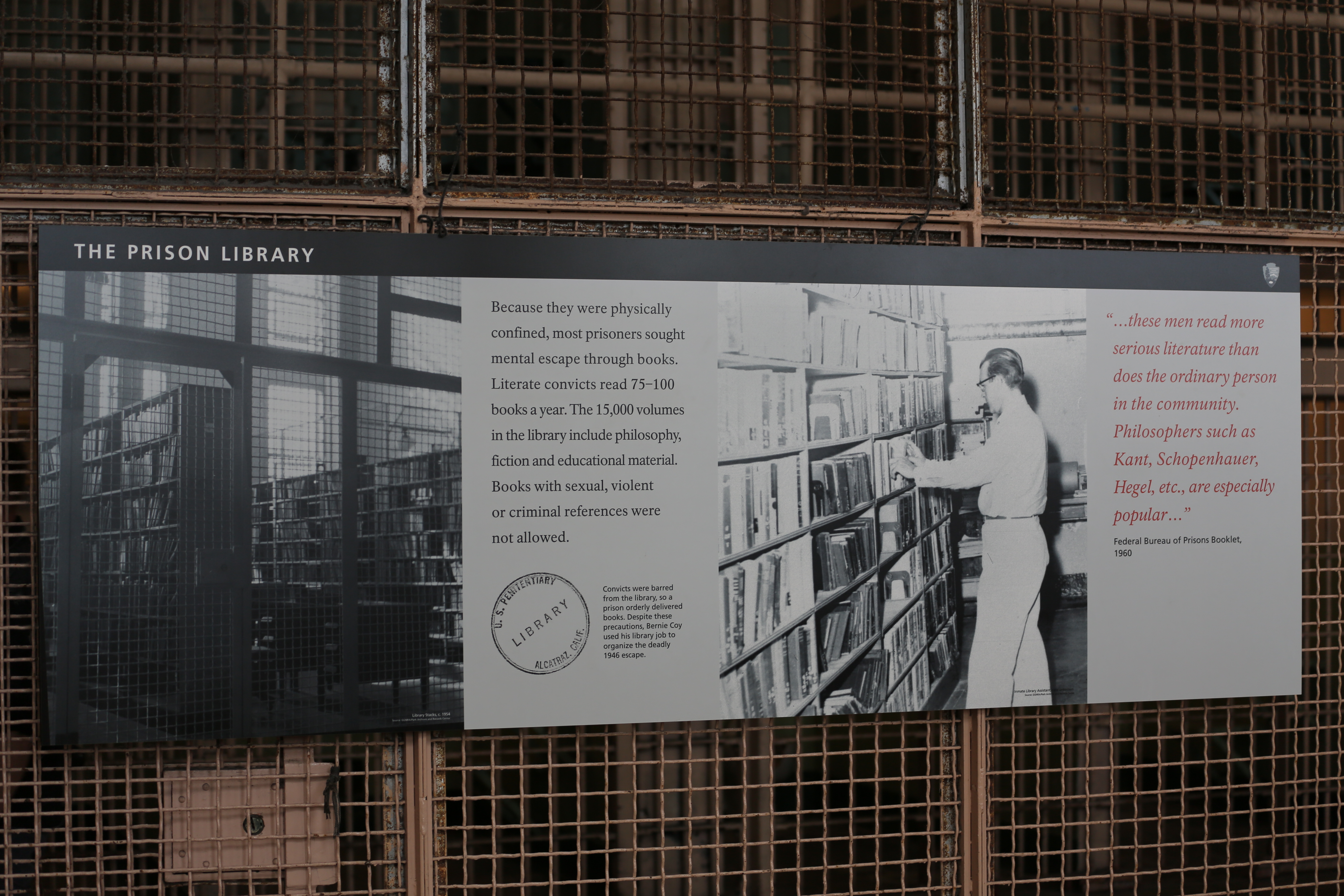
In a previous blog I wrote about the importance of going through HE as a life changing process. The hard skills of learning about a discipline and the issues, debates around it, is merely part of the fun. The soft skills of being a member of a community of people educated at tertiary level, in some cases, outweigh the others, especially for those who never in their lives expected to walk through the gates of HE. For many who do not have a history in higher education it is an incredibly difficult act, to move from differentiating between meritocracy to elitism, especially for those who have been disadvantaged all their lives; they find the academic community exclusive, arrogant, class-minded and most damning, not for them.
The history of higher education in the UK is very interesting and connected with social aspiration and mobility. Our University, along with dozens of others, is marked as a new institution that was created in a moment of realisation that universities should not be exclusive and for the few. In conversation with our students I mentioned how as a department and an institution we train the people who move the wheels of everyday life. The nurses in A&E, the teachers in primary education, the probation officers, the paramedics, the police officers and all those professionals who matter, because they facilitate social functioning. It is rather important that all our students understand that our mission statement will become their employment identity and their professional conduct will be reflective of our ability to move our society forward, engaging with difficult issues, challenging stereotypes and promoting an ethos of tolerance, so important in a society where violence is rising.
This week we had our second celebration of our prison taught module. For the last time the “class of 2019” got together and as I saw them, I was reminded of the very first session we had. In that session we explored if criminology is a science or an art. The discussion was long, and quite unexpected. In the first instance, the majority seem to agree that it is a social science, but somehow the more questions were asked, the more difficult it became to give an answer. What fascinates me in such a class, is the expectation that there is a clear fixed answer that should settle any debate. It is little by little that the realisation dawns; there are different answers and instead of worrying about information, we become concerned with knowledge. This is the long and sometimes rocky road of higher education.
Our cohort completed their studies demonstrating a level of dedication and interest for education that was inspiring. For half of them this is their first step into the world of HE whilst the other half are close to heading out of the University’s door. It is a great accomplishment for both groups but for the first who may feel they have a long way to go, I will offer the words of a greater teacher and an inspiring voice in my psyche, Cavafy’s ‘The First Step’
Even this first step
is a long way above the ordinary world.
To stand on this step
you must be in your own right
a member of the city of ideas.
And it is a hard, unusual thing
to be enrolled as a citizen of that city.
Its councils are full of Legislators
no charlatan can fool.
To have come this far is no small achievement:
what you have done already is a glorious thing
Thank you for entering this world. You earn it and from now on do not let others doubt you. You can do it if you want to. Education is there for those who desire it.
C.P. Cavafy, (1992) Collected Poems, Translated by Edmund Keeley and Philip Sherrard, Edited by George Savidis, Revised Edition, Princeton University Press, Princeton.
Share this:


We Want Equality! When do we want it?

I’ve been thinking a lot about equality recently. It is a concept bandied around all the time and after all who wouldn’t want equal life opportunities, equal status, equal justice? Whether we’re talking about gender, race, sexual orientation, disability, age, marital status. religion, sex or maternity (all protected characteristics under the Equality Act, 2010) the focus is apparently on achieving equality. But equal to what? If we’re looking for equivalence, how as a society do we decide a baseline upon which we can measure equality? Furthermore, do we all really want equality, whatever that might turn out to be?
Arguably, the creation of the ‘Welfare State’ post-WWII is one of the most concerted attempts (in the UK, at least) to lay foundations for equality.[1] The ambition of Beveridge’s (1942) Report of the Inter-Departmental Committee on Social Insurance and Allied Services was radical and expansive. Here is a clear attempt to address, what Beveridge (1942) defined as the five “Giant Evils” in society; ‘squalor, ignorance, want, idleness, and disease’. These grand plans offer the prospect of levelling the playing field, if these aims could be achieved, there would be a clear step toward ensuring equality for all. Given Beveridge’s (1942) background in economics, the focus is on numerical calculations as to the value of a pension, the cost of NHS treatment and of course, how much members of society need to contribute to maintain this. Whilst this was (and remains, even by twenty-first century standards) a radical move, Beveridge (1942) never confronts the issue of equality explicitly. Instead, he identifies a baseline, the minimum required for a human to have a reasonable quality of life. Of course, arguments continue as to what that minimum might look like in the twenty-first century. Nonetheless, this ground-breaking work means that to some degree, we have what Beveridge (1942) perceived as care ‘from cradle to grave’.
Unfortunately, this discussion does not help with my original question; equal to what? In some instances, this appears easier to answer; for example, adults over the age of 18 have suffrage, the age of sexual consent for adults in the UK is 16. But what about women’s fight for equality, how do we measure this? Equal pay legislation has not resolved the issue, government policy indicates that women disproportionately bear the negative impact of austerity. Likewise, with race equality, whether you look at education, employment or the CJS there is a continuing disproportionate negative impact on minorities. When you consider intersectionality, many of these inequalities are heaped one on top of the other. Would equality be represented by everyone’s life chances being impacted in the same way, regardless of how detrimental we know these conditions are? Would equality mean that others have to lose their privilege, or would they give it up freely?
Unfortunately, despite extensive study, I am no closer to answering these questions. If you have any ideas, let me know.
References
Beveridge, William, (1942), Report of the Inter-Departmental Committee on Social Insurance and Allied Services, (HMSO: London)
The Equality Act, 2010, (London: TSO)
[1] Similar arguments could be made in relation to Roosevelt’s “New Deal” in the USA.

 Thoughts from the criminology team