
Home » 2019 (Page 2)
Yearly Archives: 2019

NN Austere: What the Hell Happened?

Picture Credit: belongs to Action for Children
In its long, eventful history, the town that I grew up in has been home to theatre proprietors like John Franklin. It’s also been home to Thomas Beckett, Charles Bradlaugh, and partook in the Wars of the Roses. What’s now Delapré acted as the stage for the Battle of Northampton in 1475. Northamptonshire housed slaves from the era of Britain’s colonial ambition. It was the muse of Alan Moore’s Jerusalem, and sporting legends, including Mobbs’ Own battalion of rugby players during the First World War, as well as Walter Tull, who went on to be the first Black (mixed-race) officer in the British Army. But now embarking on a general election before entering 2020, we are in a homelessness epidemic, rivalling the plot of Charles Dickens’ Oliver Twist. These are austere times.

Whilst Walter Tull and his siblings feared the workhouse in the epilogue of Victorian Britain, our buzz terms in 2019 are “austerity” and “universal credit,” essentially prisons of the poor. Growing up in the county, with all its beauty and brutality, it’s now a much changed environment. Its landscape has much changed from the one I remember as a youth. It’s not identifiable to my seven-year-old self climbing trees in Abington Park and Salsey Forest, Charlie B standing menacingly in Abington Square, whilst the Doddridge Centre played host to many a community event by Jimmy’s End.
On the brink of one of the most important elections since forever, “He who rules Northampton, rules England,” stated All Saints’ Father Oliver Cross. I look at the town I grew up in and I want to weep. Walking through Town Centre and into the outer rim, you can see how austerity has ravaged communities. How community spirit has rotted from the inside, as apathy and hopelessness can be tasted and sweated, foaming at the mouth – from blood in the River Nene to knife crime, and bus stops stood like cenotaphs.
Walking through London’s southwest last Wednesday to see homelessness brushing shoulders with the Ritz reminded me of the some 14,000 children in poverty in the shoe town. Austerity is a scouring pad to these brittle streets, orchestrated by a system that eats people below the poverty line for breakfast, lunch and dinner. The release of I, Daniel Blake in 2016 and Sorry We Missed You in 2019 are prime examples of how institutional violence has been used to rip gaping holes through working-class Britain.

On exiting MK Central, it’s a sight that leaves a lump in your throat. Milton Keynes has been nicknamed “Tent City” purely for its massive street-sleeping population. And the grass patch near the site of Northampton’s old bus station has been nicknamed “Rat Island.” I think that speaks for itself.
Seeing how the Government has operated these last ten(ish) years, it’s a migraine to the soul, temporarily broken by fireworks at New Year and the gong of church bells at Christmas. But the heart-shattering discordant noise of “spare some change, sir” on Abington Street and The Market is enough to make this Northamptonian cry. From childhood to being a student at the university, the homeless population here and I are acquainted – as I walked to catch my school bus in the morning, as I now walk to Waterside Campus.
Suddenly, Northampton has shrunk to a few miles of boarded up buildings, shivering hands, defaced shoes, and fleeting images of a hollowed-out shell of what used to be a thriving high street. A thriving community. Businesses come and go, and the street-dwellers, students and members of the public alike I’ve seen, to be devoid of all expression. I watch their writhing white eyes, looking into this winter of discontent – as the consumer capitalist culture of Christmas sneaks up on us like a gentle hand out of a grave.
When I see a homeless person, I greet them like I would anyone else. “Good morning, sir (or ma’am).” And I give them some change if I have it. But what else can I say? What else do I do? I walk through the underpass behind Boots. I see wrapped up bodies on the ground. They look dead. Cold corpses, but the system sheds no tears for them. Forgotten in a split second of time. They shiver, freshly alive. And now they are footnotes to history.
Hardworking people going to food banks because their wages do not cover the basics. Working students that have student finance at food banks because it does not cover the basics. Austerity’s mortar fire. Machine gun fire. Austerity grinds on the bones. Austerity chases you down river rapids, collecting fallen objects from your pockets, taking from the mouths of your children. It’s zero-hour contracts and six-days of fourteen hour shifts p/w.
Northampton is a zombie. Sheep Street’s boarded-up buildings and how the Hope Centre which was once a charity for the homeless, is now one that supports austerity-stricken communities and families and people that are deprived and have fallen on hard times too. Hope saves lives. Having spoken to CEO Robin Burgess a number of times, he highlighted to me how a number of the rough sleepers are citizens from mainland Europe. The EU.

Oliver Twist, Les Mis, Poldark – texts on poverty. When we think about poverty, it’s always the third world. In places like India, where I visited in 2016: amputees on the streets and children on the precipice of death. I look into their eyes. I wasn’t the same after that. I think I cried for a fortnight when I returned. Our public services are in a state of disarray – social care, the NHS, the police, education – this is Britain, in 2019, as the idea of Brexit has split families and friends, as it eats away at the national consciousness.
This is a parable of biblical proportions: Northampton won’t survive another decade of this, and we have not even begun to talk about austerity through the lens of minority Britain, where gender, race and sexuality all play roles of bias.
Share this:


OUT NOW: Agatha Christie Goes to War

Exciting news! I’m thrilled to reveal that Agatha Christie Goes to War, a book of essays I
co-edited with Dr Rebecca Mills, has been
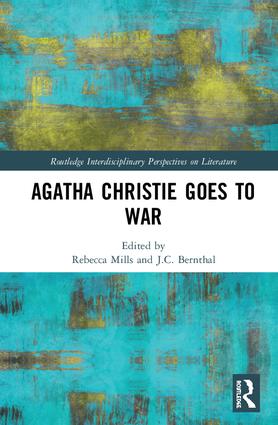
published by Routledge. You can get it in hardback or e-book form, for your library or yourself. My author copies arrived last week, and they’re quite a thing to behold.
Agatha Christie has never been substantially considered as a war writer, even though war is a constant presence in her writing. This interdisciplinary collection of essays considers the effects of these conflicts on the social and psychological textures of Christie’s detective fiction and other writings, demonstrating not only Christie’s textual navigation of her contemporary surroundings and politics, but also the value of her voice as a popular fiction writer reflecting popular concerns. Agatha Christie Goes to War introduces the ‘Queen of Crime’ as an essential voice in the discussion of war, warfare, and twentieth century…
View original post 443 more words
Share this:

A Love Letter: in praise of Agatha Christie

For most of my life, I have been an avid reader of all types of books. As my family will confirm, from childhood, I was never without a book. As an adult, I have regularly selected coats with large pockets and bags purely on the basis that they can hold a book. As many students will attest, my answer to most academic questions is “read, read and read some more”. Despite the growth of the internet and other media, which as @drkukustr8talk has noted recently, diverts and subverts our attention and concentration, reading remains my first and truest love.
This, my third ‘Love Letter’, focuses on my favourite author, above all others, Agatha Christie. I have previously dedicated ‘Love Letters’ to poetry, and art. Both of these forms took a long time for me to develop my understanding of and my love for. This ‘Love Letter’ is slightly different.
I first discovered Christie’s novels when I was about 12, since then they have formed a regular backdrop to my life. They act as a comfort blanket when I am tired, stressed, sad or away from home. I have read and reread everything she wrote and know the stories inside and out. Despite my decades of adoration, it remains challenging to know exactly what it is that appeals to me so much about Christie’s novels.
Perhaps it is the symmetry, the fact that for Christie every crime has a solution. Conceivably, given my pacifist tendencies, it could be the absence of explicit violence within her books. Maybe it’s Christie use of stereotypical characters, who turn out to be anything but. You don’t have to look very far to find the oh-so suspicious foreigner, who turns out to be a caring father (Dr Jacob Tanois) or the shell-shocked former military man trained in violence, who metamorphosises into a rather lonely man, who suffers from epilepsy (Alexander Cust). In all these cases, and many others, Christie plays with the reader’s prejudices, whatever they might be, and with deft sleight of hand, reveals that bias as unfounded.
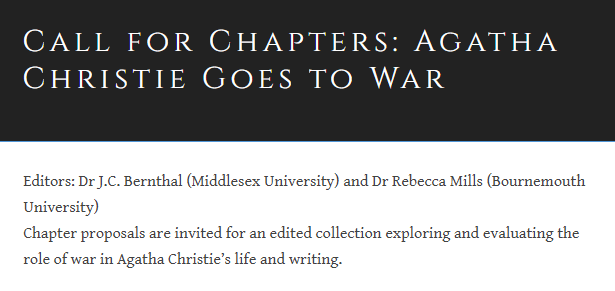
To be honest, until relatively recently, I did not think much about the above, reading Christie was so much part of my life, that I took it very much for granted. All that changed in 2017, when I spotted a ‘Call for Chapters’
It seemed too good an opportunity to miss, after all I had spent a lifetime reading Christie, not to mention more than a decade studying war and crime. After all, what did I have to lose? I submitted an abstract, with no real expectation that someone who had never studied fiction academically, would be accepted for the volume. After all, who would expect a criminologist to be interested in the fictional writing of a woman who had died over 40 years ago? What could criminology learn from the “golden age” of “whodunnit” fiction?
Much to my surprise the abstract was accepted and I was invited to contribute a chapter. The writing came surprisingly easy, one of very few pieces of writing that I have ever done without angst. Once I got over the hurdle of forcing myself to send my writing to strangers (thank you @manosdaskalou for the positive reassurance and gentle coercion!) , what followed was a thoroughly pleasant experience. From the guidance of the volume’s editors , Drs J. C. Bernthal and Rebecca Mills, to the support from many colleagues, not mention the patience of Michelle (Academic Librarian) who restrained from strangling me whilst trying to teach me the complexities of MLA. Each of these people gave me confidence that I had something different to say, that my thinking and writing was good enough.
Last week, my copy of the book arrived. It was very strange to see my chapter in print, complete with my name and a brief biography. Even more surreal was to read the editors’ introduction and to see my work described therein, with its contribution to the volume identified. I doubt many people will ever read my chapter, it is published in a very expensive academic book destined for academics and libraries. Nevertheless, I have left the tiniest of marks in academic literature and perhaps more importantly, publicly acknowledged my love for the writing of Agatha Christie.
The finished article:
Bowles, Paula, (2020), ‘Christie’s Wartime Hero: Peacetime Killer’ in Rebecca Mills and J. C. Bernthal, Agatha Christie Goes to War, (Abingdon: Routledge): 28-45
Share this:


Things I used to could do without a phone. #BlackenAsiaWithLove
A Spoken Word poem for young people everywhere, esp Youth in Asia, who may never know WE LIVED before smartphones…and live to tell about it.
Walk.
Walk down the street.
Find my way.
Go someplace.
Go someplace I had previously been.
Go someplace I had previously not been.
Meet.
Meet friends.
Meet friends at a specific time and place.
Meet new people.
Meet new people without suspicion.
Strike up a conversation with a stranger.
Make myself known to a previously unknown person.
Now, everything and everyone unknown is literally described as ‘weird’.
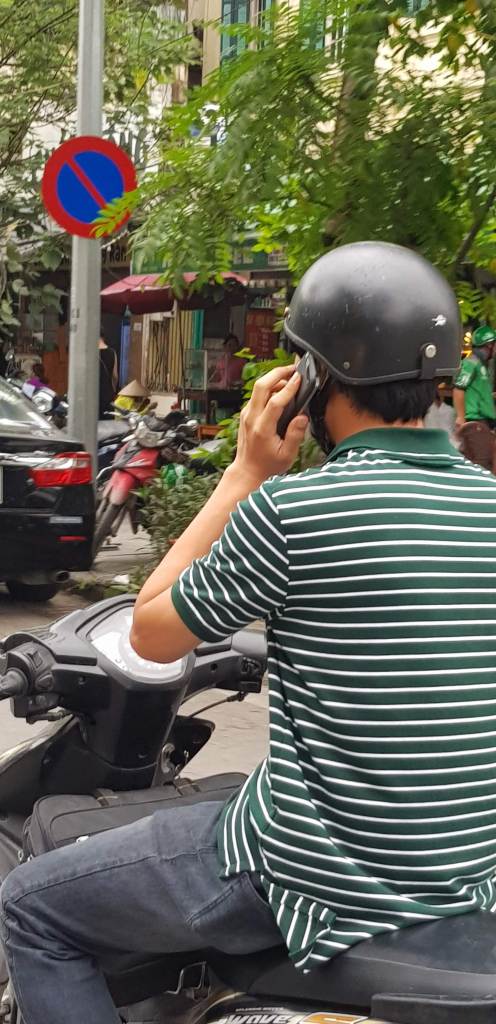
Eat.
Eat in a restaurant by myself.
Pay attention to the waiter.
Wait for my order to arrive.
Sit.
Sit alone.
Sit with others.
Listen.
Listen to the sound of silence.
Listen to music.
Listen to a whole album.
Listen to the cityscape.
Overhear others’ conversations in public.
Watch kids play.
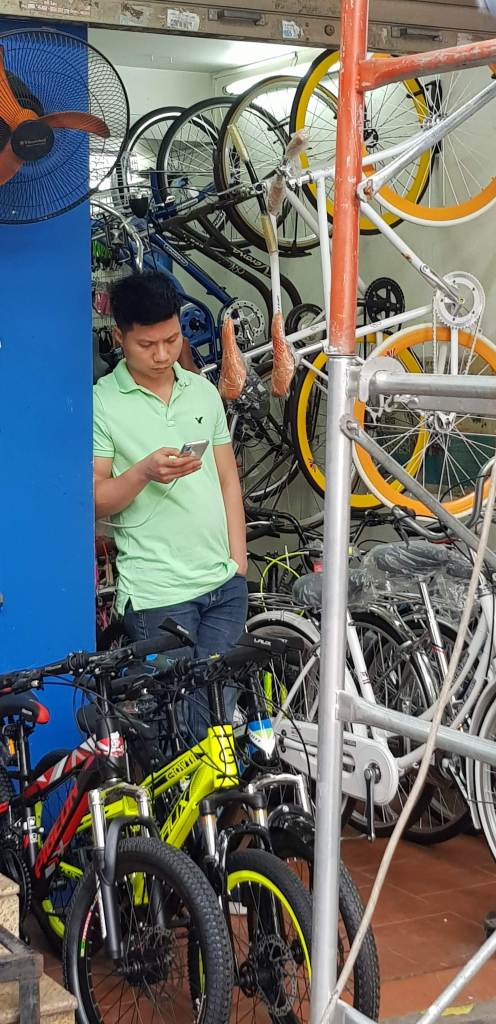
Shop.
Share.
Share pictures.
Take pictures.
Develop pictures.
Frame pictures.
See the same picture in the same spot.
Read.
Read a book.
Read a long article.
Read liner notes.
Pee.
I used to be able to stand at a urinal and focus on what I was doing,
Not feeling bored,
Not feeling the need to respond to anything that urgently.
Nothing could be so urgent that I could not, as the Brits say, ‘take a wee’.
Wait.
Wait at a traffic light.
Wait for a friend at a pre-determined place and time.
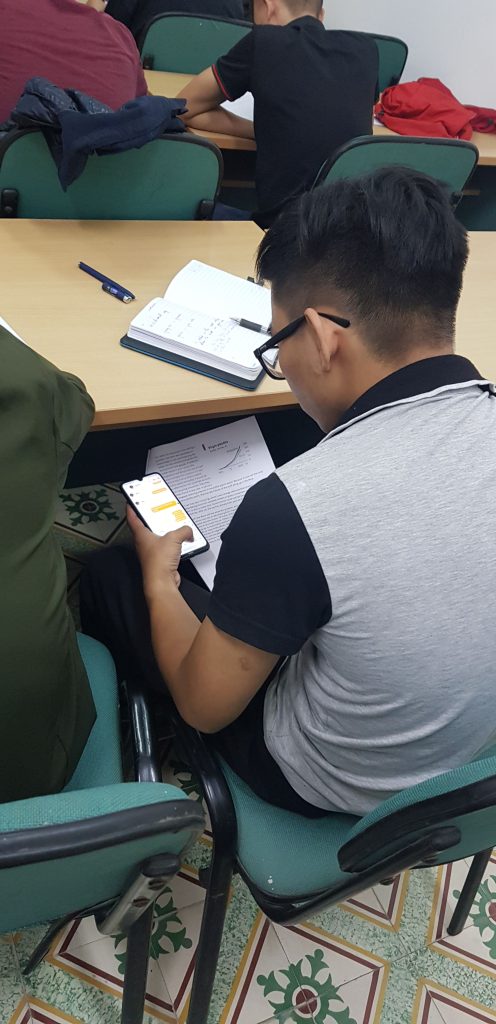
Wait for my turn.
Wait for a meal I ordered to arrive.
Wait in an office for my appointment.
Wait in line.
Wait for anything!
I used to appreciate the downtime of waiting.
Now waiting fuels FOMO.
I used to enjoy people watching…
Now I just watch people on their phones.
It’s genuine anxiety.
Walk.
Walk from point A to B.
I used to could walk between two known points without having to mark the moment with a post.
Now I can’t walk down the hall,
Or through the house or even to the toilet without checking my phone.
I avoid eye contact with strangers.
Anyone I don’t already know is strange.
I used to could muscle through this awkwardness.
Talk.
Have a conversation.
A friend and I recently lamented about how you used to could have a conversation and
Even figure out a specific thing that you couldn’t immediately recall…
Just by talking.
I also appreciate the examples we discussed.
Say you wanted to mention a world leader but couldn’t immediately remember their name. What would you do before?
Rattle off the few facts you could recall and in so doing you’d jog your memory.
Who was the 43rd US president?
If you didn’t immediately recall his name,
You might have recalled that the current one is often called “45” since
Many folks avoid calling his name.
You know Obama was before him, therefore he must’ve been number “44.”
You know Obama inherited a crap economy and several unjust wars,
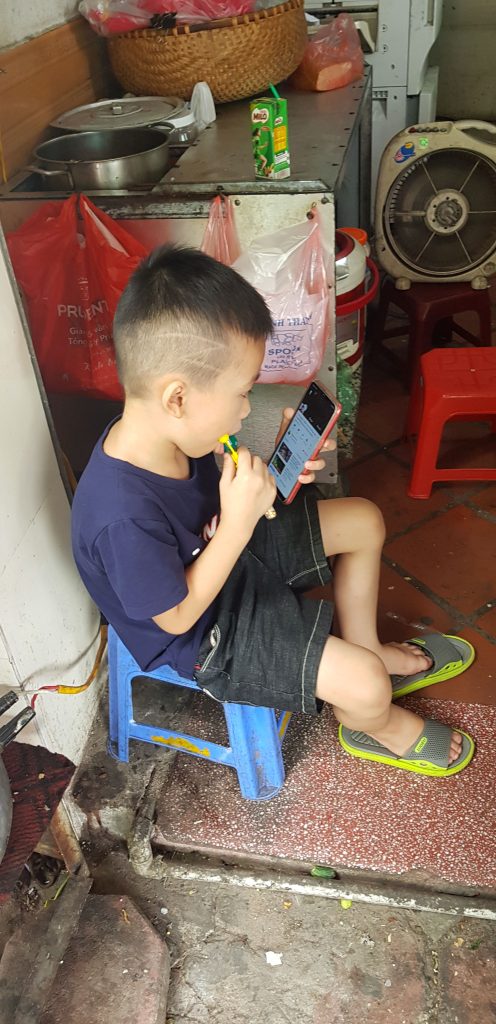
Including the cultural war against Islam. And
That this was even one of the coded racial slurs used against him: “A Muslim.”
Putting these facts together,
You’d quickly arrive at Dubya! And
His whole warmongering cabinet. And
Condi Rice. And
General Powell’s botched PowerPoint presentation at the UN. And
Big dick Cheney, Halliburton and that fool shooting his friend while hunting.
That whole process might have taken a full minute,
But so would pulling up 43’s name on the Google.
This way, however, you haven’t lost the flow of conversation nor the productive energy produced between two people when they talk.
(It’s called ‘limbic resonance’, BTW).
Yeah, I used to be able to recall things…
Many more things about the world without my mobile phone.

Wonder.
Allow my mind to wander.
Entertain myself with my own thoughts.
Think.
Think new things.
Think differently just by thinking through a topic.
I used to know things.
Know answers that weren’t presented to me as search results.
I used to trust my own knowledge.
I used to be able to be present, enjoying my own company,
Appreciating the wisdom that comes with the mental downtime.
Never the fear of missing out,
Allowing myself time to reflect.
It is in reflection that wisdom is born.
Now, most of us just spend our time simply doing:
Surfing, scrolling, liking, dissing, posting, sharing and the like.
Even on a wondrous occasion, many of us would rather be on our phones.
Not just sharing the wonderful occasion –
Watching an insanely beautiful landscape through our tiny screens,
Phubbing the people we’re actually with,
Reducing a wondrous experience to a well-crafted selfie –
But just making sure we’re not missing out on something rather mundane happening back home.
I used to could be in the world.
Now, I’m just in cyberspace.
I used to be wiser.
Share this:


Killed with kindness #RaceEd

What does it say about the education sector that we don’t say what we mean? What does it say that I attended a conference on racism at universities that didn’t have racism in the title? “Racial harassment” is what they called it, as in Westminster Higher Education Forum Keynote Seminar: Priorities for Tackling Racial Harassment & Improving the BAME Experience in HE. Racial harassment? Racism. Name it. Own it. We’re nearly in 2020 and we’re still wrapping these issues in bubblewrap to make it more palatable for, dare I say, senior management at UK universities (overwhelmingly White). Should we draw a nail? Pop. Pop. Pop.
Arising from my bed at 5:45am to make a 7:30am(ish) train, only to arrive at this conference feeling a bit awkward. The whole delivery felt “preachy” from the get-go. Being lectured on race by mainly White middle class people brought me back to first year on my Creative Writing degree where I did a number of literature modules, delivered by a lecturer who talked about slavery like a trivial matter. That’s my family history you’re talking there!
As Vice President BME at Northampton, I’m facing more and more problems with the language and rhetoric we use around race. The sector lumps all Black and brown students together and calls them BME / BAME. What about the term people of colour? I, too, am guilty of using “people of colour” and do myself have issues with it. It’s probably the best of the worst.
The term B(A)ME is not homogeneous. Even among Black people, there is differences. i.e between African and Caribbean, as well as Black British people whose families come from those places. Even to call someone African; there are fifty-four different nations in Africa, each with their own languages, culture, traditions and so on. Nigeria alone has over 250 different languages. But we continue with BME and BAME. Racial / cultural identity matters. Do we lump all White people together? No. And I bet if you called someone from Belfast, English, they’d have something to say!
Watching Dr. Zainab Khan (Assoc. Pro-Vice Chancellor at London Met) speak was a breath of fresh air, telling it like it is. And having been to a few conferences like this, it seems to me that the sector is more set on managing racism than taking to steps to eradicate it. Both Dr. Khan, and Fope Olaleye (Black Students’ Officer at NUS) brought a much needed clarity to racism (not racial harassment) at our universities, as well as institutional racism. It was great to hear comments on Macpherson and Critical Race Theory too.
And in my opinion, best practice is the brutal, honest truth. Not statistics, but qualitative data. Real life experiences and true stories by people on the ground experiencing this on a day-to-day.
The Royal Over-Seas League private members club was our host. Plaques to Britain’s colonial past in what was then British India hung on the wall. Staff meandered in capes and gowns, and plums in their mouths. What’s more, it was six speakers before a Black or brown person came to the floor. As a Students’ Union, we did not have to pay to attend. But others did pay the three-figure entrance fee. And there sat problem number one, why do these conferences seek money for attendance? Are they cashing in on Black and brown trauma? Is there an argument of ethics to be had here?
During the half-day conference there were four non-White speakers. This did not occur until towards the end of proceedings, in what felt like a very shoehorned state of affairs. Again, I felt that I was being preached at on my own narrative of racism in higher education. Whitesplaining is very real, when White British people talk about racism like its their lived experience.
At an event, wherein, we discussed things like the ethnicity award gap, decolonising the curriculum and anti-racist learning, to have a conference of this matter in a place that was overtly classist and elitist with nods to a system which in itself was built of white supremacy, it’s quite difficult to not see the irony in it all. We also discussed institutional racism in the same breath as decolonial thinking. Ha! And really, all you can do is laugh.
White British people organising events on behalf of Black / brown people on themes that impact us more than them, on symptoms that were originally created by the White elite – in the jaws of colonisation and the whims of European empires. The times that made Britain “great” – imperialism in the tint of gold, glory and god, eclipsed by the Ritz in London’s southwest as I bump into austerity and homelessness, like cold corpses by Green Park.
In the making of Westminster Higher Education Forum Keynote Seminar: Priorities for Tackling Racial Harassment, the White middle class stands tall as colonialism walks with us in the present. The bellowing voice of White privilege. I know plenty of students that would have come to this. Alas, this forum fell into the trap that many discussions have fallen into. Well-meaning White people telling us what we ought to do about racism.

Whilst I made some valuable connections, the wider narrative of whitesplaining ran riot, like Robert Redford and Meryl Streep spread-eagled across the plains in Out of Africa. Diversity in panel discussions is a must. It was functional in concept, but the swaggering thoughtlessness in venue, entry fee and panellists left for a very awkward-feeling in the audience.
If these types of conferences aren’t done properly (from diverse panels to organisational competence), are we not just feeding the racist systems we want to deconstruct?
Share this:


In Thanksgiving, White Supremacy thrives under US

In the autumn of 2004, my schoolteacher said: “In fourteen hundred and ninety-two, Christopher Columbus sailed the ocean blue.” She made this man seem so likeable. If we played a little word association game with him, words like genocide, thief and coloniser come to mind. Murderer. Evil. Within a little rhyme, she had dressed him in innocence. By no fault of her own. I’m sure there are numerous schoolteachers up and down this island nation who really don’t have a clue about colonial history, and in sermonising this “explorer,” she was dismissing the individual who opened the doors to European colonisation of the Americas (what became the New World) and the Caribbean.
Whilst the rest of the United States of America breaks bread on their annual day of thanks, Natives see this day as a day of mourning. Like an armistice, in remembrance of their ancestors, and a people that were erased through genocide committed by White Europeans in the prologue of colonialism. It is often noted that the first Thanksgiving was in 1621, but really it could be argued that day belongs in 1637 when puritan Governor Winthrop decided he would give thanks for the safe return of those who went to Mystic, Connecticut and participated in the Massacre of the Peqout.
Like a lot of the history I thought I knew, it seems more of a taking than anything else. Thanksgiving is for giving thanks, but the story behind it feels more like a thanks-taking. Do they teach this in American schools? Something tells me, no.
The late great Malcolm X said “We didn’t land on Plymouth Rock; the rock was landed on us.” And in Britain, the voyage that led the British into slavery was by an ambitious man from Plymouth (UK) called (Sir) John Hawkins, as in 1562/1563 he hijacked a Portuguese vessel, sailed to the new world and sold his cargo into slavery, making a small fortune. Not to be confused with Plymouth in the US, often labelled as America’s hometown.
However, growing up in Britain, as I did, the story of Christopher Columbus “discovering America” is one that’s been told so many times that it’s now begun to feel like folklore. Not once, as a child, did I hear anything about the native peoples living in America and the West Indies before he came.
What they mean when Columbus discovered America, is he was the first White man to discover it. Because achievements (historically) like this are only valid in western society when a White person does it. From Cook to Columbus, White explorers who went to “new places” to “find” peoples and cultures different from their own only to react with savagery and violence.
Not once in my school classes did I get stories from the perspectives of the oppressed. Whether we’re talking about slaves during the 200+ years of British colonial ambition, or the world wars, as at war the ones that suffered most were the working classes. What happened after? If I was to go by what I was taught at school, I’d live life believing everything was rosy.
At school, the sermons my teachers had for Columbus now make my skin crawl. Lorded as one of the great European heroes, turning up in Hispaniola in 1492, native to Amerindians prior to colonisation. The majority of the people there did die of European diseases but nothing could prepare them for the monumental onslaught that came from Columbus’ soldiers. And when any country invades another, rape is always a feature.
“His soldiers snatched babies from the breasts of their mothers and dashed their heads against the rocks. Children were fed alive to his dogs. Women’s breasts were cut off. He decided to hang thirteen of the Native Americans in Hispaniola to recreate the crucifixion of Jesus, plus the apostles.”
George Monbiot (writer, journalist, activist)
What Columbus’ soldiers did in Hispaniola set the precedent for what happened next, the eventual genocide that erased almost all of the Native peoples of America from existence. However, when I think about Native people, as much as screen representation is concerned, I think to Old Hollywood. John Wayne in The Searchers being one of the most horrific films I’ve ever watched and this is what Said means by orientalism. Though, I believe his theory can be applied to any non-White oppressed group.
And when we think about colonial statues, we really need to think about the character of the people we are building monuments to. From Barcelona to New York, Columbus is known all over the world. And I think due to how we teach history in schools, we blindly celebrate people we really know nothing about. From Churchill in India to Columbus and Captain Cook.
And both George Washington (first US President) and Thomas Jefferson (third US President) endorsed Columbus’ actions, and what’s more, both these men owned slaves. Who really are we celebrating? Who are we honouring with statues, plaques and awards? Who are we putting on our money? Great leaders aren’t always great people, and how did they treat others? What about their morality, equity, and values as public figures?

In Thanksgiving and Columbus Day, the US establishment does not recognise its history of genocide. The fact that we have Natives with us today is nothing short of a miracle. That their ancestors managed to survive: disease, Catholicism, and settler colonialism; telling their stories to preserve their culture and identity is activism. Their existence is resistance.
Columbus is a symbol of conquest and privilege. How can we condemn Hitler and Stalin but not Columbus? Simple. When non-White history is told from the perspective of the oppressor, the lack of White empathy is obvious. In colonialists Cecil Rhodes and former-PM Winston Churchill the British establishment honours White supremacists and mass murderers, united in their pursuits for either one, two or all of the three: gold, glory or God.
And in Christopher Columbus, the American establishment honours a White supremacist, a mass murderer and a slave trader; and under the administration of President Trump, I believe it’s safe to say it ain’t changing any time soon.
Share this:

The ‘other’ BBC worldservice. #BlackenAsianWithLove
The ‘other’ BBC worldservice.
If you google “BBC+Mandingo,” please be aware that it is NSFW. Use your imagination. Now, imagine an auction block. Imagine a slave standing there. Breeding slaves underpinned the ‘white supremacist, capitalist, patriarchal’ system that placed their bodies upon that auction block. Hyper-sexualisation of Black bodies began right there. It is bell hooks’ Intersectionality lens that’s necessary for a holistic gaze upon consumer commodification.
Now, imagine that one Black boy in class, vying for attention just as any other adolescent, yet he’s got an entire multitude of hyper-sexualised images filling the heads of virtually everyone in the room. By the time they hit the locker-room, everyone is expecting to see this kid’s BBC. I’ve had many (non-Black) adults say that to me explicitly, inexplicably in any given situation where one might not otherwise imagine penis size would surface so casually in conversation. Hence, we can all imagine that with the crudeness of adolescent male vernacular: Your kid is asking my kid why his penis isn’t what all the rappers rap about. 
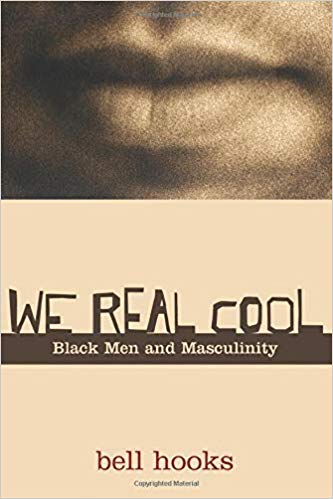
Why are so many commercially successful rappers’ fantasies reduced to “patriarchal f*cking?” Reading Michael Kimmel’s essay “Fuel for Fantasy: The Ideological Construction of Male Lust,” in her seminal book We Real Cool: Black Masculinity, bell hooks clarifies: “In the iconography of black male sexuality, compulsive-obsessive fucking is represented as a form of power when in actuality it is an indication of extreme powerlessness” (hooks: 67-8).
It’s auto-asphyxiation, a kind of nihilistic sadomasochism that says, if the world thinks of me as a beast, then a beast I shall be. Plenty of kids work this out by the time they hit the playground. “Patriarchy, as manifest in hip-hop, is where we can have our version of power within this very oppressive society,” explains writer/activist Kevin Powell (qtd. in hooks: 56). Ironically, Powell came to fame in the 90’s on MTV through the original reality show aptly entitled “The Real World.”
Plantation Politics 101
Since at least 2017, commercial rap has been the most widely sold musical genre; it’s pop. Beyond roughly 700,000 sales, Black people are not the primary purchasers of commercialised rap, as explained in the documentary Hip-Hop: Beyond Beats and Rhymes. It takes millions to earn ‘multi-platinum’ status. Yet, while created by and for Black and brown people in ghettoized communities, it has morphed into a transnational commodity having little to do with the realities of its originators, save for the S&M fantasies of wealth beyond imagination. And what do they boast of doing with that power, read as wealth? Liberating the masses from poverty? Intervening on the Prison Industrial Complex? Competing with the “nightmare” racist landlords like Donald Trump’s dad Fred? No! They mimic the very gangsters they pretend to be. Once Italian-Americans held hard that stereotype, but now it’s us. It’s always about power. Truly, ‘it’s bigger than Hip-Hop’.
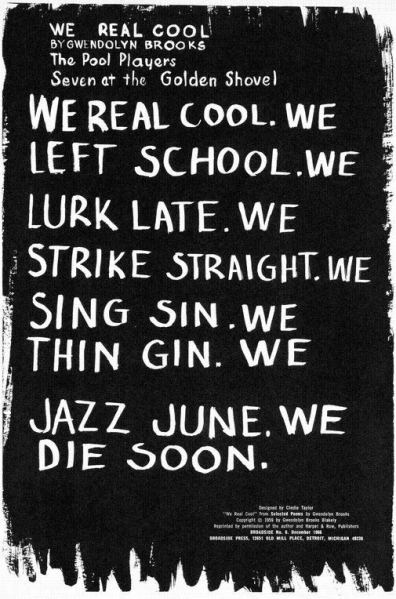 The more painful question few bother asking is why commercial rap music focuses so keenly on pimps, thugs, b*tches and whores? Like other commodities, commercial rap is tailored to the primary consumer base, which isn’t (fellow) Black people, but white youth. What is it about contemporary white youth that craves images of salacious, monstrous, licentious and violent Black people boasting about killing and maiming one another? Describing this mass commercial “Misogynistic rap music,” hooks states: “It is the plantation economy, where black males labor in the field of gender and come out ready to defend their patriarchal manhood by all manner of violence against women and men whom they perceive to be weak and like women” (hooks: 57-8). Plainly, the root of commercial rap’s global prominence is the reenactment of “sadomasochistic rituals of domination, of power and play” (hooks: 65).
Hyper-sexualisation is a form of projection onto Black people a mass white anxiety about our shared “history of their brutal torture, rape, and enslavement of black bodies” (hooks: 63). She goes on to explain: “If white men had an unusual obsession with black male genitalia it was because they had to understand the sexual primitive, the demonic beast in their midst. And if during lynchings they touched burnt flesh, exposed private parts, and cut off bits and pieces of black male bodies, white folks saw this ritualistic sacrifice as in no way a commentary on their obsession with black bodies, naked flesh, sexuality” (ibid). Hence the BBC obsession finds a consumer home safely in pop music!
“I am ashamed of my small penis,” a stranger recently mentioned to me in a grilled wing joint I happened upon here in Hanoi. The confession came from nowhere, having nothing to do with anything happening between us at the time. Is this the locker-room banter I always hear about? Are straight men really so obsessed with their penises? Given his broken English and my non-existent Vietnamese, I tried comforting him by explaining in the simplest terms the saying: “It’s not the size of the wave but the motion of the ocean.” Colloquialisms never translate easily, but I did at least deflect the subject away from ethno-sexual myths spread worldwide through contemporary consumer culture.
We’ve got to talk about ethno-sexual myths with openness, honesty and integrity. Silence is the master’s tool; silence = death! Further, echoing ‘black, lesbian, mother, warrior, poet’ Audre Lorde, ‘The master’s tools will never dismantle the master’s house”. I am Black in Asia, and there are perhaps no two groups of men at polar opposites of ethno-sexual myths. Like the hyper-sexualisation of women of colour, these myths reveal that neither Blackness nor Asianess is at the centre of these globally circulated myths. Hyper-sexual in comparison to who or what? Hegemonic heteronormative whiteness. Say it with me: Duh!
To get In-formation:
hooks, b. (2004) We Real Cool: Black Men and Masculinity. New York: Routledge.
Lorde, A. (1984) Sister Outsider: Essays and Speeches. Berkeley: Crossing Press.
Share this:


my dyspraxia is making order out of chaos
Inspired from “On being a University Student with Asperger Syndrome” – Stephanie Nixon

When I returned for my third year at the new Waterside Campus in October 2018, my world fell apart. It was like the sky was falling: confused at the layout, annoyed at the classroom style, mobile desks in my poetry classes (on BA Creative Writing). I thought the university had gone mad. What were they thinking? I was now used to Avenue Campus. It was nice. It was familiar. It was comfortable. And honestly, I never thought I’d ever go to university, since I had extra lessons every week only to just maybe have a chance at keeping up with everyone else. I struggled to achieve academically at both GCSE and A-Level. What they’d now label Special Educational Needs (or SEN). Another box. And, at nine years old I was diagnosed with the development disorder known as Dyspraxia.

So, now fifteen years diagnosed. A disorder that impacts the way brain orders movement and thought. It really is a wonder how I got to grips with cricket, both with bat and ball. Having five and half ounces thrown at me at school pushed me into the deep end. It showed me how to hide it a bit more. At the crease, my sense of direction is very good. In villages, it’s good. In the home counties, my sense of direction is good. It’s familiar. It’s comfortable. But drop me in London or New York. Ha! I navigate those places with GPS and headphones, someone speaking to me, guiding me. Really like Iron Man. Though, Google Maps is no match for J. A. R. V. I. S or F. R. I. D. A Y.
I have to find my way through verbal instructions. And over the years, like with any condition, hidden or not, you develop coping mechanisms. And I lived set on not playing the victim. No special treatment for Tré (for it not infringe on my life). I tried to live like everyone else. Why would I do that when I wasn’t like everyone else? That’s a question, isn’t it? Why?
I would avoid certain types of places. Things that were very twisty and turny were a no-go. Fairs. Oh, and UCL destroyed my spirit when I visited. Basically, a real world version of Hogwarts. No talking pictures, but the stairs like to change!
Northampton College’s Booth Lane corridors challenged me between the years of 2012 and 2016, where I went from BTEC Level 2 qualifications through A-Levels and into the first year of a HND before coming to university. Where I was befuddled by the hexagonal building. Or was it octagonal? I forget. One of those types of shape where my perceptions of depth were challenged five days a week for four years.

Anyone that’s seen me work, knows that I love a good folder. I love highlighters. Clipboards, post-it notes. I’m a stationary freak! At work, I print more than most. I like to lay things out on a desk, or seven. Or have it on a pinboard. I spread my belongings out and apologise later. I love White boards. I don’t like E-Books. That’s a struggle. Give me that new book smell.
I found many of the discussions around Dyspraxia to be about co-ordination but it’s also includes perception and memory. As a youth, tasks would take me longer to do simply because of the thought processes I would take to go through and then translating those thoughts to action.
Dyspraxia, often confused with clumsiness, is more than just having two left feet. I struggled to learn – write, read, learn, to play sports. But I got it eventually. And even to walk in a straight line. From scanning your card on the barriers to pressing buttons on the lifts to ascending the stairs and paying for stuff at the checkout, Dyspraxia is real and often goes undiagnosed. And the links between attainment and academic performance; is it worth looking into things like this in regards to attainment in HE – be it, race, class, sexuality or otherwise?
I knew I was academically able, but in the education system (Level 1 – 4 + FE) as it stood, I was not achieving academically on paper. Graduating with a 2.1 in Creative Writing in July 2019, it showed me that the problem wasn’t me (as I once thought), but the sector, in how it deals with and treats individuals with SEN and other issues that can act as barriers to study.
I didn’t choose to talk about my Dyspraxia on entry to university because I wanted people to see me as a person, not a dyspraxic person (for some tick box exercise). At school, my Dyspraxia was humiliating. Poor co-ordination 70% of the time. Spilling drinks. Missing my mouth at dinner. Walking into stuff. Occasionally ridiculed for it by teachers, who meant it in jest but didn’t have a clue.
So, anything that makes order of chaos is a gift. Lists. Boards, like the ones you see in crime dramas with all the bits of a crime scene – photographs, bulletpoints etc. Anything that brings clarity is a godsend. To learn, I had to teach myself how other people think. That’s why doing A-Level Communication and Culture helped a lot. I had to analyse people. Why do people think that way in certain situations? The series Lie to Me was helpful too, teaching me how to come to conclusions, finding method in madness.
It took me six months to accept Waterside, and another six months to get used to it. The almost Milton Keynes-like repetition, John Carpenter’s They Live in the view of John Franklin and Thomas Beckett. George Orwell laughing violently at the smell of rotten cabbage and hegemony.
But I have my lists. Boards. Cutting out the noise. Stripping through the bullshit; an alternative view of society through the lens of someone who sees the world different.
Share this:


Empathy Amid the “Fake Tales of San Francisco”*
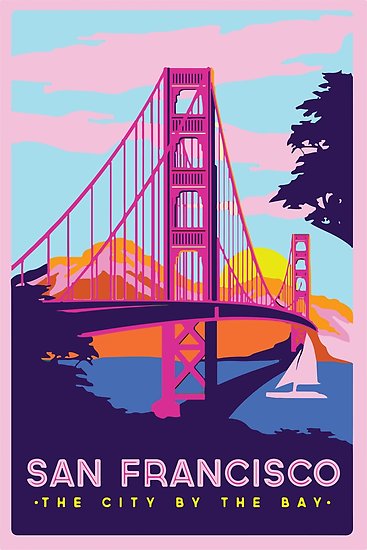
This time last week, @manosdaskalou and I were in San Francisco at the American Society of Criminology’s conference. This four-day meeting takes place once a year and encompasses a huge range of talkers and subjects, demonstrating the diversity of the discipline. Each day there are multiple sessions scheduled, making it incredibly difficult to choose which ones you want to attend.
Fortunately, this year both of our two papers were presented on the first day of the conference, which took some of the pressure off. We were then able to concentrate on other presenters’ work. Throughout discussions around teaching in prison, gun violence and many other matters of criminological importance, there was a sense of camaraderie, a shared passion to understand and in turn, change the world for the better. All of these discussions took place in a grand hotel, with cafes, bars and restaurants, to enable the conversation to continue long after the scheduled sessions had finished.
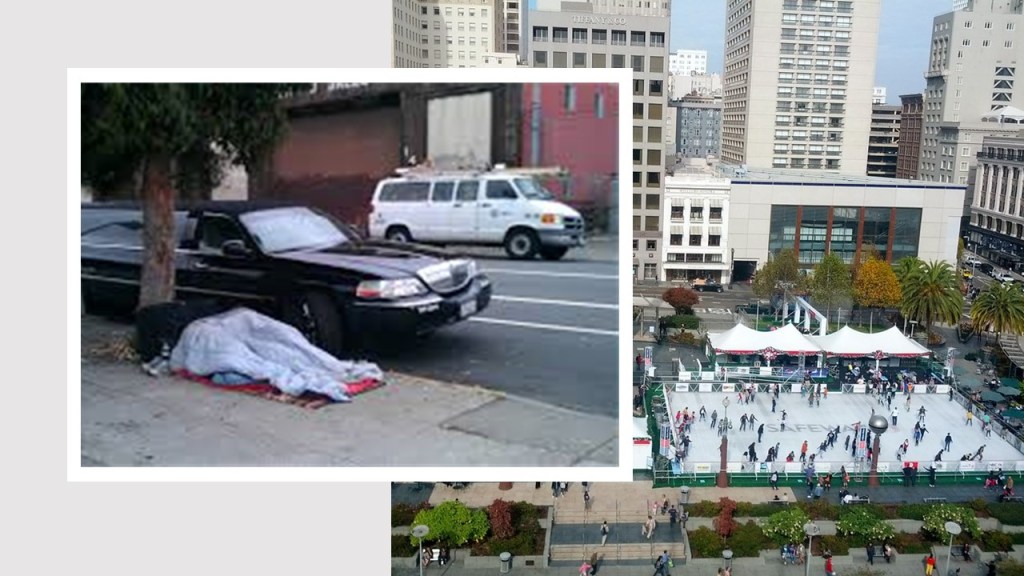
Outside of the hotel, there is plenty to see. San Francisco is an interesting city, famous for its Golden Gate Bridge, the cable cars which run up and down extraordinarily steep roads and of course, criminologically speaking, Alcatraz prison. In addition, it is renowned for its expensive designer shops, restaurants, bars and hotels. But as @haleysread has noted before, this is a city where you do not have to look far to find real deprivation.
I was last in San Francisco in 2014. At that point cannabis had been declassified from a misdemeanour to an infraction, making the use of the drug similar to a traffic offence. In 2016, cannabis was completely decriminalised for recreational use. For many criminologists, such decriminalisation is a positive step, marking a change from viewing drug use as a criminal justice problem, to one of public health. Certainly, it’s a position that I would generally subscribe to, not least as part of a process necessary to prison abolition. However, what do we really know about the effects of cannabis? I am sure my colleague @michellejolleynorthamptonacuk could offer some insight into the latest research around cannabis use.
When a substance is illegal, it is exceedingly challenging to research either its harms or its benefits. What we know, in the main, is based upon problematic drug use, those individuals who come to the attention of either the CJS or the NHS. Those with the means to sustain a drug habit need not buy their supplies openly on the street, where the risk of being caught is far higher. Thus our research population are selected by bad luck, either they are caught or they suffer ill-effects either with their physical or mental health.
The smell of cannabis in San Francisco is a constant, but there is also another aroma, which wasn’t present five years ago. That smell is urine. Furthermore, it has been well documented, that not only are the streets and highways of San Francisco becoming public urinals, there are also many reports that public defecation is an increasing issue for the city. Now I don’t want to be so bold as to say that the decriminalisation of cannabis is the cause of this public effluence, however, San Francisco does raise some questions.
- Does cannabis cause or exacerbate mental health problems?
- Does cannabis lead to a loss of inhibition, so much so that the social conventions around urination and defecation are abandoned?
- Does cannabis lead to an increase in homelessness?
- Does cannabis increase the likelihood of social problems?
- Does the decriminalisation of cannabis, lead to less tolerance of social problems?
I don’t have any of the answers, but it is extremely difficult to ignore these problems. The juxtaposition of expensive shops such as Rolex and Tiffany just round the corner from large groups of confused, homeless people, make it impossible to avoid seeing the social problems confronted by this city. Of course, poor mental health and homelessness are not unique to San Francisco or even the USA, we have similar issues in our own town, regardless of the legal status of cannabis. Certainly the issue of access to bathroom facilities is pressing; should access to public toilets be a right or a privilege? This, also appears to be a public health, rather than CJS problem, although those observing or policing such behaviour, may argue differently.
Ultimately, as @haleysread found, San Francisco remains a City of Contrast, where the very rich and the very poor rub shoulders. Unless, society begins to think a little more about people and a little less about business, it seems inevitable that individuals will continue to live, eat, urinate and defection and ultimately, die upon the streets. It is not enough to discuss empathy in a conference, no matter how important that might be, if we don’t also empathise with people whose lives are in tatters.
*Turner, Alex, (2006), Fake Tales of San Francisco, [CD]. Recorded by Arctic Monkeys in Whatever People Say I Am, That’s What I’m Not, The Chapel: Domino Records
Share this:

‘Guilty’ of Coming Out Daily – Abroad. #BlackenAsiaWithLove
I am annoyed that our apartment-building manager told my husband that a two-bedroom had recently become available, and that we should move in because we would be “more comfortable.” My husband always takes such statements at face value, then performs his own cost/benefits analysis. Did the manager offer a discount, I asked? I mean, if he’s genuinely concerned about our comfort, shouldn’t he put his money where his mouth is? That’s probably just the American in me talking: He was either upselling the property or probing us to see what the deal was – not at all concerned about our comfort. I speak code, too.
The most homophobic thing that anyone has ever said to me is not any slur, but that gay people should not “flaunt it.” As if concealing our identities would magically erase homophobia. This reveals that the speaker either doesn’t know – or doesn’t care to know – how readily people everywhere speak about our personal lives. There are random people I have met in every single part of the world, that ask my marital status. It comes shortly after asking my name and where I’m from. The words used are revealing – just ask any divorced person who has engaged with any society’s traditions. Is it deceptive to say that they are “single,” instead? What’s more, regardless of language, preferred terms like “unmarried” reveal the value conferred upon this status. You’re not a whole person until you’re married, and a parent. It is only then that one is genuinely conferred what we sociologists call ‘personhood’. Also, are married lesbians called two Mrs.?
Come out, come out wherever you are.
In many parts of the world, being ‘out’ carries the death penalty, including parts of my father’s homeland, Nigeria. I’ve literally avoided visiting Nigeria because of the media-fueled fear of coming out. I hate the distance it’s wedged between my people, our culture and I. There was a time when coming out was literally the hardest thing I ever had to do. Now, l must come out daily.
Back in the UK, many educators would like to believe that they don’t discuss their personal lives with students. But who hasn’t been casually asked how one spent the weekend? Do I not say “My husband and I…” just as anyone else might? Abroad, do I correct co-workers when they refer to us as ‘friends’? Yesterday, I attended an academic conference. All the usual small talk. I came out a dozen times by lunch.
In teaching English here in Asia, isn’t it unfair for me to conceal from my students the gender of my “life-partner,” which is actually our formal legal status? Am I politicising my classroom by simply teaching gender-neutral terms like ‘spouse’ or ‘partner’? Or, do I simply use the term ‘husband’ and skim over their baffled faces as they try to figure out if they have understood me properly? Am I denying them the opportunity to prepare for the sought-after life in the west? Further, what about the inevitability of that one ‘questioning’ student in my classroom searching for signs of their existence!
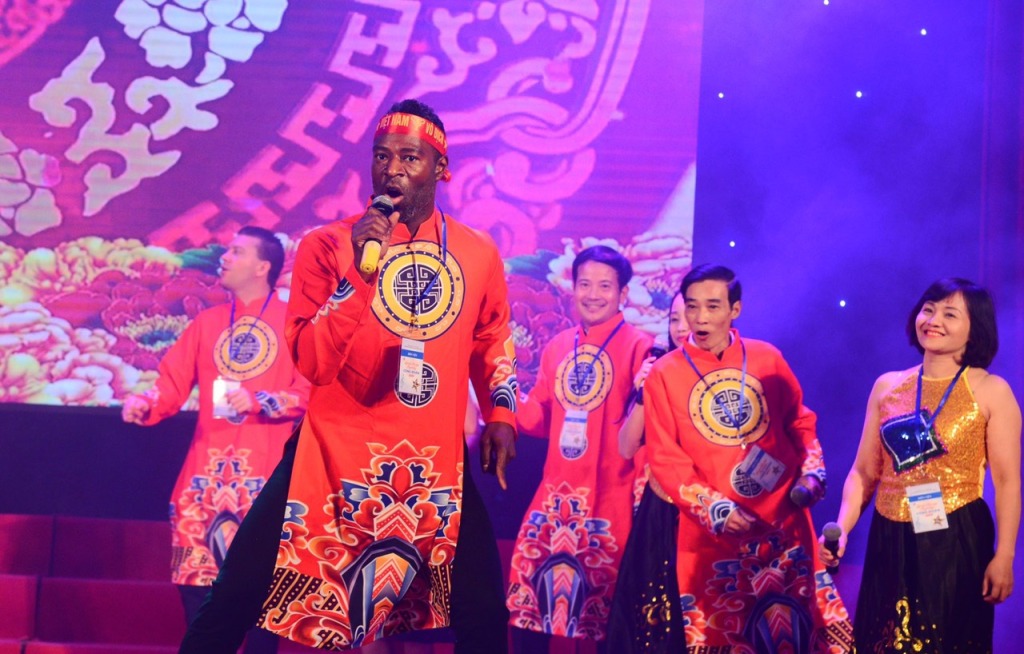
I was recently cornered in the hallway by the choreographer hired by our department to support our contribution to the university’s staff talent competition (see picture below*). She spoke with me in German, explaining that she’d lived several years in the former GDR. There are many Vietnamese who’d been ‘repatriated’ from the GDR upon reunification. So, given the historical ties to Communism, it’s commonplace to meet German (and Russian) speakers here. Naturally, folks ask how/why I speak (basic) German. My spouse of seventeen years is German, so it’d be weird if I hadn’t picked up any of the language. It’s really deceptive to conceal gender in German, which has three. I speak German almost every day here in Hanoi.
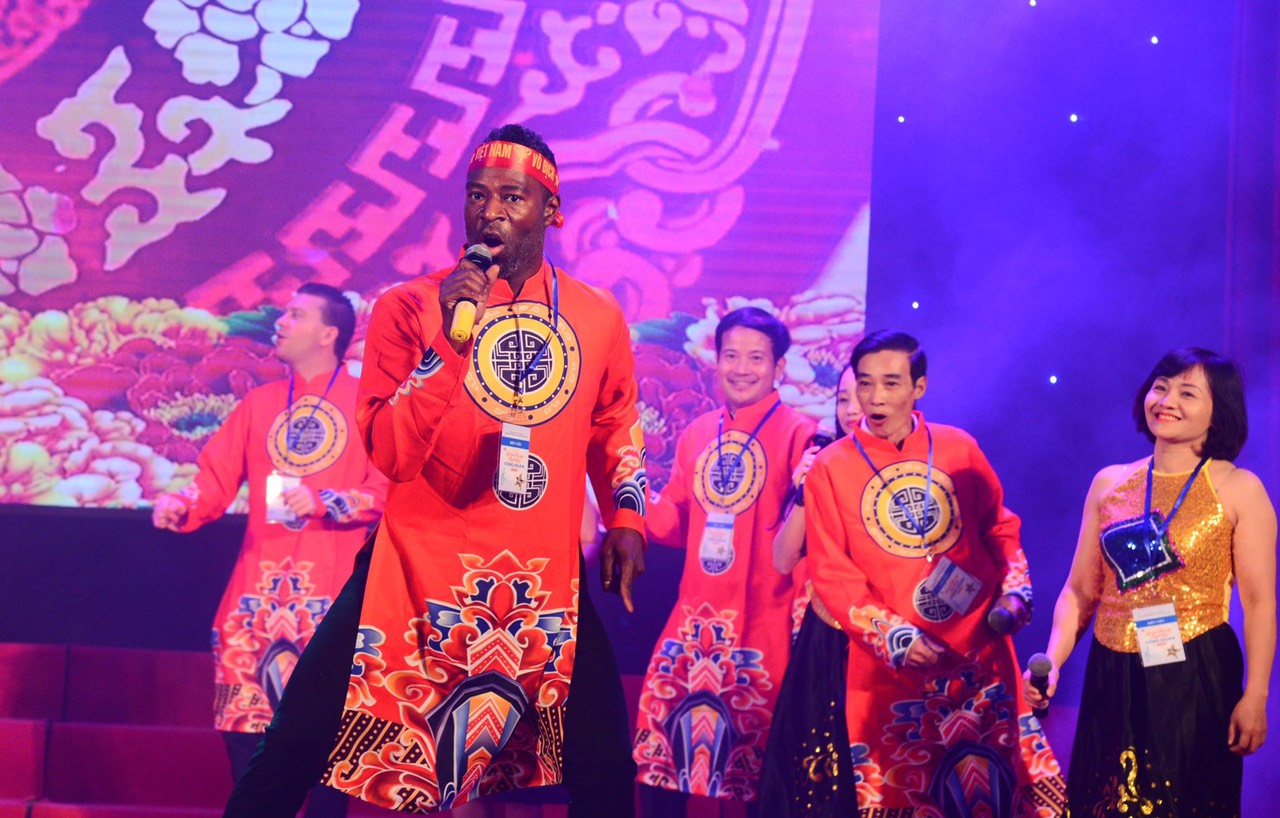
The word is ‘out’.
In Delhi, we lived in the same 2-bedroom flat for over 7 years. It became clear to our landlady very early on that we slept in one bedroom. Neighbours, we’re told, also noticed that we only ever had one vehicle between us and went most places together. Neither the landlady nor any neighbour ever confronted us, so we never had to formally come out. Yet, the chatter always got back to us.
As a Peace Corps volunteer in rural Mali in the late 90’s, I learned to speak Bambara. Bambara greetings are quite intimate: One normally asks about spouses, parents and/or children, just as Black-Americans traditionally would say “How yo’ momma doin?’” In Mali, village people make it their business to get single folks hitched. Between the Americans, then, it became commonplace to fake a spouse, just so one would be left in peace. Some women wore wedding bands for added protection, as a single woman living alone was unconscionable. The official advice for gays was to stay closeted L. While I pretended to be the husband of several volunteers, I could never really get the gist of it in my village. Besides, at 23 years old, being a single man wasn’t as damning as it is for women. I only needed excuses to reject the young women villagers presented to me. Anyhow, as soon as city migrants poured back to the village for Ramadan, I quickly discovered that there are plenty of LGBTQ+ folks in Mali! This was decades before Grindr.
Here in Hanoi, guys regularly, casually make gestures serving up females, as if to say: ‘Look, she’s available, have her’. I’ve never bothered to learn the expected response, nor paid enough attention to how straight men handle such scenarios. Recently, as we left a local beer hall with another (gay) couple, one waiter rather cheekily made such gestures at a hostess. In response, I made the same gestures towards him; he then served himself up as if to say ‘OK’. That’s what’s different about NOW as opposed to any earlier period: Millennials everywhere are aware of gay people.
A group of lads I sat with recently at a local tea stall made the same gestures to the one girl in their group. After coming out, the main instigator seamlessly gestured towards the most handsome in his clique. When I press Nigerian youth about the issue, the response is often the same: We don’t have a problem with gay people, we know gay people, it’s the old folk’s problem. Our building manager may be such a relic.
*Picture from The 2019 Traditional Arts Festival at Hanoi University of Science and Technology (HUST)

 Thoughts from the criminology team