
Home » 2019 (Page 10)
Yearly Archives: 2019

Why do we punish? An important question we need to keep asking
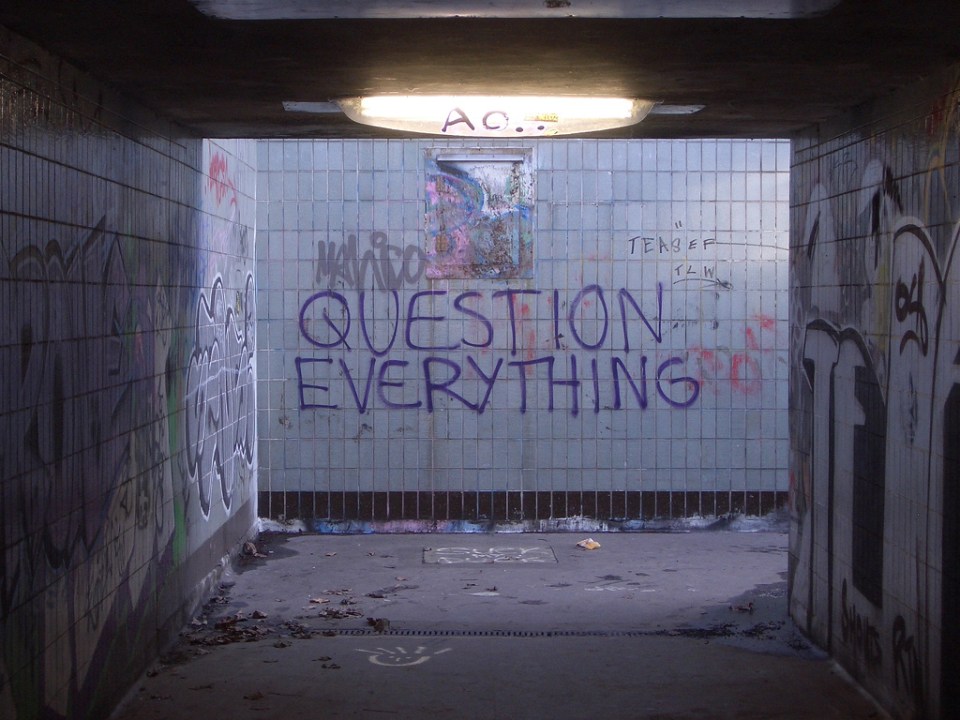
Tomorrow I am at the University of Northampton Open Day for our criminology programmes, and I have decided to focus on the theme of punishment, and so it seemed appropriate to also focus on this for my blog this week. I want to introduce prospective students to this question of why we punish offenders, given that when students come to us – and I have found this in every HEI I have worked in – up until that point, little consideration is given to the assumption that offenders must be punished and that they must face harsh punishment, as this is the key function of our justice system.
We all spend the next three years challenging these assumptions through an examination of the purpose of punishment, sentencing practice, the legalities of what the courts can do, the likelihood of cases getting to court, that a life sentence very rarely means ‘life’ and the problems we have with overcrowding in prisons and high re-offending rates. I introduce students to the work of Joe Sim, Ben Crewe, Yvonne Jewkes, George Mair and Rob Canton among countless others to provide research evidence and theory which should help them answer the question – why punish? Yet, I still find students at the end of their programme who have not shifted from this position of punishment as central to justice, required to support victims and as necessary to uphold law, order and maintain a civil society. I don’t wholly disagree – there are high risk offenders, there are types of offending which cause harms beyond direct victims, and there is a need for intervention to protect the public. What I try to get across to students, is that there are equally circumstances in which we need to ask whether a criminal justice response is the most effective, morally just and if it truly reflects a civil society.
In my experience of teaching one of the ways this debate is raised is to examine case studies, how the justice system dealt with them, how they were presented in the press and what we know now. I will be examining the Shannon Matthews case on Saturday – an emotive, harrowing and high-profile case which will no doubt get prospective students – and their parents – talking. I don’t intend to change hearts and minds during a 45-minute presentation and discussion, but it is really to make it clear that a criminology programme will challenge what people think they know and believe about crime and the justice system. I think it is vital that criminology, as a social science, maintains its foundations as a critical examination of policy, law, practice, theory and those established common sense beliefs about how crime should be dealt with. I tell students during these sessions and induction weeks that telling friends and family they study criminology presents an interesting issue for them, as everyone has an opinion they will want to express. This is especially the case for Karen Matthews, Shannon’s mother, who continues to be vilified in the press after her release from prison. It takes time to get across to students that to examine our assumptions about what we think we know about Karen and what she did is not to condone it, but to explain it, understand it and perhaps look at it less with emotion, and more with empathy.
Rob Canton’s book ‘Why Punish’ is a very good resource for these debates – it presents these questions from moral, philosophical, sociological and political perspectives. It is one of the most thorough examinations of punishment, the penal system and the rationale we present for this, from deterrence, incapacitation, retribution and rehabilitation. The case of Karen Matthews would seem to present an obvious answer – we punish because it is reprehensible to kidnap a child and to fraudulently obtain money from this act, and then to deceive friends, family and community. We punish to send a clear message of response, to vindicate laws and to seek justice for Shannon, and we punish because that is what the justice system is meant to do. The re-examination of punishment requires an acknowledgement of the emotional reactions to crime, that our assessment of what should happen to offenders comes from a place of indignation, fear, a need for justice and a requirement that the state must act to implement this. So, in the case of Karen Matthews, perhaps the question is not to ask why was she punished for her crimes, but to consider why this continues in the form of press attention and condemnation. For those less high-profile cases, we need to consider how many among the 82,764 (Ministry of Justice, 2018) people in prison truly pose a risk to others, need treatment and support and not just incarceration, will not benefit from retributive condemnation or attempts at deterrence and where there were alternatives in community sentencing which could have addressed their offending behaviour.
This may seem a lot to ask of prospective students and parents who come along to find out what we do, but it is simply to emphasise the importance of asking this question, among many others. The harms of imprisonment are well documented from Foucault, to Sykes, Sims and more contemporary research into the impact of overcrowding, violence, drug use and the high numbers of prisoners with mental health issues (such as Nurse et al 2003; Huey & Mcnulty, 2005; Crewe, 2007). This must all be understood in the context of high re-offending rates which tell us whatever your views on the purpose of custodial sentences, they don’t work to prevent further offending. As well as being an important question to ask, it is also a difficult one – it proposes to ask the public to think differently about crime and offenders, to demand politicians and policy makes use methods which are more effective, less harmful in terms of the consequences of engagement with the criminal justice system, and which still represent ‘doing justice’. I am expecting, and hoping, for some interesting debate and discussion, and that students get a clear idea of not only what we do, but why we do it and why we will continue to do so.
Susie Atherton
Senior Lecturer in Criminology
Canton, R. (2017) Why Punish? An Introduction to the Philosophy of Punishment, Palgrave, London.
Crewe, B. (2007) Power, Adaptation and Resistance in a Late-Modern Men’s Prison, The British Journal of Criminology, Volume 47, Issue 2, 1 March 2007, Pages 256–275.
Huey, M. P., & Mcnulty, T. L. (2005). Institutional Conditions and Prison Suicide: Conditional Effects of Deprivation and Overcrowding. The Prison Journal, 85(4), 490–514.
Ministry of Justice (2018) Prison population Figures: 2018, MoJ, London.
Nurse J., Woodcock, P. & Ormsby, J. (2003), Influence of environmental factors on mental health within prisons: focus group study British Medical Journal, 327:480.
Share this:


The Lure of Anxiety
Helen is an Associate Lecturer teaching on modules in years 1 and 3.
I wear several hats in life, but I write this blog in the role of a lecturer and a psychologist, with experience in the theory and practice of working with people with psychological disorders.
In recent years, there has been an increase in awareness of mental health problems. This is very welcome. Celebrities have talked openly about their own difficulties and high profile campaigns encourage us to bring mental health problems out of the shadows. This is hugely beneficial. When people with mental health problems suffer in silence their suffering is invariably increased, and simply talking and being listened to is often the most important part of the solution.
But with such increased awareness, there can also be well-intentioned but misguided responses which make things worse. I want to talk particularly about anxiety (which is sometimes lumped together with depression to give a diagnosis of “anxiety and depression” – they can and do often occur together but they are different emotions which require different responses). Anxiety is a normal emotion which we all experience. It is essential for survival. It keeps us safe. If children did not experience anxiety, they would wander away from their parents, put their hands in fires, fall off high surfaces or get run over by cars. Low levels of anxiety are associated with dangerous behaviour and psychopathy. High levels of anxiety can, of course, be extremely distressing and debilitating. People with anxiety disorders avoid the things they fear to the point where their lives become smaller and smaller and their experience severely restricted.
Of course we should show compassion and understanding to people who suffer from anxiety disorders and some campaigners have suggested that mental health problems should receive the same sort of response as physical health problems. However, psychological disorders, including anxiety disorders, do not behave like physical illnesses. It is not a case of diagnosing a particular “bug” and then prescribing the appropriate medication or therapy to make it go away (in reality, many physical conditions do not behave like this either). Anxiety thrives when you feed it. The temptation when you suffer high levels of anxiety is to avoid the thing that makes you anxious. But anyone who has sat through my lecture on learning theory should remember that doing something that relieves or avoids a negative consequence leads to negative reinforcement. If you avoid something that makes you highly anxious (or do something that temporarily relieves the anxiety, such as repeatedly washing your hands, or engaging in a ritual) the avoidance behaviour will be strongly reinforced. And you never experience the target of your fears, so you never learn that nothing catastrophic is actually going to happen – in other words you prevent the “extinction” that would otherwise occur. So the anxiety just gets worse and worse and worse. And your life becomes more and more restricted.
So, while we should, of course be compassionate and supportive towards people with anxiety disorders, we should be careful not to feed their fears. I remember once becoming frustrated with a member of prison staff who proudly told me how she was supporting a prisoner with obsessive-compulsive disorder by allowing him to have extra cleaning materials. No! In doing so, she was facilitating his disorder. What he needed was support to tolerate a less than spotless cell, so that he could learn through experience that a small amount of dirt does not lead to disaster. Increasingly, we find ourselves teaching students with anxiety difficulties. We need to support and encourage them, to allow them to talk about their problems, and to ensure that their university experience is positive. But we do them no favours by removing challenges or allowing them to avoid the aspects of university life that they fear (such as giving presentations or working in groups). In doing so, we make life easier in the short-term, but in the long-term we feed their disorders and make things worse. As I said earlier, we all experience anxiety and the best way to prevent it from controlling us is to stare it in the face and get on with whatever life throws at us.
Share this:


New Year Organisation
Starting the year with a light-hearted post. My original post was going to be on a much more serious legal issue, but I’ll save that for later in the year! As the new year starts, I must say I’m not one for resolutions, but I do try to make sure that I start off on the right foot in regard to organisation of my professional and personal life.
For my professional life I am a fan of calendars and notebooks. I am a visual person and I need to write everything down otherwise I become stressed trying to remember everything I am supposed to do. I have three notebooks and yes, I am unapologetically a Harry Potter fan if you couldn’t tell. First is for my research projects, notes from meetings and training, and general planning. Second is for notes from academic podcasts that I listen to and reflect on. Third is my organiser for the year – need to know where I am week to week! While I do use technology for scheduling, I have returned to having a paper backup. (As a public service announcement make sure to back up your phone, do it today, right now. My phone completely died on Christmas Day and my last back up was July 2018). In addition, I use a wall calendar to track everything.


For my personal life being minimalistic is important to me and not feeling cluttered as I feel this impacts on my productivity. Moving overseas was a big help in letting go of items which I felt obligated to hold onto. When you know that each box you are shipping overseas is going to cost you approximately AUD$80 it definitely makes you think about what is important to you. Between my partner and I, we ended up with eight boxes. We donated, gifted, sold and threw out so much stuff. Even since moving a year ago I still go through items a couple of times a year.
It is important to start small and deal with each task at a time, otherwise it can be overwhelming. To help motivate me I follow professional organisers on Instagram, listen to the Minimalists podcast, and watch organisation programs on Netflix like the new Tidying up with Marie Kondo (love a good before and after shot). Watching other people go through the decision-making process makes me realise how much obligation is felt when holding onto things. In the end it is just stuff. While I have been able to minimise a lot of my possession – I still only have one suitcase of clothes. It doesn’t mean I have to get rid of everything I am not this way with books, I believe I will soon be able to build a fortress.
Resources
Academic Podcasts
- Research in Action – Dr Katie Linder
- Recommend looking at Dr Katie Linder’s websiteas she has a number of other podcasts on academic life
- Topcast: The Teaching Online Podcast – Dr Tom Cavanagh and Dr Kelvin Thompson
Organisation Podcast and Program
- The Minimalists
- Tidying up with Marie Kondo on Netflix

 Thoughts from the criminology team