

NN Austere: What the Hell Happened?

Picture Credit: belongs to Action for Children
In its long, eventful history, the town that I grew up in has been home to theatre proprietors like John Franklin. It’s also been home to Thomas Beckett, Charles Bradlaugh, and partook in the Wars of the Roses. What’s now Delapré acted as the stage for the Battle of Northampton in 1475. Northamptonshire housed slaves from the era of Britain’s colonial ambition. It was the muse of Alan Moore’s Jerusalem, and sporting legends, including Mobbs’ Own battalion of rugby players during the First World War, as well as Walter Tull, who went on to be the first Black (mixed-race) officer in the British Army. But now embarking on a general election before entering 2020, we are in a homelessness epidemic, rivalling the plot of Charles Dickens’ Oliver Twist. These are austere times.

Whilst Walter Tull and his siblings feared the workhouse in the epilogue of Victorian Britain, our buzz terms in 2019 are “austerity” and “universal credit,” essentially prisons of the poor. Growing up in the county, with all its beauty and brutality, it’s now a much changed environment. Its landscape has much changed from the one I remember as a youth. It’s not identifiable to my seven-year-old self climbing trees in Abington Park and Salsey Forest, Charlie B standing menacingly in Abington Square, whilst the Doddridge Centre played host to many a community event by Jimmy’s End.
On the brink of one of the most important elections since forever, “He who rules Northampton, rules England,” stated All Saints’ Father Oliver Cross. I look at the town I grew up in and I want to weep. Walking through Town Centre and into the outer rim, you can see how austerity has ravaged communities. How community spirit has rotted from the inside, as apathy and hopelessness can be tasted and sweated, foaming at the mouth – from blood in the River Nene to knife crime, and bus stops stood like cenotaphs.
Walking through London’s southwest last Wednesday to see homelessness brushing shoulders with the Ritz reminded me of the some 14,000 children in poverty in the shoe town. Austerity is a scouring pad to these brittle streets, orchestrated by a system that eats people below the poverty line for breakfast, lunch and dinner. The release of I, Daniel Blake in 2016 and Sorry We Missed You in 2019 are prime examples of how institutional violence has been used to rip gaping holes through working-class Britain.

On exiting MK Central, it’s a sight that leaves a lump in your throat. Milton Keynes has been nicknamed “Tent City” purely for its massive street-sleeping population. And the grass patch near the site of Northampton’s old bus station has been nicknamed “Rat Island.” I think that speaks for itself.
Seeing how the Government has operated these last ten(ish) years, it’s a migraine to the soul, temporarily broken by fireworks at New Year and the gong of church bells at Christmas. But the heart-shattering discordant noise of “spare some change, sir” on Abington Street and The Market is enough to make this Northamptonian cry. From childhood to being a student at the university, the homeless population here and I are acquainted – as I walked to catch my school bus in the morning, as I now walk to Waterside Campus.
Suddenly, Northampton has shrunk to a few miles of boarded up buildings, shivering hands, defaced shoes, and fleeting images of a hollowed-out shell of what used to be a thriving high street. A thriving community. Businesses come and go, and the street-dwellers, students and members of the public alike I’ve seen, to be devoid of all expression. I watch their writhing white eyes, looking into this winter of discontent – as the consumer capitalist culture of Christmas sneaks up on us like a gentle hand out of a grave.
When I see a homeless person, I greet them like I would anyone else. “Good morning, sir (or ma’am).” And I give them some change if I have it. But what else can I say? What else do I do? I walk through the underpass behind Boots. I see wrapped up bodies on the ground. They look dead. Cold corpses, but the system sheds no tears for them. Forgotten in a split second of time. They shiver, freshly alive. And now they are footnotes to history.
Hardworking people going to food banks because their wages do not cover the basics. Working students that have student finance at food banks because it does not cover the basics. Austerity’s mortar fire. Machine gun fire. Austerity grinds on the bones. Austerity chases you down river rapids, collecting fallen objects from your pockets, taking from the mouths of your children. It’s zero-hour contracts and six-days of fourteen hour shifts p/w.
Northampton is a zombie. Sheep Street’s boarded-up buildings and how the Hope Centre which was once a charity for the homeless, is now one that supports austerity-stricken communities and families and people that are deprived and have fallen on hard times too. Hope saves lives. Having spoken to CEO Robin Burgess a number of times, he highlighted to me how a number of the rough sleepers are citizens from mainland Europe. The EU.

Oliver Twist, Les Mis, Poldark – texts on poverty. When we think about poverty, it’s always the third world. In places like India, where I visited in 2016: amputees on the streets and children on the precipice of death. I look into their eyes. I wasn’t the same after that. I think I cried for a fortnight when I returned. Our public services are in a state of disarray – social care, the NHS, the police, education – this is Britain, in 2019, as the idea of Brexit has split families and friends, as it eats away at the national consciousness.
This is a parable of biblical proportions: Northampton won’t survive another decade of this, and we have not even begun to talk about austerity through the lens of minority Britain, where gender, race and sexuality all play roles of bias.
Share this:

OUT NOW: Agatha Christie Goes to War

Exciting news! I’m thrilled to reveal that Agatha Christie Goes to War, a book of essays I
co-edited with Dr Rebecca Mills, has been
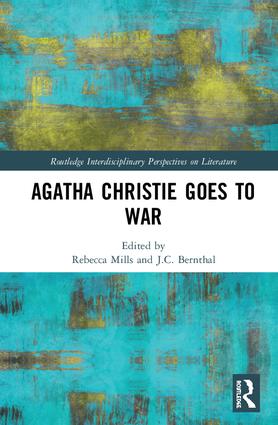
published by Routledge. You can get it in hardback or e-book form, for your library or yourself. My author copies arrived last week, and they’re quite a thing to behold.
Agatha Christie has never been substantially considered as a war writer, even though war is a constant presence in her writing. This interdisciplinary collection of essays considers the effects of these conflicts on the social and psychological textures of Christie’s detective fiction and other writings, demonstrating not only Christie’s textual navigation of her contemporary surroundings and politics, but also the value of her voice as a popular fiction writer reflecting popular concerns. Agatha Christie Goes to War introduces the ‘Queen of Crime’ as an essential voice in the discussion of war, warfare, and twentieth century…
View original post 443 more words
Share this:

A Love Letter: in praise of Agatha Christie

For most of my life, I have been an avid reader of all types of books. As my family will confirm, from childhood, I was never without a book. As an adult, I have regularly selected coats with large pockets and bags purely on the basis that they can hold a book. As many students will attest, my answer to most academic questions is “read, read and read some more”. Despite the growth of the internet and other media, which as @drkukustr8talk has noted recently, diverts and subverts our attention and concentration, reading remains my first and truest love.
This, my third ‘Love Letter’, focuses on my favourite author, above all others, Agatha Christie. I have previously dedicated ‘Love Letters’ to poetry, and art. Both of these forms took a long time for me to develop my understanding of and my love for. This ‘Love Letter’ is slightly different.
I first discovered Christie’s novels when I was about 12, since then they have formed a regular backdrop to my life. They act as a comfort blanket when I am tired, stressed, sad or away from home. I have read and reread everything she wrote and know the stories inside and out. Despite my decades of adoration, it remains challenging to know exactly what it is that appeals to me so much about Christie’s novels.
Perhaps it is the symmetry, the fact that for Christie every crime has a solution. Conceivably, given my pacifist tendencies, it could be the absence of explicit violence within her books. Maybe it’s Christie use of stereotypical characters, who turn out to be anything but. You don’t have to look very far to find the oh-so suspicious foreigner, who turns out to be a caring father (Dr Jacob Tanois) or the shell-shocked former military man trained in violence, who metamorphosises into a rather lonely man, who suffers from epilepsy (Alexander Cust). In all these cases, and many others, Christie plays with the reader’s prejudices, whatever they might be, and with deft sleight of hand, reveals that bias as unfounded.
To be honest, until relatively recently, I did not think much about the above, reading Christie was so much part of my life, that I took it very much for granted. All that changed in 2017, when I spotted a ‘Call for Chapters’
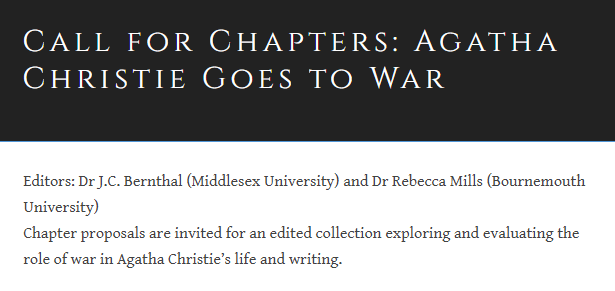
It seemed too good an opportunity to miss, after all I had spent a lifetime reading Christie, not to mention more than a decade studying war and crime. After all, what did I have to lose? I submitted an abstract, with no real expectation that someone who had never studied fiction academically, would be accepted for the volume. After all, who would expect a criminologist to be interested in the fictional writing of a woman who had died over 40 years ago? What could criminology learn from the “golden age” of “whodunnit” fiction?
Much to my surprise the abstract was accepted and I was invited to contribute a chapter. The writing came surprisingly easy, one of very few pieces of writing that I have ever done without angst. Once I got over the hurdle of forcing myself to send my writing to strangers (thank you @manosdaskalou for the positive reassurance and gentle coercion!) , what followed was a thoroughly pleasant experience. From the guidance of the volume’s editors , Drs J. C. Bernthal and Rebecca Mills, to the support from many colleagues, not mention the patience of Michelle (Academic Librarian) who restrained from strangling me whilst trying to teach me the complexities of MLA. Each of these people gave me confidence that I had something different to say, that my thinking and writing was good enough.
Last week, my copy of the book arrived. It was very strange to see my chapter in print, complete with my name and a brief biography. Even more surreal was to read the editors’ introduction and to see my work described therein, with its contribution to the volume identified. I doubt many people will ever read my chapter, it is published in a very expensive academic book destined for academics and libraries. Nevertheless, I have left the tiniest of marks in academic literature and perhaps more importantly, publicly acknowledged my love for the writing of Agatha Christie.
The finished article:
Bowles, Paula, (2020), ‘Christie’s Wartime Hero: Peacetime Killer’ in Rebecca Mills and J. C. Bernthal, Agatha Christie Goes to War, (Abingdon: Routledge): 28-45
Share this:


Things I used to could do without a phone. #BlackenAsiaWithLove
A Spoken Word poem for young people everywhere, esp Youth in Asia, who may never know WE LIVED before smartphones…and live to tell about it.
Walk.
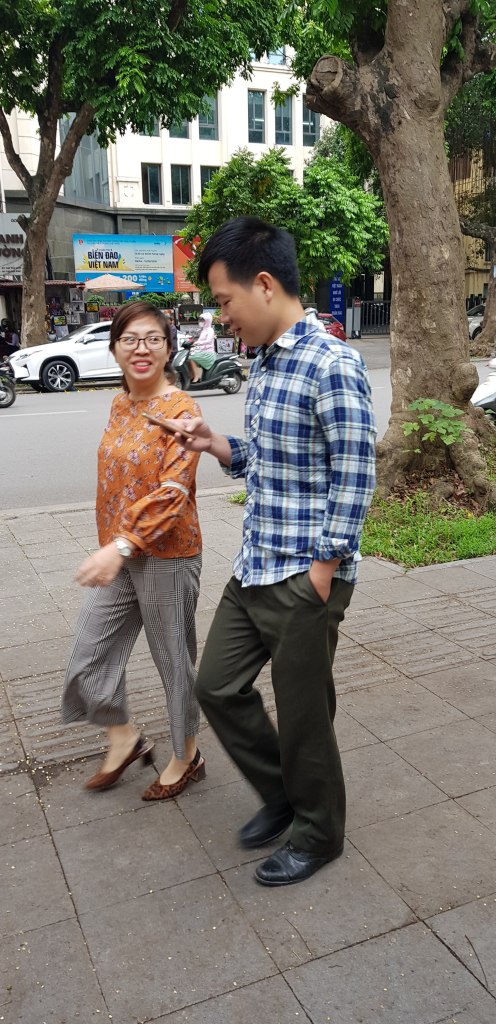
Walk down the street.
Find my way.
Go someplace.
Go someplace I had previously been.
Go someplace I had previously not been.
Meet.
Meet friends.
Meet friends at a specific time and place.
Meet new people.
Meet new people without suspicion.
Strike up a conversation with a stranger.
Make myself known to a previously unknown person.
Now, everything and everyone unknown is literally described as ‘weird’.
Eat.
Eat in a restaurant by myself.
Pay attention to the waiter.
Wait for my order to arrive.
Sit.
Sit alone.
Sit with others.
Listen.
Listen to the sound of silence.
Listen to music.
Listen to a whole album.
Listen to the cityscape.
Overhear others’ conversations in public.
Watch kids play.
Shop.
Share.
Share pictures.
Take pictures.
Develop pictures.
Frame pictures.
See the same picture in the same spot.
Read.
Read a book.
Read a long article.
Read liner notes.
Pee.
I used to be able to stand at a urinal and focus on what I was doing,
Not feeling bored,
Not feeling the need to respond to anything that urgently.
Nothing could be so urgent that I could not, as the Brits say, ‘take a wee’.
Wait.
Wait at a traffic light.
Wait for a friend at a pre-determined place and time.
Wait for my turn.
Wait for a meal I ordered to arrive.
Wait in an office for my appointment.
Wait in line.
Wait for anything!
I used to appreciate the downtime of waiting.
Now waiting fuels FOMO.
I used to enjoy people watching…
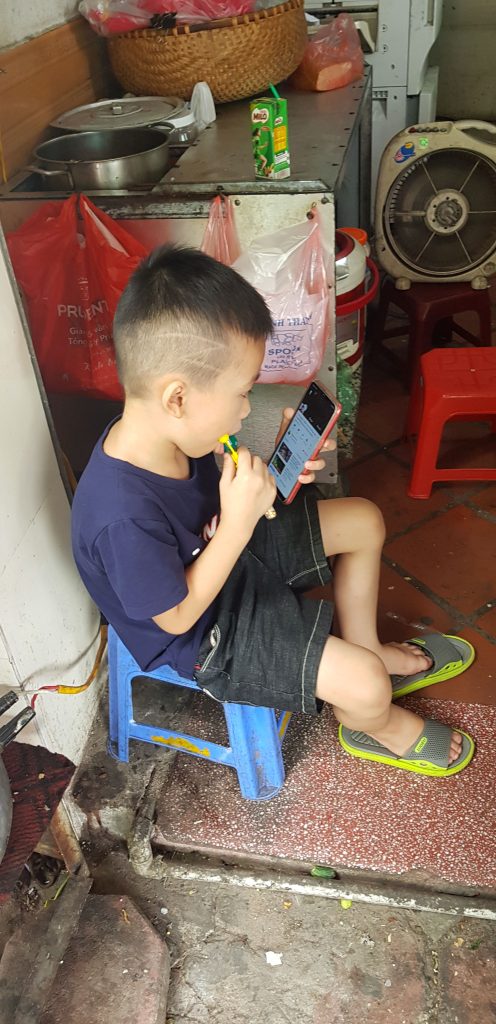
Now I just watch people on their phones.
It’s genuine anxiety.
Walk.
Walk from point A to B.
I used to could walk between two known points without having to mark the moment with a post.
Now I can’t walk down the hall,
Or through the house or even to the toilet without checking my phone.
I avoid eye contact with strangers.
Anyone I don’t already know is strange.
I used to could muscle through this awkwardness.
Talk.
Have a conversation.
A friend and I recently lamented about how you used to could have a conversation and
Even figure out a specific thing that you couldn’t immediately recall…
Just by talking.
I also appreciate the examples we discussed.
Say you wanted to mention a world leader but couldn’t immediately remember their name. What would you do before?
Rattle off the few facts you could recall and in so doing you’d jog your memory.
Who was the 43rd US president?
If you didn’t immediately recall his name,
You might have recalled that the current one is often called “45” since
Many folks avoid calling his name.
You know Obama was before him, therefore he must’ve been number “44.”
You know Obama inherited a crap economy and several unjust wars,
Including the cultural war against Islam. And
That this was even one of the coded racial slurs used against him: “A Muslim.”
Putting these facts together,
You’d quickly arrive at Dubya! And
His whole warmongering cabinet. And
Condi Rice. And
General Powell’s botched PowerPoint presentation at the UN. And
Big dick Cheney, Halliburton and that fool shooting his friend while hunting.
That whole process might have taken a full minute,
But so would pulling up 43’s name on the Google.
This way, however, you haven’t lost the flow of conversation nor the productive energy produced between two people when they talk.
(It’s called ‘limbic resonance’, BTW).
Yeah, I used to be able to recall things…
Many more things about the world without my mobile phone.

Wonder.
Allow my mind to wander.
Entertain myself with my own thoughts.
Think.
Think new things.
Think differently just by thinking through a topic.
I used to know things.
Know answers that weren’t presented to me as search results.
I used to trust my own knowledge.
I used to be able to be present, enjoying my own company,
Appreciating the wisdom that comes with the mental downtime.
Never the fear of missing out,
Allowing myself time to reflect.
It is in reflection that wisdom is born.
Now, most of us just spend our time simply doing:
Surfing, scrolling, liking, dissing, posting, sharing and the like.
Even on a wondrous occasion, many of us would rather be on our phones.
Not just sharing the wonderful occasion –
Watching an insanely beautiful landscape through our tiny screens,
Phubbing the people we’re actually with,
Reducing a wondrous experience to a well-crafted selfie –

But just making sure we’re not missing out on something rather mundane happening back home.
I used to could be in the world.
Now, I’m just in cyberspace.
I used to be wiser.
Share this:


Killed with kindness #RaceEd

What does it say about the education sector that we don’t say what we mean? What does it say that I attended a conference on racism at universities that didn’t have racism in the title? “Racial harassment” is what they called it, as in Westminster Higher Education Forum Keynote Seminar: Priorities for Tackling Racial Harassment & Improving the BAME Experience in HE. Racial harassment? Racism. Name it. Own it. We’re nearly in 2020 and we’re still wrapping these issues in bubblewrap to make it more palatable for, dare I say, senior management at UK universities (overwhelmingly White). Should we draw a nail? Pop. Pop. Pop.
Arising from my bed at 5:45am to make a 7:30am(ish) train, only to arrive at this conference feeling a bit awkward. The whole delivery felt “preachy” from the get-go. Being lectured on race by mainly White middle class people brought me back to first year on my Creative Writing degree where I did a number of literature modules, delivered by a lecturer who talked about slavery like a trivial matter. That’s my family history you’re talking there!
As Vice President BME at Northampton, I’m facing more and more problems with the language and rhetoric we use around race. The sector lumps all Black and brown students together and calls them BME / BAME. What about the term people of colour? I, too, am guilty of using “people of colour” and do myself have issues with it. It’s probably the best of the worst.
The term B(A)ME is not homogeneous. Even among Black people, there is differences. i.e between African and Caribbean, as well as Black British people whose families come from those places. Even to call someone African; there are fifty-four different nations in Africa, each with their own languages, culture, traditions and so on. Nigeria alone has over 250 different languages. But we continue with BME and BAME. Racial / cultural identity matters. Do we lump all White people together? No. And I bet if you called someone from Belfast, English, they’d have something to say!
Watching Dr. Zainab Khan (Assoc. Pro-Vice Chancellor at London Met) speak was a breath of fresh air, telling it like it is. And having been to a few conferences like this, it seems to me that the sector is more set on managing racism than taking to steps to eradicate it. Both Dr. Khan, and Fope Olaleye (Black Students’ Officer at NUS) brought a much needed clarity to racism (not racial harassment) at our universities, as well as institutional racism. It was great to hear comments on Macpherson and Critical Race Theory too.
And in my opinion, best practice is the brutal, honest truth. Not statistics, but qualitative data. Real life experiences and true stories by people on the ground experiencing this on a day-to-day.
The Royal Over-Seas League private members club was our host. Plaques to Britain’s colonial past in what was then British India hung on the wall. Staff meandered in capes and gowns, and plums in their mouths. What’s more, it was six speakers before a Black or brown person came to the floor. As a Students’ Union, we did not have to pay to attend. But others did pay the three-figure entrance fee. And there sat problem number one, why do these conferences seek money for attendance? Are they cashing in on Black and brown trauma? Is there an argument of ethics to be had here?
During the half-day conference there were four non-White speakers. This did not occur until towards the end of proceedings, in what felt like a very shoehorned state of affairs. Again, I felt that I was being preached at on my own narrative of racism in higher education. Whitesplaining is very real, when White British people talk about racism like its their lived experience.
At an event, wherein, we discussed things like the ethnicity award gap, decolonising the curriculum and anti-racist learning, to have a conference of this matter in a place that was overtly classist and elitist with nods to a system which in itself was built of white supremacy, it’s quite difficult to not see the irony in it all. We also discussed institutional racism in the same breath as decolonial thinking. Ha! And really, all you can do is laugh.

White British people organising events on behalf of Black / brown people on themes that impact us more than them, on symptoms that were originally created by the White elite – in the jaws of colonisation and the whims of European empires. The times that made Britain “great” – imperialism in the tint of gold, glory and god, eclipsed by the Ritz in London’s southwest as I bump into austerity and homelessness, like cold corpses by Green Park.
In the making of Westminster Higher Education Forum Keynote Seminar: Priorities for Tackling Racial Harassment, the White middle class stands tall as colonialism walks with us in the present. The bellowing voice of White privilege. I know plenty of students that would have come to this. Alas, this forum fell into the trap that many discussions have fallen into. Well-meaning White people telling us what we ought to do about racism.

Whilst I made some valuable connections, the wider narrative of whitesplaining ran riot, like Robert Redford and Meryl Streep spread-eagled across the plains in Out of Africa. Diversity in panel discussions is a must. It was functional in concept, but the swaggering thoughtlessness in venue, entry fee and panellists left for a very awkward-feeling in the audience.
If these types of conferences aren’t done properly (from diverse panels to organisational competence), are we not just feeding the racist systems we want to deconstruct?

 Thoughts from the criminology team